
How do you currently measure the reproductive health and success of your cattery or kennel?
This is a topic I frequently address in my blogs and lectures.
Because it is a simple truth in both dog and cat breeding: what we measure, we can enhance.
And as I navigated the corporate world, I was introduced to something called “dashboards”.
And I find this to be a powerful AND transformative concept!
These tools were… a revelation.
They can be as intricate as a mosaic, or as straightforward as a line drawing.
Yet their mission is unwavering: to offer a lucid glimpse into performance.
To ensure you remain at the forefront of dog and cat breeding insights, consider joining my newsletter. It’s my curated channel where I share the latest findings, personal experiences, and indispensable tips. Don’t miss out on information that could redefine your breeding journey.
My philosophy with dashboards? Less is more.
As Leonardo da Vinci once said, “Simplicity is the ultimate sophistication.”
While dashboards can be designed with great detail, in today’s fast-paced world of dog breeding and cat breeding, simplicity often holds the key to success.
And reproduction is not just a function but a cornerstone of a cattery or a kennel.
It’s the heart that pumps life into every generation, ensuring the lineage continues with vitality and vigour.
Given its paramount importance, doesn’t it deserve its own dedicated dashboard?
My answer is obviously yes!
With this in mind, I embarked on a mission to conceptualize a straightforward reproductive health dashboard for dog and cat breeding.
One that would not only be easy to understand but also actionable, and that would make sense for every cattery and kennel.
And it should be anchored around three fundamental parameters.
Fertility First: Setting the Pace for Breeding Excellence
When constructing a reproductive health dashboard for dog and cat breeding, to me, fertility stands out as the primary parameter.
When we talk about fertility in the context of dog and cat breeding, we’re referring to the ability of an animal to produce offspring.
It’s the measure of how often a mating results in a successful pregnancy and, subsequently, healthy litters.
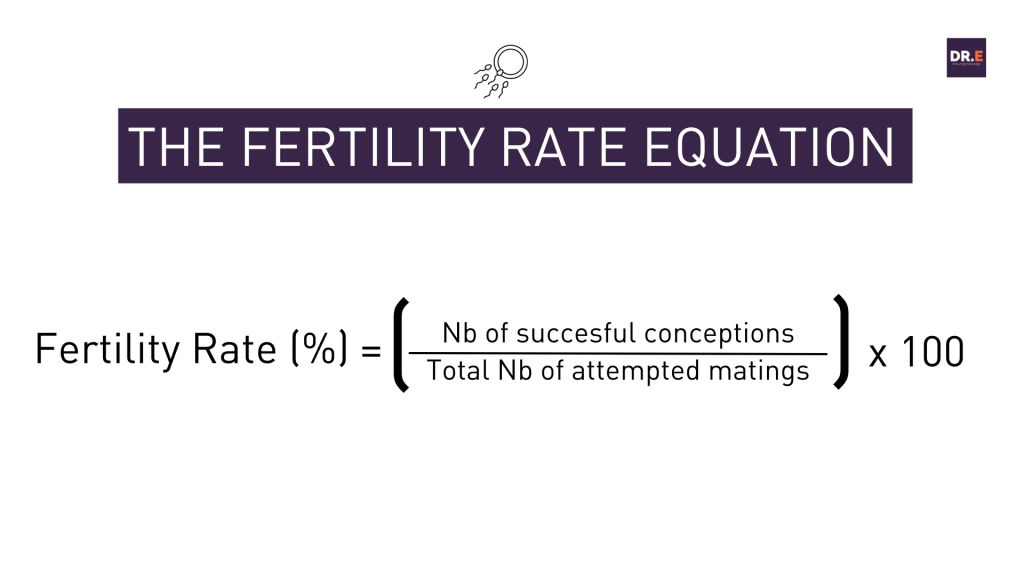
To evaluate the average fertility of a kennel or cattery, consider the following simple approach: For every 10 matings, how many result in pregnancies?
If 8 out of 10 matings lead to pregnancies, your fertility rate is 80%.
It’s a straightforward ratio of successful pregnancies to total matings.
Now, to truly gauge the performance of any dashboard, we need a benchmark.
And for our fertility dashboard, this benchmark isn’t just a random number; it’s derived from scientific literature and extensive research.
And after examining the available studies and data, I’d set the fertility benchmark for a kennel or cattery at 80%.
What it means is that, if your cattery or kennel has a fertility rate of 80% or above, you’re doing exceptionally well.

I’ve always believed in the power of visuals, which is why I lean towards a colour-coded system.
And “above 80%” would be represented by a vibrant green, signalling optimal performance.
Actually, here’s how I envision this colour code system:
- Green (>80%): This is the gold standard. It indicates that the breeding practices are top-notch, and the animals are in prime reproductive health.
- Orange (60%-79%): This is average. While not alarming, there’s room for improvement. It suggests that while most matings are successful, there might be some factors affecting fertility that need attention.
- Red (40%-59%): This is a cause for concern. A fertility rate in this range indicates potential issues, be it health-related or environmental. Immediate intervention and evaluation are recommended.
- Black (<40%): This is a critical alert. A fertility rate below 40% is a strong indication that there are significant challenges in the breeding environment. It necessitates a thorough review of breeding practices and health checks.
FYI: The subsequent ranges are determined by considering a gradual decline in fertility rates. Each color represents a significant drop, emphasizing the increasing urgency to address potential issues.
The gradation from green to black provides breeders with a clear visual cue on areas of success and those that need intervention.
DYSTOCIA: A CRUCIAL INDICATOR
Parturition, or the act of giving birth, stands as one of the most nerve-wracking moments for many dog and cat breeders.
Over the years, I’ve been inundated with questions about managing this critical phase.
And if you take a moment to scroll through social media, you’ll find that discussions around dystocia, or difficulties during birth, dominate many breeding forums.
Having been on the front lines of numerous emergency consultations, I’ve seen the immediate challenges dystocia presents.
The repercussions are severe: not only does it escalate neonatal mortality rates, but recent findings suggest that its management could even influence long-term fertility in these animals. In an upcoming blog, I’ll unpack this revelation, given its profound implications for canine and feline reproduction.
So you see, given the gravity of this issue, I believe it’s imperative to monitor the dystocia rate in any cattery or kennel.
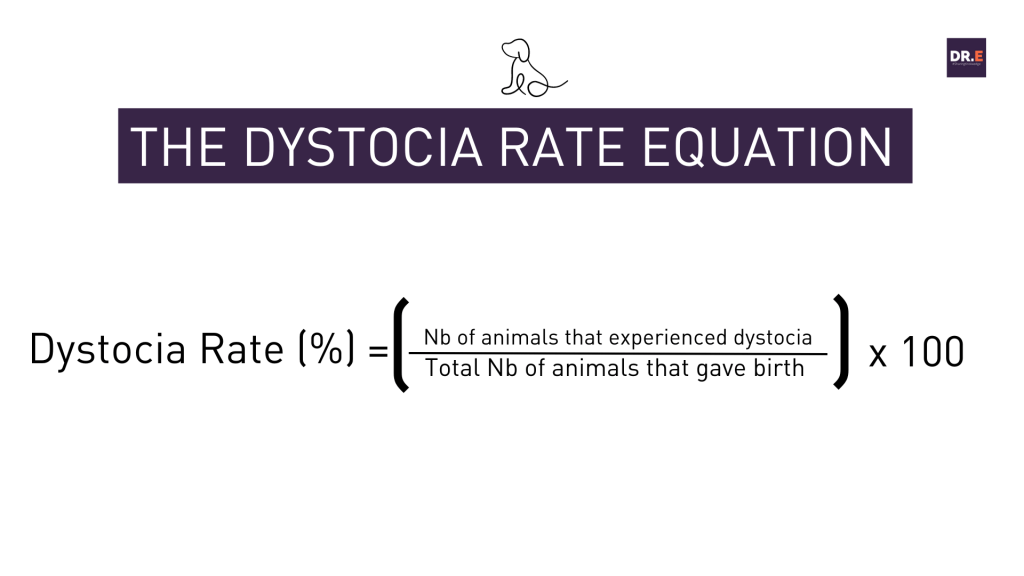
But what does the scientific literature say about this?
From the insights I’ve gathered, it’s clear to me that a benchmark of 15% is appropriate.
While dogs typically hover around this mark, cats generally experience lower rates of dystocia.
However, when we shift our focus to purebred cats, the narrative changes.
One particular study echoes the 15% dystocia rate found in dogs, solidifying the rationale behind setting our benchmark at this figure in catteries as well.
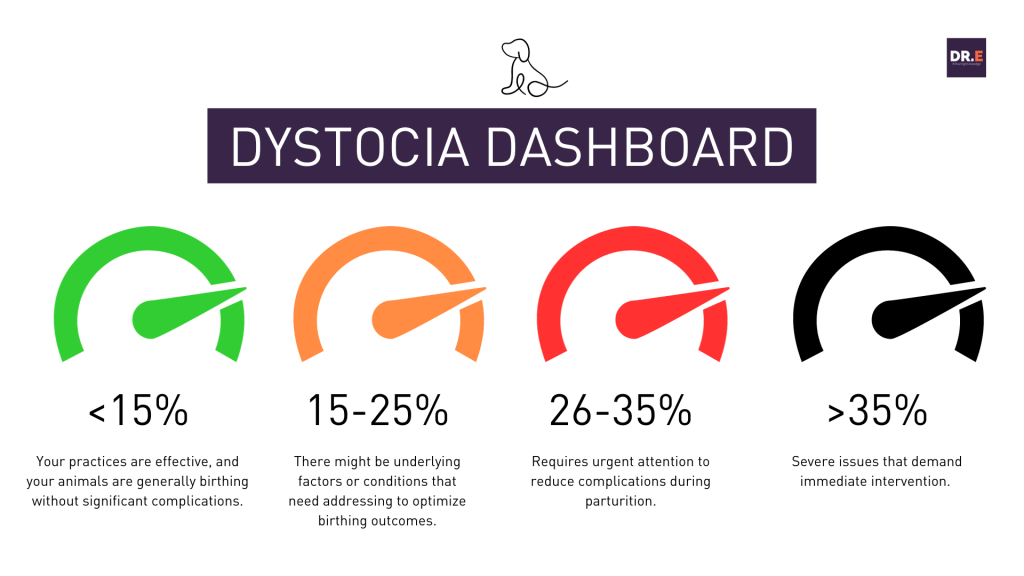
The Color-Coded Dystocia Indicator
- Green (<15%): If your kennel or cattery experiences a dystocia rate below 15%, you’re on the right track. Your practices are effective, and your animals are generally birthing without significant complications.
- Orange (15-25%): This range indicates caution. While not immediately alarming, a rate within this bracket suggests there might be underlying factors or conditions that need addressing to optimize birthing outcomes.
- Red (26-35%): A dystocia rate in this zone is a red flag. It’s a clear sign that there are challenges in your breeding environment or practices that require urgent attention to reduce complications during parturition.
- Black (>35%): This is a critical alert. A rate surpassing 35% is indicative of severe issues that demand immediate intervention. At this stage, both the mother and offspring’s health are at significant risk.
Neonatal Mortality: The Heart of Breeding Concerns
The last, but by no means least, element to discuss on our kennel/cattery dashboard is the sensitive topic of neonatal mortality.
And neonatal mortality is not just another statistic; it’s a heart-wrenching reality many breeders face.
It’s the topic that echoes loudest in the dog and cat breeding community, indicative of the widespread concern it generates.
The quest to optimize the survival of newborn puppies and kittens is indeed paramount, and it’s a journey filled with both hope and heartbreak.
I’ve experienced it firsthand, and the pain of losing these little ones is immeasurable.
For a long time, canine and feline neonatology remained what I termed a ‘grey area’ in veterinary medicine.
However, since 2016, the landscape has been rapidly changing. A surge of publications has shed light on this once obscure field.
Diving into the vast sea of studies, a consistent figure emerges: a neonatal mortality rate of around 20%.
From my perspective, this is the benchmark we ought to adopt.

I often encounter breeders who proudly claim their rates are much lower.
While I commend their success, I also challenge them:
“Are you actively monitoring this parameter in your kennel?”
And surprisingly, many are not.
Often, the statistics they present are more akin to approximations than thorough documentation.
In my opinion, this is one area where guesswork has no place.
The stakes are too high, and the importance of exact data cannot be overstated.
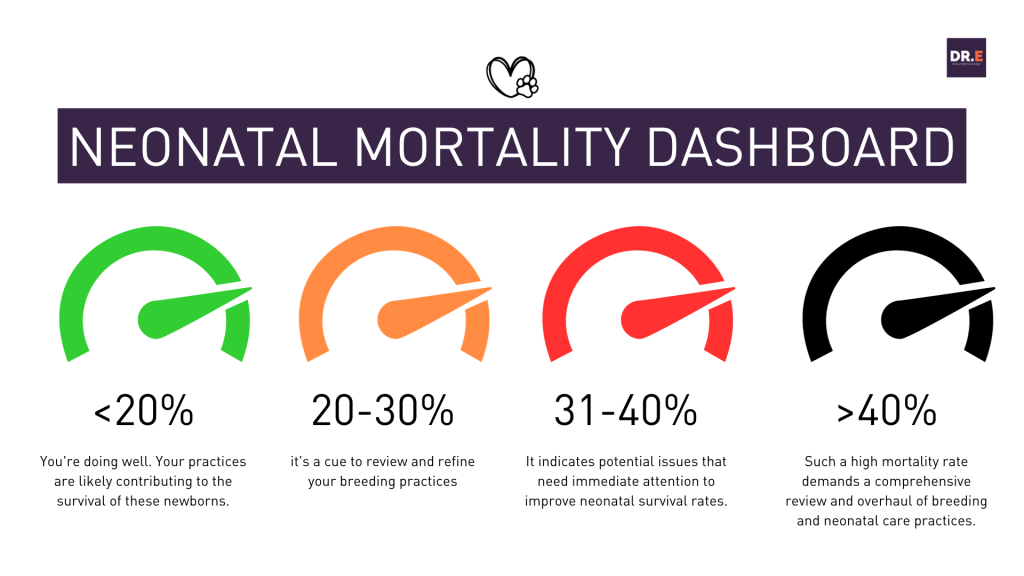
Neonatal Mortality Color-Coded System
To ensure clarity and ease of use, I propose the following color-coded system:
- Green (<20%): You’re doing exceptionally well, operating below the benchmark. Your practices are likely contributing to the survival of these newborns.
- Orange (20-30%): You’re within the average range based on global studies. While not alarming, it’s a cue to review and refine your practices.
- Red (31-40%): This is a call to action. It indicates potential issues that need immediate attention to improve neonatal survival rates.
- Black (>40%): A critical alert. Such a high mortality rate demands a comprehensive review and overhaul of breeding and neonatal care practices.
The Heartbeat of Reproductive Health
In my years navigating the intricate landscape of dog and cat breeding, amidst the myriad of metrics and figures, I’ve come to view three things as foundational to reproductive health: fertility, dystocia, and neonatal mortality rates.
These aren’t just numbers; they’re the pulse, the heartbeat, the lifeblood of a kennel or cattery’s reproductive success.
While there’s a plethora of other parameters one might consider, these three, in my opinion, encapsulate the essence of reproductive health.
And I’m all ears: which other metrics do you find indispensable? Which ones echo your personal experiences?
The world of dog breeding and cat breeding is vast and varied, and there’s always room for more insights.
But as our foundation, let’s zero in on the essential rates I mentioned here.
I urge you to begin documenting them.
Dashboards aren’t just about numbers; they’re about direction.
They guide us, showing where we excel and where we might need to pivot.
With these foundational metrics at your fingertips, you’re empowered to pinpoint areas of focus, optimizing the reproductive outcomes of your kennel or cattery.
For those of you eager to stay ahead in the world of dog and cat breeding, my online school offers unparalleled learning opportunities.Tap into the latest research and set yourself apart. It’s your chance to be at the forefront of breeding excellence.
But this is just the beginning. The road to reproductive excellence is long, winding, and filled with topics ripe for exploration.
And I promise you this: I’ll be right here, sharing my insights, discoveries, and passion every step of the way.
So, stay connected, stay curious, and let’s embark on this journey together.

 DR. EMMANUEL FONTAINE