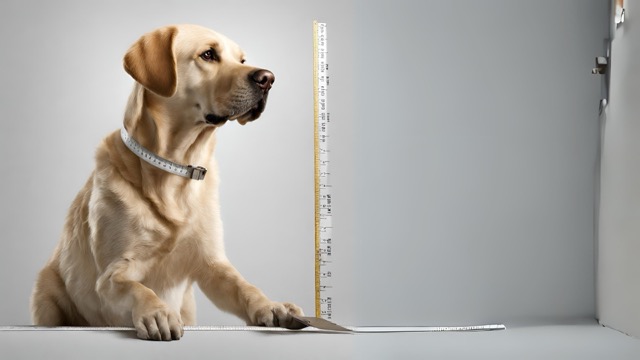
I recently came across a rather amusing comment on a Facebook group I’m part of.
The comment read:
“A vet proposed that before breeding, a dog’s penis should be measured to ensure it’s not too big for the bitch. Thoughts?”
Two hundred and five comments later, filled with chuckles and guffaws, the thread concluded with the wise words, “Laughter stimulates endorphins, which are priceless!”
I’ll admit, the comment had me in splits too.
After years of performing artificial inseminations and advising dog breeders, the idea of introducing a ruler into my toolkit was… a delightful curveball!
But it got me thinking.

Rewinding to My Early Days in AI (artificial Insemination)
Rewinding the clock, I recalled a peculiar case from years ago involving a Great Dane.
The male, despite his impressive stature and pedigree, faced challenges… in breeding the female.
To fully grasp the situation, a quick primer on dog anatomy is in order.
Male dogs have a bone at the tip of their penis, called the os penis.
This bone allows the male to penetrate the female, after which full erection and the “lock” with the bulbus glands occur.
If things go awry, like the female feeling pain and trying to flee, the os penis can fracture.
Worse-case scenario: this can lead to surgical amputation of the penis—as you can imagine, a nightmare for a stud dog.
So, always remember: don’t force nature!
If natural breeding cannot happen, this is when you can/should consider artificial insemination.
Ok, back to my story now.
The couple was brought to the clinic for artificial insemination.
However, upon examination, I was taken aback.
The male’s penis had… an abnormal shape… with a protuberance much like a horn!
Had smartphones been around back then, I’d have filled my gallery, given I’ve never seen its like since.
This explained the breeding obstacles!
This anatomical quirk, while fascinating, was the clear culprit behind the breeding difficulties.

Why Breeding Examinations Matter
This serendipitous Facebook comment and my subsequent trip down memory lane underscore a pivotal message: the absolute necessity of a comprehensive breeding soundness evaluation in both males (and females as well).
Before even considering using a male dog for breeding, a meticulous assessment of his overall health, and particularly his genital health, is paramount.
Such evaluations encompass a range of checks.
On my end, I always begin with testicular palpation, ensuring there are no abnormalities like an undescended testis or potential testicular tumors. Even in young males!
The penis, of course, is scrutinized for signs of inflammation, abnormal shapes, or structures.
Semen collection and analysis provide insights into fertility, assessing the quality and viability of the sperm.
And in today’s evolving veterinary landscape, with emerging diseases and heightened awareness, additional precautions are necessary.
Canine brucellosis, a zoonotic disease, has been garnering attention in North America and Europe.
The Society for Theriogenology‘s recommendation is clear and unequivocal:
“All dogs intended for breeding should be regularly tested for canine brucellosis, either at the time of breeding or every six months.”
Our female canines, too, require thorough evaluations.
The vulva’s conformation is of particular interest, as during breeding, those abnormalities can pose significant challenges.
Conditions like vaginal ptosis, which can manifest during the season, or locked/recessed vulvas (anatomical quirks seen in breeds like the Berger Picards), can complicate the breeding process.
While the humorous suggestion of measuring a dog’s penis size isn’t on my professional radar, the broader message is clear: meticulous health evaluations of both breeding partners are non-negotiable.

And when Anomalies Arise: What’s Next?
When abnormalities are detected, the ensuing decision to breed or abstain becomes multifaceted.
Of course, it depends on the type of abnormality, in certain cases, like canine brucellosis or ectopic testes, it is a no brainer!
But in cases like the one I encountered in this Great Dane, one can wonder.
Although many such defects like that are typically congenital and are said to have “low heritability,” (=this particular trait or characteristic is less influenced by genetics and more influenced by the environment), breeders are faced with a moral and practical dilemma.
Always something worth discussing before breeding then.
Our role as veterinarians is to equip you guys dog breeders with the most current, evidence-based information, empowering them to make informed decisions.
So depending on the “defect”, we will look for what we can find in the scientific literature… and help you decide what might be best.
As this tale winds down, I wish to reiterate a central tenet of responsible breeding: thoroughness.
While I won’t be adding a ruler to my array of instruments anytime soon, I remain steadfast in my advocacy for comprehensive breeding soundness examinations.
Because, when all is said and done, ensuring the health, well-being, and future of our canine companions is what truly matters.

 DR. EMMANUEL FONTAINE