
As a seasoned veterinarian, spaying is a procedure I know intimately. I would perform anywhere from 2 to 10 of those surgeries daily in bustling clinics! Yet, it’s the conversations before the surgery that captivate me most—pet owners brimming with questions, some, I must admit, quite unexpected! Earlier this year, I reviewed the scientific literature on the topic. Lots of things have changed (and keep changing) in veterinary medicine – that is, I find, the beauty of this discipline. So armed with this (new) knowledge, I’m here to offer clear-cut responses to your most pressing inquiries. So, settle in for the read, it is meant to be practical – and enlightening!
- Spaying a Cat: What Is It Exactly?
- Spaying a Cat: What Are the Health Benefits?
- Spaying a Cat: Are there Any Cons to It?
- Spaying a Cat: When is the Best Time to do it?
- Spaying a Cat: What Should We Do Differently After the Procedure?
- Spaying A Cat: What to Expect from the Procedure?
- Spaying a Cat: What about Post-operative Care and Recovery?
- Spaying a Cat: How Much Does it Cost?
- FAQ: Common Myths and Misconceptions About Spaying and Neutering
- Spaying a Cat: What Are the Alternatives?
Spaying a Cat: What Is It Exactly?
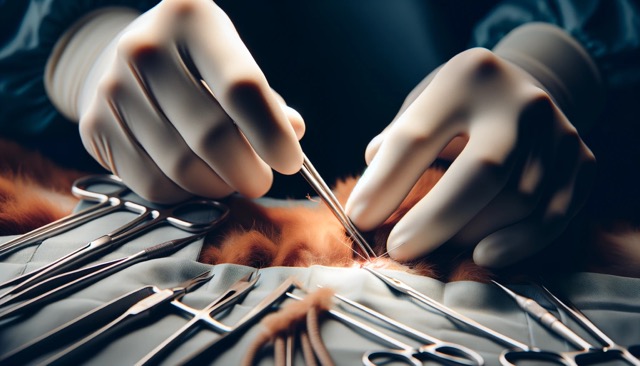
Spaying involves the removal of a female cat’s reproductive organs. Two different surgeries can be performed: ovariectomy (=only the ovaries are removed) or ovariohysterectomy (= we remove both the ovaries AND the uterus). Just so you know, there is an ongoing debate on which procedure is best. Ultimately, you need to know that both will bring the same health benefits.
Those procedures are performed under general anesthesia, ensuring the cat experiences no pain during the surgery.
Spaying a Cat: What Are the Health Benefits?
Increased Lifespan
This is the one I think we should ALWAYS mention first when we discuss this topic… because the differences are honestly staggering.
Indeed, a study published in 2022 actually showed that spayed and neutered cats lived almost 10 times longer than their entire counterparts!!!
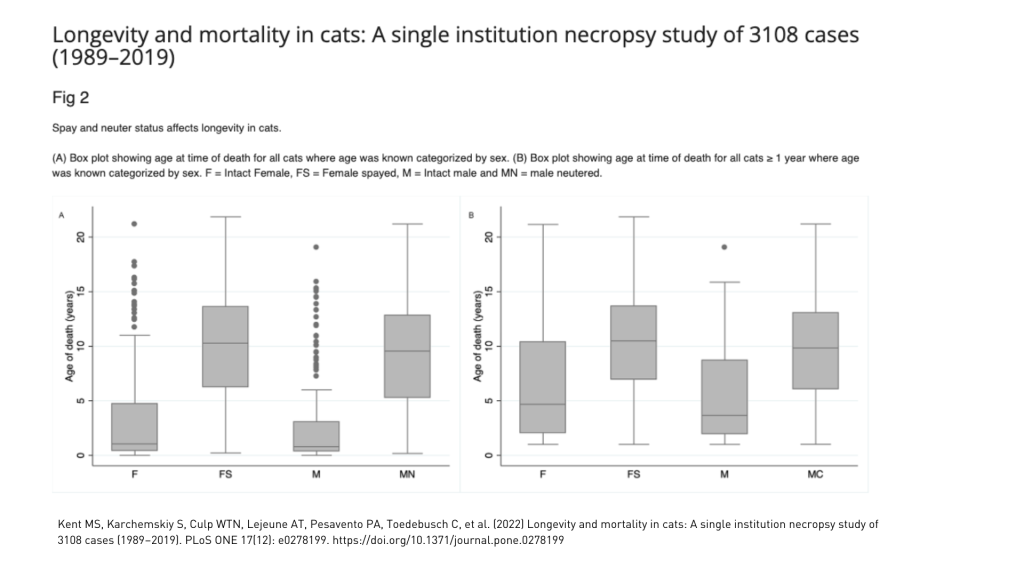
That in itself is enough to justify the procedure I believe!
Less Breast Cancer Cases
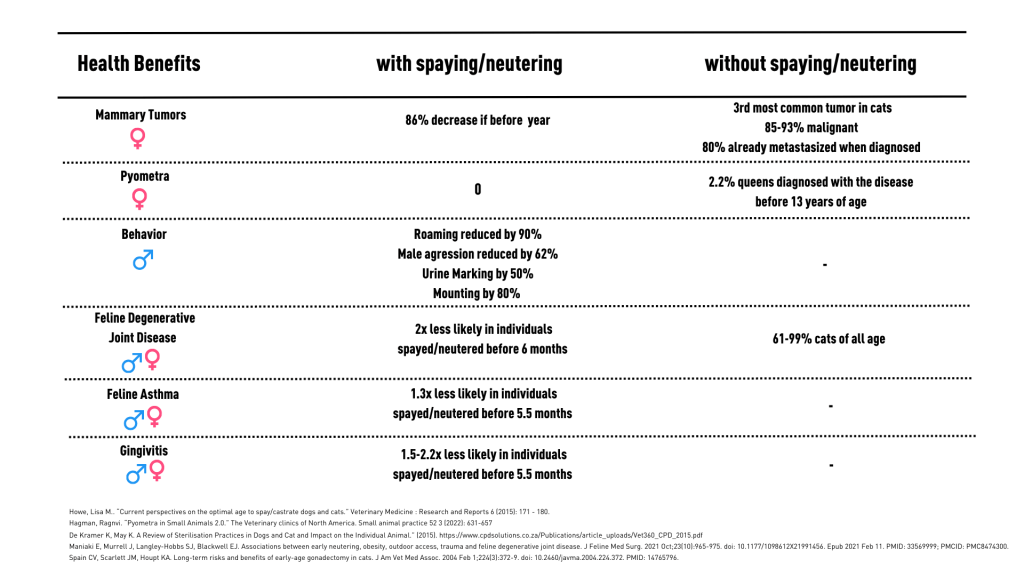
Here is another significant health benefit of spaying a cat: a decrease in the incidence of breast cancers – or mammary tumours as we call them in veterinary medicine. And this is not a small thing!
Mammary tumours are indeed the 3rd most common cancer we see in entire female cats… and worst thing is: 85-93% of them are malignant (it means that the cancer spreads to other part of the body… which is never a good thing obviously).
Important point: By spaying your cat before her first heat, you can nearly eliminate her risk of developing this type of cancer. But obviously, this is biology we are talking about here. The risk is significantly decreased, but be aware it is never fully eliminated as there are obviously other factors (like genetics, environment) also at play here.
No Uterine or Ovarian Diseases
Spaying also prevents pyometra, a severe infection of the uterus that can lead to critical illness and even death without prompt surgical intervention.
Important point: this disorder develops in the presence of the hormone progesterone, which is secreted by the ovaries. So be aware that both ovariectomy and ovariohysterectomy (the two surgical procedures I mentioned earlier) will be protective here!
I also often hear that “spaying eliminates the risk of ovarian and uterine cancers—diseases that can be fatal if not detected and treated early.” That is technically true, but I must admit this is not on top of my list when it comes to the health benefits of spaying, as those conditions are fortunately not that common in cats actually.
Less Cases of Asthma and Gingivitis
In many species, spaying seems to be associated with an increased in certain chronic inflammatory conditions… but cats are very different here actually!
On the contrary, studies have shown that spayed and neutered cats are less likely to develop feline asthma and gingivitis later in their life. Those diseases are quite common and potentially very problematic in cats, so definitely an added benefit here!
Spaying a Cat: Are there Any Cons to It?
Contrary to a persistent myth, it is NOT necessary for a cat to have a litter before being spayed; this has no significant impact on her health, and foregoing a litter does not constitute a drawback to her well-being. However, it’s important to acknowledge that some cons have been highlighted in scientific literature.
In my opinion, in the current state of knowledge, the pros still outweigh them here, but those should not be overlooked when deciding on spaying. Let’s have a quick overview of them here!
Weight Gain
Let’s be clear here: spaying does NOT systematically lead to weight gain in cats… but it does create kind of the perfect storm for this condition to develop actually. Weight gain following spaying is not so much a disadvantage as it is a consequence of the procedure.
With the removal of the ovaries and the subsequent hormonal changes, cats tend to experience:
- An increase in appetite (+20% rise in food intake post-surgery).
- Their daily energy needs drop by up to 30%.
- And their activity levels decrease significantly—by 52% according to one study.
This combination can indeed set the stage for weight gain, making cats more prone to becoming overweight or obese after being spayed.
Fortunately, this is a manageable outcome, and later in this blog, we’ll explore strategies to prevent your feline friend from tipping the scales.
Cancers
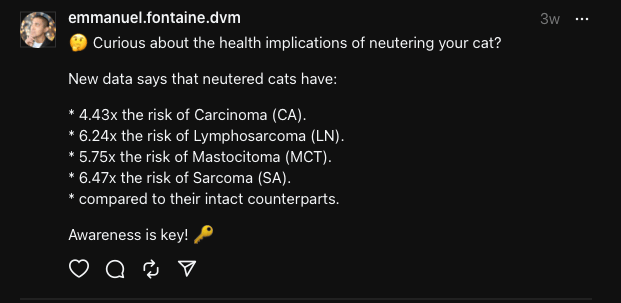
The link between spaying and an increased occurrence of certain cancer types is a topic of considerable debate in veterinary medicine, particularly concerning dogs; however, this association has not been prominently noted in cats—until a study presented in September 2023 indicated that spaying may also elevate the risk of specific cancers in felines as well actually. As this appears to be the first report of its kind, there is still much to learn, and time will likely reveal more about these findings.
Hormones Imbalance
In dogs, one theory suggests that the increase in certain cancers post-spaying may be linked to a rise in the hormone LH (=Luteinizing Hormone), which becomes more concentrated in the blood after the ovaries are removed. Without the ovaries producing hormones like estrogen, the body tries to compensate, leading to higher levels of LH.
This hormonal shift is also implicated in issues like urinary incontinence and certain skin conditions, such as puppy-coat syndrome. A recent study has observed similar hormonal imbalances in cats following spaying, yet the full implications of these changes remain unclear. As we await further research, it’s a point worth considering when contemplating the procedure.
Changes in the Microbiome
It’s a surprising revelation, but recent research indicates that spaying a cat can lead to changes in its microbiome—the community of microorganisms living in the digestive tract that play a crucial role in digestion, immunity, and overall health.
I have been reading a lot about this subject lately, and it has been quite an eye-opener I must admit; it’s a complex and intricate field, and the deeper I go, the more intricate it becomes actually.
Specifically, the study found an increase in Clostridium bacteria in the guts of spayed cats. While Clostridium is often labeled as a ‘bad’ bacteria, it’s becoming clear that its presence isn’t always as detrimental as what we used to think and its role in digestive disorders isn’t as straightforward as once thought.
The researchers themselves have stated that the clinical significance of this change in the microbiome after spaying is not yet understood.
The way I see it, this serves as a reminder of the microbiome’s importance, particularly its protection post-spaying. Given the microbiome’s critical function in developing immunity and other bodily processes, it’s a facet of feline health that certainly warrants attention in the wake of spaying.

Spaying a Cat: When is the Best Time to do it?
The Best Age to Spay…?
Ah I wish I could give you a clear-cut answer on this one… but there is none actually!
Determining the optimal age to spay a cat is a topic without a one-size-fits-all answer.
Interestingly, research has revealed that whether a kitten is spayed at 7 weeks or 7 months, there appears to be no significant difference in health outcomes. That definitely answers the question: “What happens if you spay a cat too early?” Well, you understand there is minimal risk.
Traditionally, the benchmark for spaying was set around 6 months, coinciding with the onset of a female cat’s first heat cycle. However, this timing isn’t always in sync with a cat’s biological clock; some cats may enter their first fertile season as early as 4 months, with the potential to conceive and bear kittens if not monitored closely.
Consequently, veterinary recommendations have evolved. In the United States, the AVMA suggests spaying at 5 months, while the British Veterinary Association in the UK advises doing so at 4 months—both significantly earlier than the previously customary 6-month guideline.
This shift is crucial to note, as many pet owners still operate under the outdated assumption that spaying should wait until the half-year mark.
It’s also essential to recognize that many shelters perform spay surgeries on kittens sometimes as young as 6 weeks old, and studies support that early-age spaying carries no adverse health effects. Therefore, while there’s no definitive ‘best age’ for every cat, the evidence points towards the safety and efficacy of earlier spaying to prevent unintended breeding and the associated health risks.

Can You Spay a Cat in Heat?
Yes, it is entirely possible to spay a cat while she is in heat, despite common cautions against it due to “increased surgical risks.”
Technically, these concerns are valid; a cat in heat has increased blood flow to the reproductive organs, making them more vascularized and, theoretically, raising the risk of hemorrhage during surgery.
However, theory often differs from practice. The blood vessels involved are quite small, and for an experienced surgeon, the actual risk is not as significant as one might think. My time in a biotechnology lab, where spaying cats in heat was a routine procedure to collect oocytes for research, provided me with extensive experience in this area. Having performed numerous spays on cats during their heat cycle without complications, I can attest that the procedure’s success largely depends on the surgeon’s skill and confidence.
It’s an important conversation to have with your vet, but be aware it’s not an absolute contraindication. With adept surgical technique, spaying during a cat’s heat cycle can indeed be a routine operation.
Can You Spay a Cat in the 2 Months Following Heat?
The answer is affirmative: we can indeed spay a cat within the two months following her heat cycle. This point is worth discussing because, in dogs, we often adhere to the “diestrus rule.”
Diestrus is the period after a dog’s heat cycle, marked by high levels of the hormone progesterone, which is predominantly produced by the ovaries. Removing the ovaries during this phase causes a sudden drop in progesterone, potentially leading to lactation of pseudo-pregnancy, also known as false pregnancy. This occurs in about 20% of female dogs spayed during diestrus, so it’s not an uncommon scenario and something we definitely want to acknowledge in this species!
However, the situation is quite different in cats. Cats typically ovulate only when mated, although it’s worth noting that a subset of about 20-30% can ovulate spontaneously. Yet, most cats will not experience the significant progesterone presence seen in dogs. Therefore, spaying can be safely performed. Additionally, false pregnancy is exceedingly rare in cats—I’ve never encountered a case (while I have seen PLENTY in dogs!).
So, even if a cat has ovulated, spaying during diestrus is still considered safe due to the distinct reproductive physiology of felines compared to canines.
Can You Spay a Pregnant Cat?

Yes, it is possible to spay a pregnant cat, but this comes with important considerations.
The procedure typically involves an ovariohysterectomy, where both the ovaries and the uterus are removed. However, extra care must be taken, particularly concerning anesthesia and fluid therapy.
During the surgery, a significant volume of fluids is removed along with the highly vascularized organs, which requires careful management to compensate for these losses.
This is a topic that should be discussed in detail with your veterinarian. Sometimes, pregnancy is an incidental discovery during what was planned to be a routine spay. The stage of gestation matters; earlier stages mean less fluid removal, whereas later stages, especially with a large litter, can involve substantial fluid volumes.
Ultimately, the procedure’s success hinges on the veterinary surgeon’s expertise and the implementation of appropriate precautions. While there are increased risks, especially related to anesthesia, with the right approach, it is a viable option. I have performed such surgeries in my practice, demonstrating that, with due diligence, spaying a pregnant cat is within the realm of veterinary capabilities.
Spaying a Cat: What Should We Do Differently After the Procedure?
The removal of the ovaries halts the production of hormones that drive the estrous cycle, effectively ending the behaviors associated with being in heat. This means an end to vocalizations, restlessness, and the incessant search for a mate. Cats typically become more docile and may show a reduction in aggressive tendencies, making them more amenable to indoor living and potentially reducing the risk of injury from fights or accidents outdoors.
Sounds like after spaying, it is going to be easy, right? In a sense, maybe. However there are still some things you need to focus on to optimize lifelong health in these kitties.
Food Change

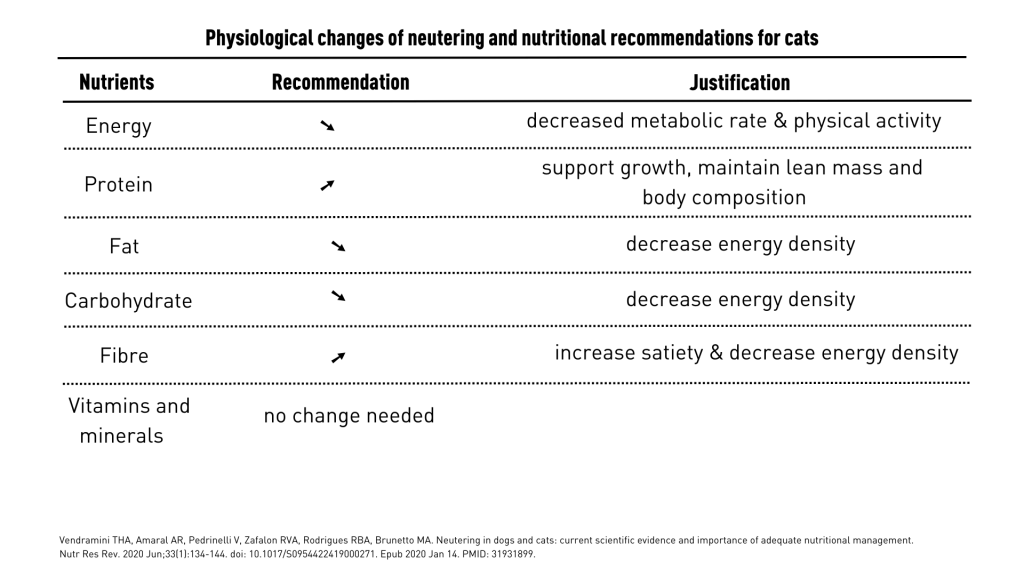
Nutritional management is key in preventing the increased risk of overweight and obesity in cats after spaying. To safeguard their health, owners should consider three pivotal steps:
- Transition to a diet formulated specifically for spayed or neutered cats.
These diets are designed to be less energy-dense, aligning with the reduced energy needs of a spayed cat. Opting for a specialized diet rather than simply reducing portions of their regular food ensures that cats still receive the essential vitamins and minerals they need, particularly crucial as many cats are spayed during their growth phase. For kittens, a diet tailored for spayed or neutered juveniles is ideal, providing lower energy content while still supporting healthy growth with adequate protein and minerals.
- Implement the dietary switch BEFORE the spaying procedure.
A cat’s appetite can increase almost immediately after surgery, so to prevent any initial weight gain, it’s best to start the new feeding regimen at least two weeks prior. This allows for a smooth transition and better acceptance by the cat.
- Pay close attention to portion sizes.
It’s a common misconception that cats will self-regulate their food intake. However, many do not, which is why it’s critical to measure the exact amount of food provided daily, particularly post-spaying. A kitchen scale is an invaluable tool in this process, allowing for precise control over food portions. As James Clearwrites: “Atomic habits are the building blocks of remarkable results.” And it’s the small, consistent habits like weighing the cat food daily that lay the foundation for significant outcomes. In the context of feline nutrition post-spaying, this meticulous approach can have a profound impact on their health for sure!
Growth Monitoring
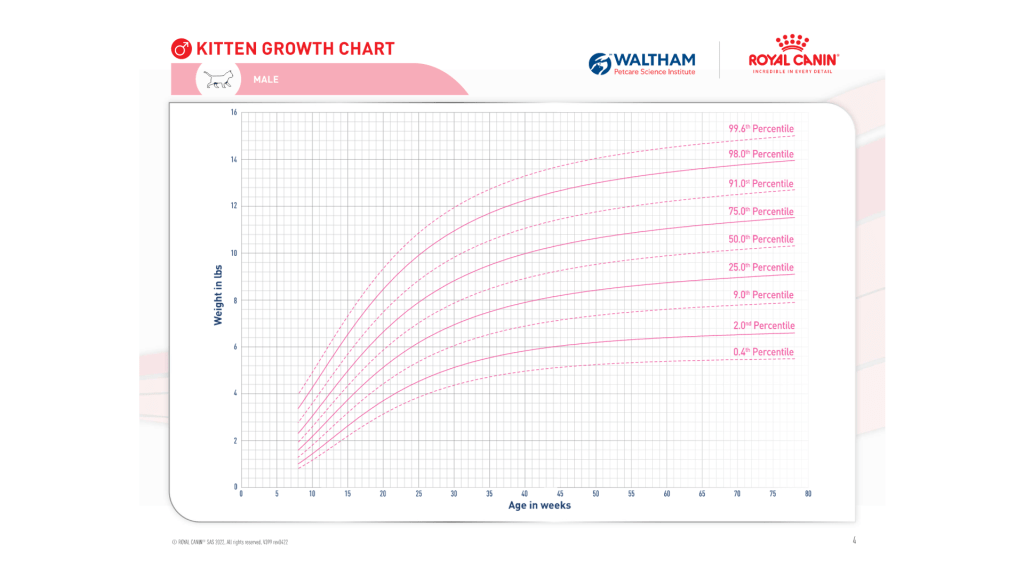
Growth monitoring in kittens has evolved significantly from the days of subjective assessments of “harmonious growth,” which often varied depending on the evaluator. And it is a critical element of the health of kittens in my opinion, especially after spaying and neutering!
Now, we have access to precise growth charts for kittens, modeled after the World Health Organization’s human growth charts; and these are, in my view, revolutionary.
Spaying and neutering shouldn’t be seen merely as endpoints; rather, they mark the commencement of a crucial developmental phase that requires vigilant monitoring.
Research utilizing these kitten growth charts has revealed that spayed and neutered kittens tend to gain more weight and fat mass compared to their unaltered counterparts. This underscores the importance of specialized diets for spayed and neutered kittens to manage this differential growth pattern.
Kitten growth charts are invaluable tools that should be employed routinely to accurately track growth. Should any deviations from the expected growth trajectory be detected, these charts enable us to intervene promptly with appropriate corrective measures, ensuring the kittens’ development remains on the right path.
Behavioral Health
Spayed cats are less likely to spray urine to mark their territory, a behavior that can be problematic in the home. They are also less likely to roam, which decreases their exposure to risks such as traffic and fights with other animals. This can lead to a longer, healthier life with fewer behavioral problems… which, as we said earlier, is a good thing!
It’s however important to note that while spaying can reduce many unwanted behaviors, it is not a cure-all for behavioral issues. Cats may still exhibit certain behaviors due to personality, past experiences, or other health issues.
We also have this say in feline medicine: “Cats thrive on familiarity and routine.” So this is something to put into practice after spaying for sure!
A comprehensive approach to behavior management, including environmental enrichment and positive reinforcement training, should be maintained and continued!
Spaying A Cat: What to Expect from the Procedure?
Understanding the Surgical Procedure
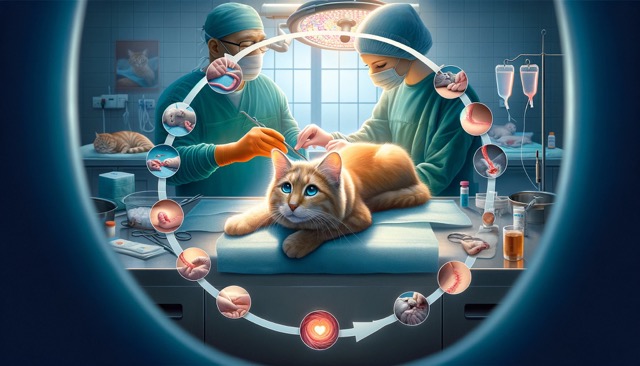
The process of spaying involves the complete removal of a female cat’s ovaries and/or uterus. This operation is performed under general anesthesia, ensuring that the cat is asleep and pain-free throughout the procedure.
The veterinarian makes a small incision in the abdominal wall through which the reproductive organs are carefully extracted. The incision is then closed with sutures that may either dissolve over time or require removal by a veterinarian.
Pre-Surgical Considerations
Prior to surgery, a thorough veterinary examination is essential to assess the cat’s overall health and suitability for anesthesia. Blood tests may be conducted to ensure that the liver and kidneys can process the anesthesia, and fasting is typically required the night before surgery to reduce the risk of complications.
Duration of the Procedure
The duration of the spaying operation can vary but typically takes between 30 to 60 minutes, depending on the cat’s age, size, and whether she is in heat or pregnant, as these factors can make the procedure more complex.
When all stars align, the surgery in itself is very quick. I have sometimes performed it in around 10 minutes. What takes more time is really the anesthesia and the reanimation after it.
Spaying a Cat: What about Post-operative Care and Recovery?
The period following a spaying procedure is critical for ensuring a cat’s swift and safe recovery. Post-operative care is not only about healing but also about monitoring for any complications that may arise after this significant surgical intervention.
Immediate Post-Surgical Care
After spaying, cats typically require several hours to fully awaken from general anesthesia. During this time, it’s essential to keep them in a warm, quiet, and comfortable environment. Owners should monitor their cat’s level of consciousness and ensure they are breathing normally, as the effects of anesthesia can vary from one individual to another.
Managing Pain and Discomfort
Veterinarians will often provide pain relief to manage discomfort post-surgery. It’s crucial to follow the vet’s instructions regarding medication administration and dosage. Signs of pain in cats can be subtle, so be vigilant for any changes in behavior that may indicate discomfort, such as decreased appetite, reluctance to move, or unusual aggression.
Rule of thumb: if you are under the impression that your cat is in pain despite the medical treatment provided, contact your veterinarian to discuss what can be done about this.
Incision Site Care
The incision site requires careful monitoring. Keep the area clean and dry, and prevent the cat from licking or biting at the sutures. An Elizabethan collar, or e-collar, may be necessary to prevent self-trauma, although today there are some alternatives.
What is really important is for you to check the incision daily for signs of redness, swelling, or discharge, which could indicate infection.
Same as earlier: if you notice that something does not look right, contact your veterinary clinic to discuss this. Better safe than sorry here, because if something is indeed wrong and we don’t address it promptly, things can go south quickly!
Activity Restriction

Restricting activity is vital during the recovery phase.
Limit jumping and strenuous play to prevent the incision from reopening.
Confine your cat to a small, safe area where they can rest comfortably without too much movement, especially in the first few days following surgery.
Keep doing so until the removal of the sutures.
Follow-up and Suture Removal
A follow-up appointment is typically scheduled to assess the healing process and remove any non-dissolvable sutures. . It’s an opportunity to address any concerns with your veterinarian and ensure that recovery is on track.
Each veterinarian has his own ways of approaching this, on my end, we’d typically have an appointment a week following the surgery to check if everything heals properly, and then a second appointment a week later to remove the sutures
Most cats recover from spaying within two weeks, with younger cats often bouncing back more quickly than older ones.
As mentioned earlier, throughout the recovery period, provide a peaceful environment and give your cat plenty of affection—this can be soothing and promote healing.
Spaying a Cat: How Much Does it Cost?
The decision to spay or neuter your cat is accompanied by various considerations, with cost being a significant factor for many pet owners. Understanding the financial aspect, as well as the value provided by this procedure, is essential for making an informed choice.
Understanding the Costs

The cost to spay or neuter a cat can vary widely depending on several factors, including geographic location, the type of clinic or veterinary hospital, and the cat’s health and age.
As I write these lines, a quick Google research tells me that in Canada for instance, the price of this surgery can vary from 75 to 400$.
Note that spaying tends to be more expensive than neutering due to the complexity of the surgery – especially because when spaying, we have to open the abdmonen actually.
The price typically includes the procedure itself, anesthesia, pain medication, and post-operative care.
Factors Influencing the Price
Several factors can influence the cost of spaying or neutering.
For instance, a pregnant cat or one that is overweight may require more time and resources (especially regarding anesthesia) to safely complete the procedure, potentially increasing the price.
Additionally, older cats may need extra care and monitoring, which can also add to the overall cost.
Financial Assistance and Low-Cost Options
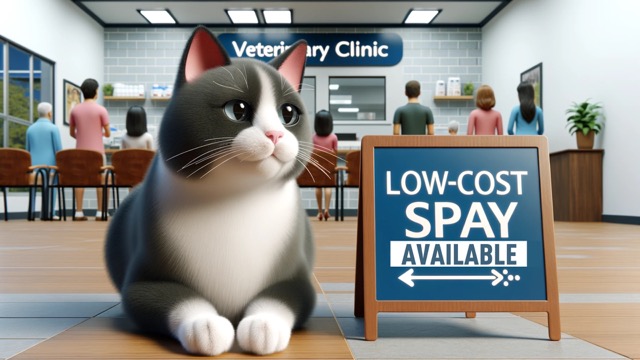
For those concerned about affordability, there are options available to reduce the financial burden. Many animal shelters and non-profit organizations offer low-cost spay/neuter programs. Some veterinary clinics may also provide discounts or payment plans to make the procedure more accessible.

Rule of thumb: discuss your options with your veterinarian and/or your local animal shelter, they will be able to give you some very good pointers here.cre
The Value of Spaying and Neutering
Maybe you find the upfront cost daunting…
But remember what you read earlier about the long-term health benefits. Those are significant, there is no doubt about this!
Remember this 10 times increase in life span? I am sure that is what you want for your kitty.
Budgeting for Your Cat’s Procedure
When planning for your cat’s spay or neuter surgery, it’s wise to budget for the unexpected. This might include additional pain medication, follow-up visits, or treatment for any unforeseen complications.
Obtaining a detailed estimate from your veterinarian can help you prepare financially for the procedure.
FAQ: Common Myths and Misconceptions About Spaying and Neutering

Myth 1: Neutered Cats Lose Their Personality
One prevalent myth is that altering a cat will lead to a loss of personality or playfulness. In reality, cats retain their character post-surgery. Neutering may reduce aggressive and territorial behaviors, but it does not change the essence of a cat’s individuality.
Myth 2: Spaying or Neutering Causes Laziness and Weight Gain
Another misconception is that spayed or neutered cats become lazy and gain weight as a direct result of the surgery. While metabolism can slow down post-surgery, weight gain is more closely related to overfeeding and lack of exercise. With proper diet and activity, cats can maintain a healthy weight and life obviously! After the procedure, this is something you will need to prioritize as we previously mentioned here.
Myth 3: It’s Better to Allow a Female Cat to Have One Litter Before Spaying
Some believe that female cats should have one litter before being spayed for health or behavioral reasons. However, there is no scientific evidence to support this claim. Early spaying reduces the risk of mammary cancer and eliminates the risks associated with pregnancy and birth.
Myth 4: Spaying and Neutering Are Unnecessarily Expensive
The belief that spaying and neutering are luxuries is another myth. While there is a cost involved, many affordable options and assistance programs exist. Moreover, the investment in spaying and neutering can prevent future expenses related to health complications from not having the procedure done.
Myth 5: Indoor Cats Don’t Need to Be Spayed or Neutered
Even indoor cats benefit from spaying and neutering. Think about what I said for breast cancers (aka mammary tumours). These procedures prevent medical issues and eliminate the chance of accidental pregnancies should an indoor cat escape or come into contact with an unaltered male.
Spaying a Cat: What Are the Alternatives?
Traditional surgical spaying and neutering are the most common methods, but advancements in veterinary medicine have introduced alternatives that may be suitable for some pet owners.
Exploring Non-Surgical Alternatives

Non-surgical alternatives, such as chemical sterilization, are emerging in the field of veterinary medicine. These methods can offer a less invasive approach to controlling the pet population. However, they are not widely available and to date, they are not permanent. I discuss this topic in this blog if you are interested to find out more about the current non-surgical spay & neuter alternatives!
What about “At-Home” Spaying?
From time to time, I’m asked whether it’s possible to spay or neuter a cat at home… After reading through this blog, I hope it’s clear that the answer is an emphatic NO. This applies to both male and female cats. While routine for veterinarians, surgeries like spaying and neutering are the result of extensive training and practice, coupled with a deep understanding of the potential complications that can arise. There is absolutely no room for improvisation in such procedures.
Sure, there are some medical alternatives, such as the administration of progestagens, but these are temporary solutions and not without their own health risks. Any intervention of this nature must be discussed and carried out by a professional veterinarian to ensure the animal’s safety and well-being.
In making the decision to spay or neuter your cat, you are taking a definitive step towards responsible pet ownership. These procedures not only enhance the quality of life for your cat but also contribute to the reduction of the stray population and the prevention of certain health issues. The benefits of these surgeries are most impactful when performed early in your cat’s life. And we actually continue to unravel the complexities of spaying in cats. Each scientific discovery brings us closer to fully understanding the procedure’s benefits and potential drawbacks as well. With the promise of new and effective medical alternatives on the horizon, our journey of learning and improving the lives of our feline companions is far from over. The future holds more insights, more advancements, and the continued commitment to the well-being of cats everywhere.

 DR. EMMANUEL FONTAINE