🇫🇷 Lire en Français | 🇪🇸Leer en Español | 🇧🇷Leia em português
Back when I was a veterinary student, I remember attending a fascinating lecture that left a lasting impression on me. We were delving into a clinical case with our professor at the vet school, exploring the complexities of feline health and breeding. Amidst our discussion, our professor shared a piece of advice that, at first, sounded almost like a joke. He said, “To stop a season in a breeding female cat, one effective way… is to put them in the dark!” I recall the initial confusion in the room – could darkness really influence a cat’s reproductive cycle?
- Understanding Estrus in Cats and the Role of Light Protocols
- Melatonin Implants for Estrus Suppression in Cats
- Administering Melatonin to Cats
- What to Expect When Using a Melatonin Implant?
- Step-by-step Guide: Implementing Light Protocols for Female Cats
- Step 1: Understanding the Basics of Light and Feline Reproduction
- Step 2: Setting Up Your Lighting System
- Step 3: Monitoring and Adjustments
- Step-by-step Guide: Using Melatonin Implants in Female Cats
- Step 1: Understanding Melatonin Implants
- Step 2: Administering the melatonin Implant
- Step 4: Monitoring AND Managing the Breeding Schedule
- Step 6: Considering Re-Implantation?
This intriguing statement was my first introduction to the significant role of melatonin in cat breeding. Melatonin, a hormone naturally produced in response to darkness, plays a crucial part in regulating various biological rhythms, including the estrus cycle in cats. It was a revelation to me and my classmates that the simple act of altering light exposure could have such a profound effect on a cat’s hormonal balance.
So in this blog, we’ll explore the wonders of melatonin and its applications, especially for those managing breeding catteries. Understanding melatonin’s role is not just about academic knowledge; it’s about leveraging this power effectively in practical scenarios indeed. So, let’s explore what melatonin is, how it works, and how you, as a cat breeder or veterinarian, can utilize this hormone to maintain the health and well-being of your feline companions.
Understanding Estrus in Cats and the Role of Light Protocols

An essential component in managing the estrous cycle in cats is the strategic use of light. It might come as a surprise, but cats require a specific amount of light exposure to maintain regular reproductive cycles.
Cats need approximately 12-14 hours of natural light each day to cycle effectively.
This requirement can be met with artificial lighting, provided it mimics the intensity of natural light. Artificial light can therefore substitute for natural sunlight, but it must have the correct intensity to be effective.
The intensity of light is measured in lux, where one lux equals the light from one candle spread over an area of one square meter.
For breeding cats, the recommended intensity is about 1500 lux, roughly equivalent to a well-lit office environment.
This can be achieved using standard household lighting, but it’s crucial to ensure the light covers the area where the cats spend most of their time.
Implementing light protocols is a strategic way to control the reproductive cycle of female cats.
By providing 12-14 hours of light per day, you encourage them to cycle regularly. Conversely, reducing the light exposure to 8 hours or less per day should induce anestrus, a period when the cat is not in heat.
However, it’s important to remember that these protocols take time to show effects. Typically, it requires at least two weeks of consistent light exposure for changes in the estrus cycle to become noticeable.
It’s also worth noting that not all cats respond uniformly to light protocols. While many will react as expected, some individuals might be completely refractory to these changes. This variance highlights the complexity of feline biology and the need for a tailored approach in managing breeding practices.
Melatonin Implants for Estrus Suppression in Cats
And this where another powerful tool comes at our disposal – melatonin implants. These implants indeed offer a sophisticated approach to estrus suppression, particularly beneficial for breeders and owners of show cats in my opinion.
Because everything we’ve talked about regarding using light protocols in catteries is deeply rooted in hormonal interactions. And at the center of it all is melatonin, the hormone that masterfully coordinates these processes.
Melatonin implants are designed to release melatonin gradually over a period; they now serve as a safe and reversible method for delaying or suppressing the estrus cycle in female cats.
As I just wrote, this technique becomes particularly invaluable for cat breeders. It can offer greater control over the breeding process, allowing for the timing of litters and also offers a mean to increase the anestrous period.
Melatonin implants provide a way to suppress estrus without the permanence of surgical alteration, thus keeping these cats eligible for breeding.
And if you run a cattery, I am sure you know what I talking about: continuously dealing with female cats in heat can be… quite challenging sometimes indeed!
Melatonin implants can help manage the behavioral changes associated with the heat cycle. The restless and often loud behaviors of a cat in heat – from howling to attempts to escape in search of a mate – can be stressful for both the cat and its owner. By using melatonin implants to delay or suppress estrus, these stress-inducing behaviors can be minimized.
Melatonin implants of 18 mg have been shown to suppress estrus in female cats for 2 to 4 months.
It’s important to note that these effects are reversible; once the melatonin wears off, the cat can return to its normal heat cycle. Moreover, there are no known side effects from using melatonin in this manner, making it a safe choice for breeders and cat owners.
Administering Melatonin to Cats
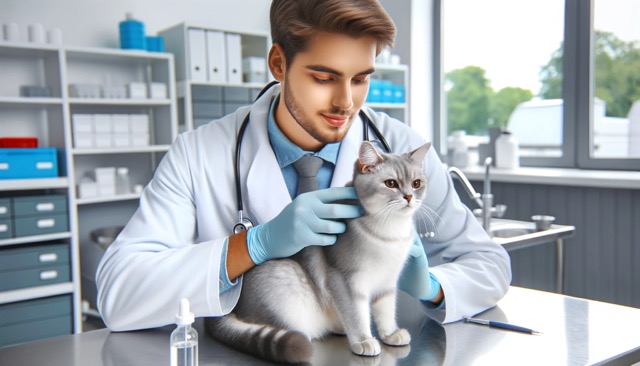
Melatonin Pills VS Implants?
Melatonin is known for regulating sleep (this is mainly why we use it in humans), and just so you know it is also used in other indications in cats as well, like for treatment of uveitis for instance.
Uveitis is an inflammatory condition affecting the eye. The effectiveness of melatonin in treating uveitis is attributed to its well-known anti-inflammatory and antioxidant properties.
Melatonin is commonly available in pill form. When I travel across the world to places like Asia for lectures, I usually purchase melatonin pills, hoping they’ll help me combat jet lag upon arrival!
However, when it comes to managing the estrus cycle in cats, pills are not the ideal choice. Melatonin indeed has a very short biological half-life, lasting only 15-20 minutes, and is poorly absorbed when taken orally.
This means that if given in pill form, it would require frequent, possibly multiple daily dosages to maintain effective levels in a cat’s body, which is both impractical and stressful for the cat and owner.
Implants, on the other hand, offer a sophisticated solution. They steadily release melatonin over an extended period, ensuring a consistent and effective dosage without the need for frequent administration.
This not only makes the process more manageable for cat owners and breeders but also ensures that the melatonin is utilized efficiently in the cat’s body, maximizing its intended effects on estrus suppression.
Administration of a Melatonin Implant
Administering a melatonin implant to a cat is a precise and thoughtful process, designed to ensure the comfort and safety of your furry friend.
The implant is placed directly under the skin, ensuring a consistent and effective release of melatonin over time.
The preferred location for the implant is a small area just behind the cat’s navel, not between the shoulder blades where it might cause a tissue reaction.
This specific region is carefully clipped and disinfected before the implant, about 2 cm in size, is inserted subcutaneously. In some cases, particularly with nervous cats, local anesthesia can be applied to minimize discomfort.
This approach not only ensures a steady release of melatonin for managing the cat’s reproductive cycle but also prioritizes the cat’s well-being throughout the procedure.
What to Expect When Using a Melatonin Implant?

Estrus Suppression
Estrus suppression in cats is vital for breeders to control mating and breeding schedules. Melatonin implants serve as a non-invasive method to temporarily halt the estrus cycle, facilitating planned breeding and reducing unwanted behaviors associated with heat cycles.
Cat breeders can expect estrus suppression in females to last for approximately 4 months following the insertion of an 18 mg melatonin implant.
The implant should ideally be inserted during the interestrus phase of the cat’s reproductive cycle – interestrus is the period in a cat’s reproductive cycle that occurs between 2 heat cycle.
Diverse Responses to Melatonin Implants in Cats
However, even though this alternative sounds appealing in paper, it is important to note that studies have reported clear individual variations in how female cats respond to this treatment.
The melatonin 18 mg implant indeed showed a mean efficacy of 86.4 ± 50.3 days… but with a range from 21 to 277 days. And in some individuals, no effect was noted at all!
These individual differences could be influenced by several factors, including the cat’s breed, physiological characteristics, and even environmental aspects such as seasonality for instance.
The study suggests that the timing of the return to estrus peak, especially noticeable in March compared to the November–February period, might be linked to seasonal changes. This implies that the melatonin implant’s effectiveness, in terms of duration, could be partially dependent on the time of year it is administered.
For breeders, this means that while melatonin implants are a generally effective tool for controlling the estrus cycle, they should be prepared for varying results.
In Male Cats?
When it comes to feline reproductive management for male cats, the use of melatonin implants has not shown significant benefits in suspending reproductive activity.
This is a critical consideration for breeders and cattery owners looking to control mating and manage breeding schedules – and more effectively manage the difficulties associated with maintaining an intact male.
On this end, my preferred alternative here would rather be deslorelin implants. Those have demonstrated efficacy in this area in inhibiting sexual behavior in male cats for extended periods, making it a more suitable choice for those seeking to manage the reproductive activity of male cats in a controlled breeding environment.
Check my blog here to find out more on the use of deslorelin implants:
The Landscape of Cat Spaying: Past, Present and Future
Step-by-step Guide: Implementing Light Protocols for Female Cats
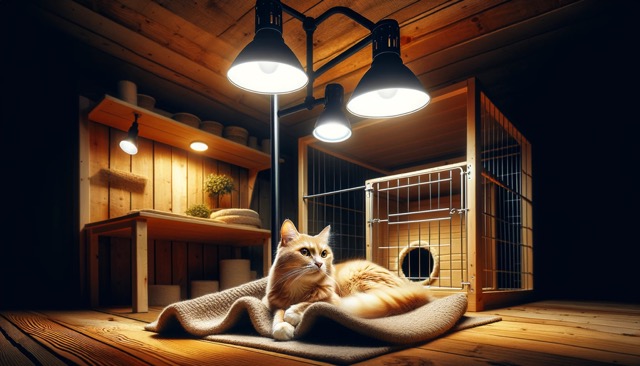
We said it several times: managing the estrus cycle in female cats is crucial for breeders. Light plays a pivotal role in this process… and after reading the previous sections of this blog, I hope it is now clear to you all: you have options.
The following section provides a comprehensive, step-by-step approach to implementing light protocols in your cattery, ensuring effective and practical management of the reproductive cycle in cats.
Step 1: Understanding the Basics of Light and Feline Reproduction
| Remember the importance of light | Cats need about 12-14 hours of light per day to maintain regular reproductive cycles. You want to suppress reproductive cycles? Then target 8 hours of light per day in the cattery. |
| Remember the importance of light intensity | The ideal intensity for breeding cats is around 1500 lux. To accurately measure and maintain this level of light intensity, this is what you can do here: 1. Use an Handheld Lux Meter: These are specialized devices designed to measure light intensity. Breeders can use a handheld lux meter to take readings in different areas of the cattery to ensure consistent light levels. They are easy to use, with digital displays showing the lux level. 2. Use Smartphone Apps: There are various smartphone apps available that can approximate lux levels using the phone’s light sensor. While not as accurate as dedicated lux meters, they can be a convenient and cost-effective starting point. 3. Do a Comparative Assessment: Understanding that 1500 lux is roughly equivalent to a well-lit office, you can compare the lighting in your cattery with such an environment. If the lighting feels similar to an office under full lighting conditions, it’s likely close to the 1500 lux mark. |
Step 2: Setting Up Your Lighting System
| Choose the right bulbs | Opt for bulbs that mimic natural sunlight and provide the required intensity. LED or full-spectrum bulbs are good options. I have a thing for smart bulbs here, as they come with more potential customization options. |
| Location matters | Ensure the light covers the areas where the cats spend most of their time, such as feeding, resting, and play areas. |
| Use a timer | Automate your lighting system with a timer to provide a consistent light-dark cycle every day. This is the type of device I was using back in the days in catteries.. but these days I’d definitely go for a smart lighting system so that I can control all of that from my smartphone. |
Step 3: Monitoring and Adjustments
| Keep records | Document the start date of the light protocol, changes in the cats’ behavior, and any signs of estrus or anestrus. |
| Be patient | It may take some time, up to 2 weeks, before you see noticeable changes in the estrus cycle. |
| Adjust as needed | If you don’t see the desired results, adjust the duration or intensity of light exposure. |
Remember that there can be individual variations! Not all cats respond uniformly to light protocols. Some may be completely unaffected.
Step-by-step Guide: Using Melatonin Implants in Female Cats
For those females that do not respond to light protocols, or if setting up light protocols in your cattery is not convenient, the other way to harness the power of light here is to leverage melatonin implants.

And here is a step-by-step approach to using effectively these implants.
Step 1: Understanding Melatonin Implants
| Know the Basics | Melatonin implants are small devices that release the hormone melatonin over a period, influencing the cat’s reproductive cycle by suppressing estrus. The studies we find in the scientific literature typically use an 18 mg melatonin implant. Remember that in this indication, melatonin pills are NOT a good option. |
| Recognize the Duration | These implants can suppress estrus for about 4 months, which makes them my favourite option in this indication. Keep in mind though that individual responses can vary. |
Step 2: Administering the melatonin Implant
| Veterinary Consultation | The implant is typically placed subcutaneously, often in the area behind the navel to avoid tissue reactions. This is a veterinary procedure, so definitely consult with your veterinarian if you are interested in this option. Remember that in some cases, sedation might be required to safely inject the implant. So always better to seek the support of a veterinary professional here, there is no room for improvisation. On top of that, discussing with your veterinarian can help determine if this is in your specific case a suitable option. Remember that melatonin implants are typically administered during interestrus, which is the time between 2 heat periods in the female cat. Your veterinarian can help you determine if the timing is adequate. |
| Understanding Individual Variability | Be aware that not all cats will respond the same way to the implant, especially when it comes to the duration of estrus suppression. |
Step 4: Monitoring AND Managing the Breeding Schedule
| Observe Behavioral Changes | Monitor the cat for changes in estrus-related behavior, such as reduced vocalization and restlessness. Keep in mind that studies have shown that 33% of female cats can actually exhibit heat behaviour for 2 days following implant administration. |
| Health Monitoring | Melatonin implants are considered safe in cats, and there are typically no associated side effects… but it is always good practice to keep an eye out for any of those ones. If something looks abnormal, always consult with your veterinarian. |
| Strategic Planning | Use the period of estrus suppression provided by the implant to plan breeding activities. |
| Record Keeping | Keep detailed records of implantation dates and observed changes in estrus behavior to inform future breeding strategies. These information will be very useful when discussing with your veterinarian. |
Step 6: Considering Re-Implantation?
| Timing for Re-Implantation? | As mentioned earlier, these implants are typically effective for around 4 months. If you are interested in a longer duration of efficacy, discuss this with your veterinarian as other alternatives (like deslorelin implants) might be preferable in your situation. |
| Evaluating Long-Term Use | Definitely something to discuss as well with your veterinarian. Be aware that studies have shown that when repeating the use of melatonin implants, some individuals might become refractory to its effects. So again, depending on how long you want the effect to persist, it will be important to discuss all the available solutions. |
We are now equipped with powerful tools to optimize how we manage the reproductive cycles of female cats. Light protocols and melatonin implants offer remarkable solutions for those seeking greater control and efficiency, allowing cat breeders to craft a more strategic approach to breeding. I must admit that discovering the influence of light on feline reproduction has been a game-changer for me. This simple yet profoundly effective strategy redefines the breeding landscape, and offers an accessible and impactful way to guide the natural cycles of our beloved felines. Yep, a game changer indeed!

 DR. EMMANUEL FONTAINE