
🇫🇷Lire en Français | 🇪🇸Leer en Español |🇧🇷Leia em português
I remember the day I visited the distressed dog breeders. They had just faced the heart-wrenching tragedy of losing two entire litters of puppies within the first week of their birth. Their eyes were burdened with the heavy weight of loss and despair, a clear indication of the emotional toll this calamity had taken on them. They were not just breeders; they were caretakers who had poured their hearts into their breeding program, having made countless efforts to refine and improve their breed through meticulous genetic selection. But all these endeavors were swiftly obliterated when they lost their precious litters.
While I was there, amidst the palpable grief and worry, I felt compelled to ask them a question, one that seemed relevant in the light of their recent setback. “Do you have a rough idea of your average neonatal mortality rate in your kennel during a normal year?” I asked, attempting to navigate the waters of this sensitive issue.
The moment I uttered these words, I saw them exchange glances, their eyes wide with confusion. It was clear that they had never pondered upon this aspect. They had not ventured into the nitty-gritty of calculating or evaluating such a statistic. This oversight was understandable, considering that every kennel has its unique challenges and realities. But here we were, faced with a crisis situation, having lost a significant number of puppies. It felt essential to ascertain a frame of reference, a marker against which we could compare this heartbreaking event.
The uniqueness of each kennel notwithstanding, having the neonatal mortality rate data can dramatically shift the perspective and approach to handling such crises. This is not merely a statistical number, it is a crucial insight into the overall health and success of a breeding program. This is where the conversation took a turn. “Let me explain why this is something you should calculate,” I said gently, preparing to shed light on a hitherto overlooked aspect, one that could potentially revolutionize their kennel management.

Defining Neonatal Mortality
“Neonatal mortality, in the context of canine breeding, refers to the unfortunate demise of puppies within their initial three weeks of life,” I began to explain to the grieving breeders.
“This phase is of paramount importance in the growth and survival of puppies. Any loss during this period can cast a significant shadow on the success of your breeding program. The influencing factors are diverse, ranging from genetics to maternal care, and even environmental conditions.”
I paused before bringing up the statistical facts, “In several scientific studies carried out globally over the years, it has been consistently observed that the average neonatal mortality rate in canines hovers around 20%. This is the benchmark that you, as breeders, should keep in mind for your kennels. It serves as a critical reference point for assessing your breeding program’s health.”
Drawing their attention towards the implication of these numbers, I continued, “If your kennel’s neonatal mortality rate is below this 20% mark, it suggests that you are managing things reasonably well. However, should it exceed this percentage, which I’ve seen skyrocket to startling heights of 40, 50, or even over 60%, it’s a signal to take immediate action. This alarming statistic calls for a comprehensive evaluation of your kennel management practices, to identify potential issues and provide effective remedies.”
“The importance of tracking this number is twofold,” I emphasized, noting their growing comprehension, “Firstly, it allows for the early detection of any looming problems. High mortality rates of over 60% are clear indicators of severe underlying issues that may require considerable time and effort to rectify. By evaluating the rate regularly, proactive steps can be taken to minimize this statistic. While 20% is the global benchmark, I have encountered kennels where the rate is as low as 5% or even lower. By monitoring and consistently striving to lower this rate, you can set your own benchmark, tailored to your specific circumstances.”
“With this approach, you can not only enhance your kennel’s operation but also prevent unforeseen problems from spiraling out of control,” I concluded. “In my opinion, every dog breeder should maintain a keen eye on this metric. It is a vital tool for the optimal management of your kennel and, ultimately, for the success of your breeding program.”

Determining Neonatal Mortality in Your Breeding Program
“To calculate the neonatal mortality rate in your breeding program, diligent record keeping is essential,” I began, my tone underscoring the significance of what I was about to share. “This requires you to jot down the number of puppies born alive and those who unfortunately pass away within their first three weeks of life. These records provide you the data needed to calculate the neonatal mortality rate, which is typically expressed as a percentage.”
I saw a glint of understanding in their eyes, but I pressed on, eager to provide them with practical advice. “You might prefer the traditional method of using a notebook for record keeping, and that’s perfectly fine. However, in this digital age, there are more efficient ways of handling this task. An Excel spreadsheet, for instance, can automatically calculate this percentage for you. All you need to do is input the data. Essentially, it gives you the ability to track this vital parameter almost in real-time.”
Barely pausing, I continued, “Additionally, there are specialized breeding management software tools available nowadays. They are designed to streamline kennel management, allowing you to focus on data input while the software handles all the complex calculations. What’s more, they provide you with the opportunity to review all the parameters of interest at your convenience. Ideally, you would sit down once or twice a year with your veterinarian, analyze these parameters, and decide on the areas that need improvement and the actions required for enhanced kennel management.”
I concluded my advice with an empowering message, “The bottom line is that there is a multitude of ways to calculate these numbers. Choose the method that suits you best and start tracking as soon as possible. This approach is what differentiates hobbyist breeders from those who treat this as a professional endeavor. Acting professionally benefits not just you but also the health and well-being of your dogs. Remember, your commitment to professionalism will ultimately reflect in your kennel’s success.”

Key Factors Contributing to Neonatal Mortality
“Determining the neonatal mortality rate is undoubtedly crucial,” I began, adding another layer of nuance to the conversation, “but it’s not the whole picture. A key dimension of this problem involves pinpointing when the majority of these losses occur. Is the majority of neonatal mortality happening around the time of parturition, resulting in mainly stillborn puppies or those who pass away within the first 48 hours of life? Or do the losses typically happen during the first, second, or third week of life? This information is absolutely essential, as it helps us identify the most suitable interventions to reduce neonatal mortality.”
Explaining further, I added, “For example, if we see a high incidence of peri-natal death, which refers to deaths around the time of parturition or within the subsequent 48 hours, it may suggest an issue with dystocia, a term that denotes difficulties in giving birth. While some deliveries do naturally take a longer time, a prolonged delivery period can sometimes have dire consequences. So, this would necessitate a closer look at the dam.”

Importance of Management during Pregnancy and Delivery
“Understanding the dam’s gestational journey is paramount,” I stressed, “Did she encounter any problems during her gestation? Were there any noticeable predisposing factors that could indicate a potential problem leading to neonatal mortality? Was her diet during gestation adequately managed? As we know, appropriate nutrition during this period is crucial for optimizing neonatal health. How does the breeder manage the dam’s parturition? These are all questions we must explore to get to the root of the issue.”
“Armed with the answers to these questions, we can begin to address and improve upon certain aspects of kennel management,” I concluded. “Through this targeted approach, we can optimize neonatal health, decrease perinatal mortality, and ultimately enhance the overall success of the breeding program.”

Improving Neonatal Mortality in Your Breeding Program
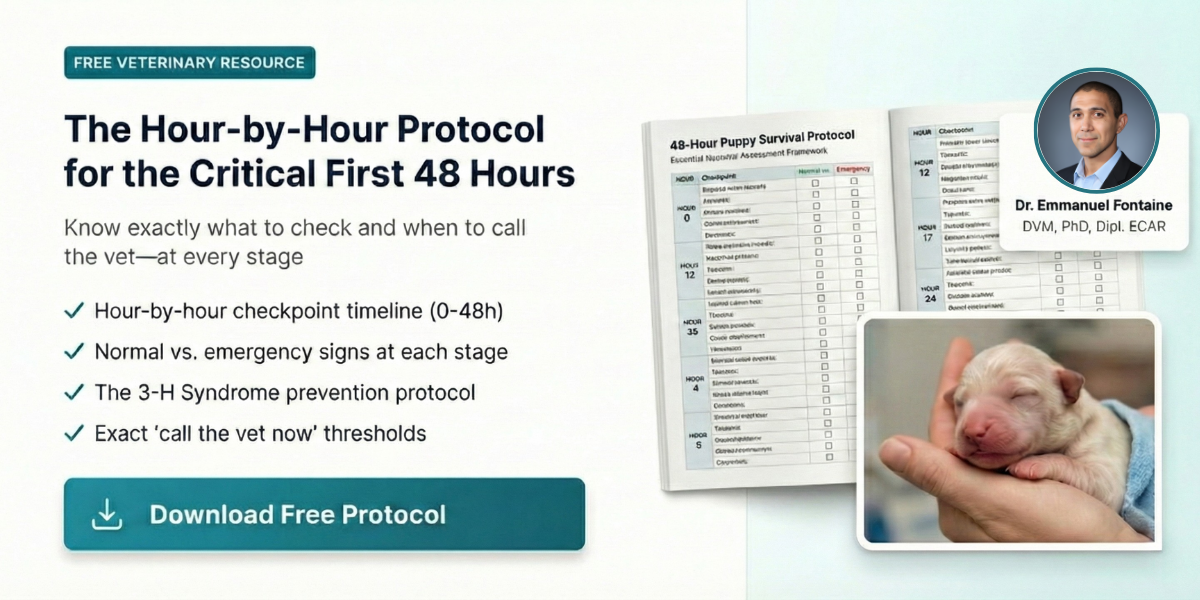
“One phenomenon to watch out for, particularly during the first week of life, is what I often refer to as the ‘3-H Syndrome’ in my lectures. It stands for Hypothermia, Hypoglycemia, and Dehydration. The more I engage with breeders on this issue, the more evident it becomes that the 3-H syndrome is perhaps one of the most prevalent causes of neonatal mortality during this period.”

Then I introduced the subject of infectious causes, “Bacterial infections are a key contender here. They are usually the most common infectious cause of neonatal mortality, with E. coli being the most frequently isolated culprit. So, if you observe clinical symptoms such as skin inflammation, eye inflammation (ophthalmia), diarrhea, or signs of toxic milk syndrome, such as puppies crying post-nursing, it should raise an alarm.”
On the topic of viral infections, I shared my own experience, “Although I often hear about herpesvirus infection as a commonly cited cause of neonatal mortality, I have found this to be less frequent, both in my practice and according to recent scientific literature. However, should canine herpesvirus be responsible for neonatal mortality, it would likely occur within the first three weeks post-parturition. It is a virus of the colder mucosas, a trait shared by newborn puppies whose body temperature is lower than that of adult dogs. This ties in with the Hypothermia aspect of the 3-H syndrome I mentioned earlier. Despite this connection, remember that its incidence isn’t as common as many might think.”
The future of your breeding program lies in your hands, and by paying close attention to maternal, pregnancy, and newborn-related factors, you can help ensure its success and provide the best care possible for your puppies.
So, what actions will you take to lower the neonatal mortality rate in your breeding program to its minimum possible level?
Your Action Plan to Reduce Neonatal Mortality in your Dog Breeding Program
1/ Assess the neonatal mortality rate in your breeding program: Regularly record and monitor the number of newborn puppies and any deaths that occur in the first weeks of life.
2/ Identify the causes of neonatal mortality: Analyze the data and look for common factors, such as congenital anomalies, hypoglycemia, respiratory distress, and infections, to determine the main causes of neonatal mortality in your breeding program.
3/ Implement preventive measures: Based on the identified causes, take necessary steps to prevent or mitigate the risk of neonatal mortality. This may include providing adequate nutrition and prenatal care for the dam, optimizing the environment for the newborn puppies, and providing timely veterinary care.
4/ Monitor the effectiveness of preventive measures: Regularly evaluate the neonatal mortality rate and track any improvements to determine the effectiveness of the preventive measures implemented.
5/ Foster a culture of continuous improvement: Stay informed about the latest research and best practices in puppy rearing and neonatal care. Regularly review and improve the preventive measures and protocols to ensure the ongoing health and survival of newborn puppies in your breeding program.
6/ Seek veterinary advice: If you are struggling to reduce the neonatal mortality rate in your breeding program, don’t hesitate to seek the advice of a veterinarian with experience in neonatal care. They can provide additional guidance and support to help you achieve your goal.

 DR. EMMANUEL FONTAINE
3 thoughts on “Understanding and Managing Neonatal Mortality in Your Dog Breeding Program”