
In my ongoing quest to unravel the mysteries behind infectious causes of diarrhea in kittens, I’m currently reading numerous scientific articles. And after shedding light on feline panleukopenia, the next intriguing topic on my list is Giardia infection. This parasite fascinates me as it epitomizes a crucial mantra I often emphasize: the true value of a diagnostic test lies in its interpretation. Don’t worry, as you continue reading, you’ll grasp the essence of this statement! Admittedly, my search for recent studies didn’t yield much—while there’s no shortage of research, most focus on the role of cats in transmitting Giardia to humans, highlighting its nature as a zoonosis (a disease that can be transmitted from animals to humans). This concern spans across various countries (Iran, Mexico, Italy, Denmark,…), underscoring the global relevance of Giardia. However, determined to uncover more, I dug deeper… and struck gold! I’ve compiled fascinating facts and figures to enrich your understanding of “Giardia kitten poop” and its implications!
- What Exactly is Giardia?
- How Does Giardia Sneak Into Kitten Lives?
- What Are the Clinical Signs of Giardia in Kittens?
- How Do You Pinpoint Giardia in Kittens?
- What Are Your Options When Battling Giardia in Cats?
- How Can You Shield Your Kittens from Giardia?
- How Do You Care for a Cat Battling Giardia?
- Can Your Cat’s Giardia Affect Your Health?
What Exactly is Giardia?
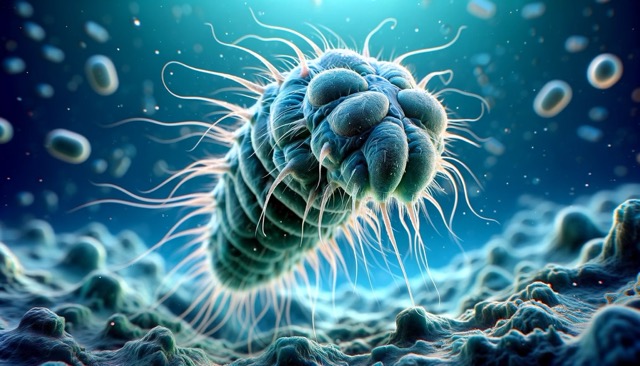
You might have heard the term “Giardia”. For kitten caretakers, cat breeders, and animal shelter workers, fully decoding this term is a must-do mission.
Giardia is a protozoan parasite – a single-celled organism that can cause intestinal infections in cats.
And you might be surprised to learn that Giardia is not a rare guest in our feline friends.
In the US, about 10.3% of cats with clinical signs are infected with Giardia. A study in western Canada reported a similar prevalence, with 9.9% of cat samples testing positive for this parasite.
This indicates that Giardia is a fairly common issue, especially in cats living in communal settings like animal shelters and breeding catteries.
Very important: giardia seems to have a preference for younger cats.
Studies show that kittens under six months old have a higher occurrence rate (of around 30%, compared to 21% in adult cats in a recent study from Mexico). This trend is consistent across various research, highlighting the increased vulnerability of kittens to this intestinal parasite.
How Does Giardia Sneak Into Kitten Lives?
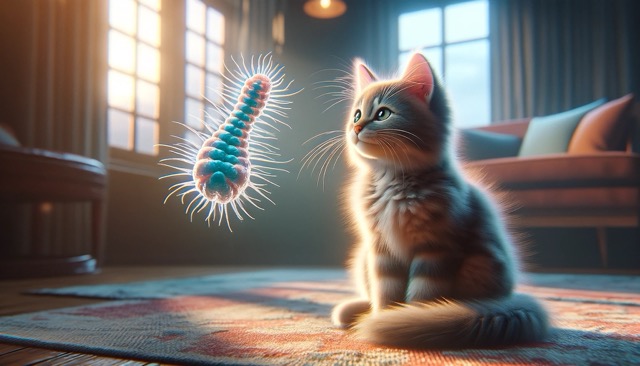
The Giardia Lifecycle: An Intricate Dance
The Giardia lifecycle is a fascinating journey… and somehow, crucial for every pet owner to understand.
It begins with what we call a Giardia cyst – like a tiny, tough protective bubble that shelters the Giardia parasite when it’s outside a cat’s body, in the environment. Think of it as a mini-survival pod that allows the parasite to live for months in water, soil, or even on surfaces, waiting to be picked up by a new host.
And here’s a crucial point to grasp: Giardia cysts are incredibly resilient in the environment, making them a persistent source of infection and re-infection, particularly in places like breeding catteries and animal shelters. This resilience means that effectively managing the environment is key to controlling this parasite. It’s not just about treating the infected; it’s about breaking the cycle of contamination that these hardy cysts perpetuate.
After a cat ingests a Giardia cyst, the clock starts ticking on the infection process. The cyst journeys to the cat’s intestine, where it transforms into an active form of the parasite – the trophozoite -, ready to attach to the intestinal walls.
This transformation can occur quite rapidly, typically within 5 to 16 days weeks after ingestion.
During this period, the parasite begins to multiply and exert its effects, eventually leading to symptoms such as diarrhea – more on that later in this blog.
Following this period, cats begin to release Giardia cysts back into their surroundings, amplifying the risk of spreading and perpetuating the infection.
This cycle of shedding turns them into unwitting agents of contamination, ensuring the persistence of Giardia in the environment.
Why Are Kittens Particularly Vulnerable?
Kittens are almost predestined to cross paths with Giardia, especially during critical growth phases like the weaning period, when they transition from mother’s milk to solid food, and the early pediatric period, extending from the end of weaning around 8 weeks to reaching adult size at about 12 months (or 15 for Maine Coons).
This vulnerability stems from a combination of digestive and immune immaturity.
Their developing digestive tracts and evolving microbiome—the community of beneficial bacteria aiding digestion—make them susceptible as they adapt to new diets.
And at the same time, kittens are also going through what we call the immunity gap.
The concept of the immunity gap is pivotal in understanding why kittens face higher infectious disease risks during this period.
Initially protected by maternal antibodies received through colostrum, this shield wanes between 5 to 8 weeks, creating a gap before their own immune defences fully kick in.
This period of limbo leaves them exposed to threats like Giardia, making “giardia kitten poop” more than just a concern—it’s a call to vigilance for those caring for these young felines.
What Are the Clinical Signs of Giardia in Kittens?

Bear in mind a critical fact: a significant number of cats carrying Giardia show absolutely no symptoms. This silent carrier state is surprisingly common, particularly among adult cats.
Clinical symptoms are most notably seen in kittens, with diarrhea standing out as the predominant and unmistakable sign.
When it comes to Giardia kitten poop, the feces of infected animals frequently emit a strong smell, appear pale, and might include mucus, often distinguished by a telltale yellow hue. This distinctive coloration arises because Giardia disrupts the normal digestion of fats. In puppies, this disruption can sometimes lead to coprophagia, a less common but concerning behaviour not typically observed in kittens.
Remember two crucial points:
– Firstly, don’t be misled—kittens can be silent carriers of Giardia, showing no symptoms at all. I’ve encountered numerous such cases.
– Secondly, should a kitten exhibit any form of diarrhea, Giardia must be on your radar, regardless of the symptoms’ appearance.
While the signs I’ve described are strong indicators, they’re NOT definitive for diagnosis.
Giardia is a master of disguise, and with other formidable pathogens lurking (recall the menace of feline panleukopenia), plus the potential for multiple infections, accurate diagnosis is non-negotiable.
Always seek laboratory confirmation to ensure no stone is left unturned in your kitten’s health.
How Do You Pinpoint Giardia in Kittens?

The Challenge of Diagnosing Giardia
Diagnosing Giardia in cats, especially kittens, is a complex puzzle due to the parasite’s elusive nature.
Giardia infection often flies under the radar because of the parasite’s intermittent shedding and the subtleties in identifying its forms.
The Companion Animal Parasite Council (CAPC) underscores the importance of a comprehensive approach, combining different types of tests (direct smear, fecal flotation via centrifugation, ELISA, PCR) tailored for our furry companions.
They do mention that “repeat testing performed over several days may be necessary to identify infection” – which reminds us that this is NEVER an easy task.
One thing I find VERY important though: they recommend we test SYMPTOMATIC cats.
A symptomatic cat shows clear signs or symptoms of illness, which in the context of Giardia, often manifests as diarrhea, whether it’s consistent or comes and goes.
This distinction is crucial because it directly influences how we interpret diagnostic tests.
Remember, the true power of a diagnostic test lies not just in its results, but in how we understand and act on these findings.
In the case of Giardia, the way we read the test can lead to a significant decision: whether to treat the kitten or not.
This underscores the importance of clinical symptoms as a key factor in our decision-making process.
Fecal PCR: the go-to diagnostic test?
When it comes to the nitty-gritty of fecal tests, fecal PCR has become a go-to in many instances.
Fecal PCR is a cutting-edge diagnostic tool that I frequently turn to, particularly in the complex world of kitten diarrhea.
This isn’t just any test; modern fecal PCR panels can screen for a multitude of pathogens simultaneously, making it an invaluable asset in environments like catteries or animal shelters where multiple infectious agents could be at play.
One innovative approach we employ is the use of “pooled PCRs,” where we combine fecal samples from several diarrheic kittens. This strategy enhances our chances of pinpointing the elusive pathogen responsible for the outbreak.
This method is particularly beneficial for detecting Giardia, notorious for its intermittent shedding, which can sometimes result in a missed diagnosis with a single test.
It’s important to note, however, that when we opt for pooled PCRs, our aim shifts towards a collective diagnosis for the entire group, be it a cattery or shelter, rather than pinpointing an individual kitten’s ailment.
When it comes to diagnosing a single kitten, the strategy diverges, underscoring the importance of a tailored discussion with your veterinarian.
Despite the prowess of PCR, it’s wise to heed the Companion Animal Parasite Council’s (CAPC) guidance.
Indeed, some authors caution against over-reliance on PCR alone, given its limitation of failing to amplify DNA in approximately 20% of Giardia-positive samples.
This brings us back to a fundamental principle: the power of combining diagnostic tests.
Whether facing an outbreak in a communal setting or addressing diarrhea in a lone kitten, integrating various diagnostic methods, as recommended by experts, is key. This holistic approach not only enhances accuracy but also ensures that our furry friends receive the most effective care possible.
Always remember, that navigating these decisions with your veterinarian is crucial, especially when the health of a vulnerable kitten is at stake.
The SNAP Giardia Test: A Quick Check
For a rapid assessment, in clinics we often use the SNAP Giardia Test.
It emerges as a convenient in-house tool, delivering results in just 8 minutes.
Its simplicity, speed, and cost-effectiveness make it an attractive option, though once again it’s best used as a supplementary test alongside more comprehensive methods to ensure no parasite, Giardia or otherwise, slips through the net.
What Are Your Options When Battling Giardia in Cats?

The Role of Fenbendazole and Metronidazole
The Companion Animal Parasite Council (CAPC) suggests a couple of paths: Fenbendazole, or Metronidazole. Some even advocate for a combined force of the two, aiming to bolster the chances of success.
On this part, you can refer to their website for more information.
One thing though, that I think is truly important.
I vividly recall the moment in a conference room when the stark impact of metronidazole treatment on puppies was unveiled.
The research pointed to antibiotic-induced dysbiosis, a significant disruption in the delicate balance of the digestive microbiome.
Dysbiosis is akin to throwing a wrench into the complex ecosystem of beneficial bacteria in the gut, leading to severe alterations that can ripple through an animal’s health.
Today, many experts view the digestive microbiome as an essential organ in its own right, with disruptions potentially carrying life-long consequences.
This revelation isn’t a call to abandon metronidazole or other antibiotics entirely; their use must be judicious and rooted in a thorough discussion with your veterinarian, especially when clinical symptoms in the animal raise concern.
However, it serves as a potent reminder that reaching for antibiotics should not be our knee-jerk reaction to diarrhea in kittens.
A recent webinar I watched echoed this sentiment, emphasizing that nutrition should often be the first line of defence in managing acute diarrhea cases in veterinary medicine, rather than immediately resorting to drugs.
This perspective is more than a mere digression; it’s a crucial reminder of the need to approach treatment with a holistic mindset, considering the long-term well-being of our feline companions.
To Treat or Not to Treat?
And here’s where the plot thickens: not every cat carrying Giardia needs to go through treatment.
Asymptomatic cats (and kittens), those stealth carriers showing no signs of distress, might not require intervention.
Again, this is where it will be crucial to discuss the treatment options (and if they are needed) with your veterinarian.
A Word on Giardia Vaccination
There used to be a vaccine against Giardia (at least in the United States), you might find out about it when you do some research over the internet.
And while the idea of vaccinating against Giardia might sound appealing, the CAPC stops short of a blanket recommendation. The current consensus leans towards vaccination being a strategic move in specific scenarios rather than a standard protocol.
That being said, from what I have heard, the vaccine has been discontinued… so this is no longer really an option.
How Can You Shield Your Kittens from Giardia?

In my recent blog on diarrhea in kittens, I laid out several preventative measures that are just as crucial when it comes to warding off Giardia infections.
Embracing Medical Prophylaxis
A cornerstone of prevention is a tailored deworming protocol, particularly vital if Giardia looms as a significant threat.
In the world of breeding catteries, an annual ritual we advocate for is pooled fecal analyses.
This involves collecting and testing samples from various life stages within the cattery—be it the frolicking kittens, the vigilant adults, or the nurturing pregnant queens.
The aim? To map out the parasitic landscape of the cattery.
It’s a given that parasites will be present, but understanding which ones allow us to evaluate and, if necessary, recalibrate our deworming strategies to ensure they’re hitting the mark.
And a question that often echoes in the corridors of veterinary clinics is about the “best” deworming protocol.
The truth is, it’s a fluid concept. The “best” protocol is one that’s responsive to the specific parasites at play in your environment.
On my end, I typically initiate a broad-spectrum approach targeting the “usual suspects”: roundworms, hookworms… Giardia and tapeworms! Check the CAPC parasite prevalence map to understand my selection!
From there, it’s all about fine-tuning the strategy based on fecal test outcomes or in response to any diarrhea outbreaks, particularly those implicating coccidia or Giardia.
And for those diving into the intricacies of infection prevention, the Companion Animal Parasite Council (CAPC) website once again is an invaluable resource.
Their quick product reference guide is a treasure trove of information, offering insights into therapeutic options tailored to combat identified parasites.
It’s a starting point for informed discussions with your veterinarian about crafting a deworming protocol that’s both effective and specific to the needs of your feline companions.
Why is Sanitary Prophylaxis Your Best Ally Against Giardia?

Sanitary prophylaxis is essentially about maintaining cleanliness and hygiene to prevent disease. It’s the unsung hero in the battle against infections, especially in communal settings like animal shelters and breeding catteries, where the risk of disease spread is heightened.
For environments teeming with vulnerable felines, sanitary measures aren’t just important—they’re the foundation of health and safety.
When facing an adversary like Giardia, the battle often begins with something as simple yet powerful as diligent poop scooping.
Given that Giardia cysts can lurk menacingly in the environment for months, removing feces daily is a critical first line of defence.
And while scooping is essential, it’s the subsequent disinfection that truly fortifies your fortress against Giardia.
The resilience of Giardia cysts poses a challenge, yet certain disinfectants like bleach and quaternary ammonium compounds have proven their mettle.
However, among the array of options, steam cleaning holds a special place in my preventive strategy.
The sheer heat from a steam cleaner has the power to breach the defences of Giardia cysts, ensuring they don’t overstay their welcome in your environment. ]
Something important: when it comes to kittens, the litter box is a critical zone for hygiene management.
Proper care and maintenance of litter boxes are paramount, as outlined in a previous blog of mine.
For those raising kittens or managing a cattery, I highly recommend diving into that resource for a comprehensive guide on maintaining a clean and safe litter environment.
In the grand scheme of preventing “giardia kitten poop,” sanitary prophylaxis stands out not just as a strategy, but as a necessity. It’s about creating a clean, safe space where our feline friends can thrive, free from the threats lurking in unseen places.
The Critical Role of Nutrition
An often-underestimated ally in the battle against diarrhea in kittens, including the prevention of “giardia kitten poop,” is indeed nutrition.
As discussed earlier, the transition period of weaning is notorious for triggering diarrhea, a phenomenon rooted in the simultaneous digestive and immune immaturity kittens face.
The approach to nutritional weaning—tackling the what, how, and how much of feeding—is pivotal. It’s not just about filling their bellies; it’s about nurturing their developing systems.
Proper weaning can bolster stool quality, fortify the digestive microbiome, and create a robust defence against the intestinal havoc Giardia seeks to wreak.
This critical interplay between nutrition and health is something I’ve delved into in previous blogs, offering strategies to harness nutrition as a tool for prevention:
What To Do If My Kitten Has Diarrhea: Essential Care Tips
Probiotics & More: Purr-fect Path to Kitten DIgestive Wellness
Moreover, the choice of diet can play a significant role in immune support.
Diets enriched with antioxidants or beta-glucans are designed to enhance the immune response to vaccination… but you might wonder here: what’s the point? I told you indeed that for Giardia, there is no specific vaccination.
These nutrients are in fact functional components that can prime the immune system, therefore potentially offering kittens a better fighting chance against infections like Giardia.
When selecting a diet for kittens, it’s wise to look for those that mention immune support on their packaging—a small detail that could make a significant difference!
How Do You Care for a Cat Battling Giardia?

When managing a cat with Giardia, the preventive measures we’ve discussed in the previous section hold their ground.
Emphasizing a highly digestible diet becomes even more crucial (in addition to the medical treatment your veterinarian prescribed obviously), particularly if diarrhea is present.
Opting for a therapeutic diet designed for gastrointestinal issues can provide the gentle support your kitten’s digestive system needs during this time.
The Companion Animal Parasite Council (CAPC) offers additional guidance for managing Giardia, and a noteworthy recommendation is the regular bathing of the affected animal.
Since cats can harbor Giardia cysts in their fur, bathing can significantly reduce the risk of self-reinfection during grooming. A weekly bath could serve as a practical measure in this battle.
However, it’s essential to tread lightly with bathing, especially in cats. Unlike dogs, cats may find the experience stressful, which can be counterproductive.
Stress in cats can lead to elevated cortisol levels, dampening their immune response—a scenario we want to avoid, particularly when dealing with Giardia.
The mantra “cats thrive on familiarity and routine” rings especially true here.
If you believe your cat can adapt to regular baths without undue stress, it may be a viable option. Many cat breeders successfully acclimate their cats to bathing, indicating it can be a stress-free experience for some.
Yet, it’s imperative to gauge your cat’s tolerance to avoid adding stress to an already challenging situation, especially for kittens dealing with “Giardia kitten poop.”
Can Your Cat’s Giardia Affect Your Health?

Giardia: A Zoonotic Concern?
Giardia often comes up in discussions about zoonoses, diseases that can jump from animals to humans. Understanding this potential risk starts with recognizing that not all Giardia are the same.
They’re categorized into “assemblages,” which are essentially different types or groups of Giardia, each with its own characteristics and host preferences.
Cats typically harbor Assemblage F, which is generally considered feline-specific. However, Assemblages A and B have a broader host range, including humans.
And while the common narrative suggests that human infection from feline Giardia is rare due to the prevalence of Assemblage F in cats, geographical variations can paint a VERY different picture.
Studies from diverse regions like Iran, Mexico, and Italy have reported Assemblage A as the predominant type in cats, indicating a potential risk to human health.
The risk of cross-species transmission seems to hinge significantly on where you are in the world.
Advanced PCR testing can pinpoint the exact assemblage of Giardia, offering crucial insights, especially in areas where the human-infective types are more common.
Safeguarding Human Health
Despite these concerns, the overall risk to humans is relatively low, especially with proper hygiene practices.
The simple act of washing hands after interacting with cats can significantly mitigate the risk of transmission. This precaution is particularly vital for children and anyone in close contact with cats, serving as a fundamental preventive measure in homes, catteries, and shelters alike.
For individuals with weakened immune systems, the stakes are higher.
In such cases, identifying the Giardia assemblage becomes not just a matter of academic interest but a necessary step for ensuring safety.
Tailored precautions can then be implemented to protect those at heightened risk.
While the landscape of Giardia infection in kittens hasn’t shifted dramatically in recent years, I am glad I took the time to revisit the topic. It serves as a crucial reminder of its prevalence and impact – and this exploration offered me a chance to consolidate essential knowledge for kitten owners, cat breeders, and animal shelter workers alike. As my former boss and mentor wisely said, “Teaching is repeating,” and the insights shared here are vital, given Giardia’s notorious role in causing kitten diarrhea. This blog aims to arm you with the knowledge and strategies needed to mitigate the effects of Giardia. After reading it, I hope you realize that to protect our feline friends from this common adversary, we are not powerless – there’s much we can do!

 DR. EMMANUEL FONTAINE