
Lately, I’ve been receiving many questions about cleft palates in dogs and cats. This is a topic that I believe every dog and cat breeder, as well as anyone caring for newborn puppies and kittens, needs to understand. Cleft palate is the number one congenital abnormality seen in newborns. It’s more common than most people think, and it can have serious implications. That’s why I’ve decided to revisit and update this blog. My goal is to give you a clear picture of what to expect if you’re dealing with cleft palates and how you can better support those fragile newborns. Whether you’re a breeder or just someone dedicated to animal care, this information will help you act with confidence.
- What Exactly Is a Cleft Palate in Dogs and Cats?
- What Causes Cleft Palate in Dogs and Cats?
- How Can You Spot a Cleft Palate in Dogs or Cats?
- How Is a Cleft Palate in Dogs and Cats Treated?
- Can a Dog or Cat with a Cleft Palate Live a Normal Life?
What Exactly Is a Cleft Palate in Dogs and Cats?
Imagine a newborn puppy or kitten trying to nurse, but instead of the milk nourishing them, it goes straight into their nose.
That’s the reality of a cleft palate—a congenital defect that can make something as natural as feeding a life-threatening challenge.
The condition is more common than you might think, affecting many newborn dogs and cats, and without quick action, their chances of survival drastically drop.
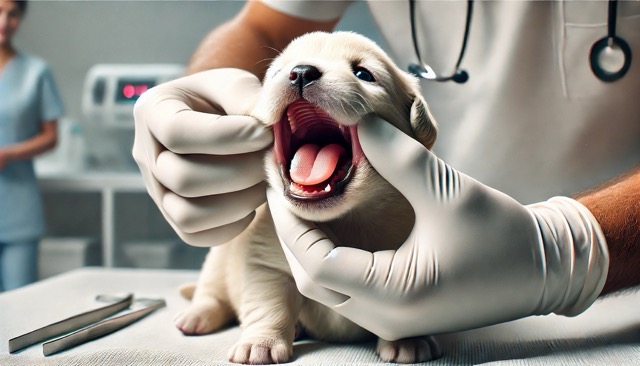
Understanding the Anatomy of a Cleft Palate
A cleft palate is essentially a gap in the roof of the mouth, separating the nasal cavity from the oral cavity.
It can be as small as a tiny slit or as large as a complete separation.
Puppies and kittens with this condition can’t suckle properly because milk seeps into their nasal passages, risking infections like pneumonia.
You might think this is rare, but it’s actually THE most common oral cavity defects in newborn pets.
How Common Is Cleft Palate in Pets?
A recent study showed that about 3% of all puppies are born with some sort of cleft palate defect.
It is particularly frequent in certain breeds like Boston Terriers and French Bulldogs.
| Breed | Incidence of the disease |
| Boston Terrier | 14.3% |
| French Bulldog | 9.8% |
| Cavalier King Charles Spaniel | 7.5% |
| English Bulldog | 4% |
| Pembroke Welsh Corgi | 2.3% |
| Miniature Schnauzer | 2% |
| Cardigan Welsh Corgi | 1.9% |
| Labrador Retriever | 1.8% |
| Australian Shepherd | 1.7% |
| Shetland Sheepdog | 1.2% |
| Dalmatian | 0.9% |
| Italian Greyhound | 0.9% |
| Weimaraner | 0.7% |
| Parson Russell Terrier | 0.5% |
| Beagle | 0.3% |
| Shiba Inu | 0% |
| Irish Setter | 0% |
| Rottweiler | 0% |
| Brittany Spaniel | 0% |
| Poodle | 0% |
| Doberman Pinscher | 0% |
In some breeds and lines, cleft palates are almost non-existent—this is encouraging and shows that genetic selection can effectively reduce the occurrence of the problem.
However, it is important to keep in mind that it can be observed in any dog breed.
Feline cleft palate is less common, but it still poses a serious threat to kittens.
Some cat breeds, like Persians, may be more susceptible.
Breeders and caretakers need to be on high alert for this condition—especially in newborns who struggle to feed or show signs of milk coming from their nose.
It’s a problem that’s hiding in plain sight, and if you don’t know what to look for, it’s easy to miss.
Are All Cleft Palates the Same?
Not all cleft palates are created equal.
Some affect the entire roof of the mouth, while others are smaller and only impact a section.
The severity varies, but the message stays the same: without intervention, these newborns are in danger.
The condition can range from an incomplete cleft, which might only affect the soft palate, to a complete cleft that stretches from the front to the back of the mouth.
Regardless of the size or type, these pets need help fast—whether through surgery or specialized care.
What Causes Cleft Palate in Dogs and Cats?
What if I told you that there are three main causes behind cleft palate development in newborn puppies and kittens?
Genetics. Exposure to teratogens. And finally, nutrition.

Genetics as the Primary Cause
The core truth is that genetics play the biggest role in whether a puppy or kitten is born with a cleft palate.
Some breeds, like Bulldogs or Persians, are predisposed to this condition.
In some breeds, we have a clear understanding of the genetic causes behind cleft palate.
For instance, in Brittany Spaniels and Nova Scotia Duck Tollers, it has been demonstrated to be an autosomal recessive problem.
This means both parents must carry the defective gene for a puppy to be affected. If only one parent carries the gene, the puppy won’t show signs of the defect but can still pass the gene to its offspring.
Some genetic tests can now check if an animal carries the defective gene for cleft palate, especially in certain breeds where we know the condition is linked to genetics. This helps breeders make more informed decisions.
In other breeds, cleft palate is described as polygenic, meaning it’s caused by multiple genes, making it more complex to predict and manage.
In most breeds, however, we still don’t fully understand the genetic determinism behind cleft palate.
Breeders should use this information carefully.
In cases where cleft palate is known to be autosomal recessive, ideally, we would remove carriers from the breeding program to avoid passing on the defective gene.
However, this could reduce genetic diversity within the breed, which can lead to other health issues.
To avoid this, breeders can mate carriers with individuals that do not carry the gene, gradually decreasing the incidence of cleft palate without compromising the breed’s genetic health.
When cleft palate is suspected to be polygenic, or if the genetic cause is unknown, the best approach is to remove any affected puppies from the breeding program to prevent passing the condition on to future generations.
To date, to my knowledge, data on this topic in cats is scarce, but we should adopt the same approach as mentioned above for dogs to manage the condition and reduce its incidence in breeding programs.

I am on a mission to learn everything about dog and cat breeding. Sign up to my newsletter to follow my journey, and receive exclusive content and offers!
Environmental Triggers During Pregnancy
Here’s something you might not expect: exposure to teratogens during pregnancy can also cause cleft palate in dogs and cats.
Teratogens are substances that interfere with normal fetal development, leading to congenital defects.
In the case of cleft palate, certain medications or environmental factors can disrupt the formation of the palate during gestation, causing this serious condition.
Some common teratogens that can trigger cleft palate include:
– Certain antibiotics
– Corticosteroids
– Aspirin
– Antifungal drugs
If a pregnant dog or cat is exposed to any of these substances, the risk of cleft palate increases significantly.
For example, if a breeder unknowingly gives a pregnant dog corticosteroids or certain antibiotics, it could disrupt the delicate development of the fetus, leading to oral cavity defects.
These dangers are not just theoretical—they’re real and present in everyday situations. Imagine a cat owner administering over-the-counter medications without realizing the risk to the unborn kittens.
To prevent this, prenatal care is absolutely essential.
Always consult a veterinarian before administering any medication to a pregnant pet and ensure they have a safe, stress-free environment during gestation.
Proper prenatal care can go a long way in reducing the risk of cleft palate caused by teratogens.
The Role of Nutrition
Cleft palates are considered midline defects, meaning they result from issues that affect the development of a structure called the neural tube.
The development of this crucial structure is influenced by folic acid, a vital vitamin. In humans, there is a substantial body of research suggesting that folic acid supplementation can help reduce the incidence of cleft palates, and similar findings have emerged in dogs.
A 2013 study conducted in Paris revealed that 22% of female dogs were deficient in folic acid at the beginning of their breeding season, despite being fed a maintenance diet and being in optimal body condition.
Although the study only involved 48 dogs, making it difficult to draw definitive conclusions, it serves as a clear reminder that folic acid deficiency is a real issue.
This evidence suggests that folic acid supplementation could be worth considering to help lower the risk of cleft palate development in dogs.

How Can You Spot a Cleft Palate in Dogs or Cats?
Spotting a cleft palate in newborn puppies or kittens isn’t always easy, but the sooner you can recognize the symptoms, the better their chances of survival.

Visible Symptoms in Puppies and Kittens
One of the first symptoms of cleft palate you’ll likely notice is difficulty feeding.
Puppies and kittens with a cleft palate struggle to suckle, as milk easily escapes through the gap in the roof of their mouth and into the nasal passages.
You might see milk dripping from their nose, which is a key sign of this condition.
Alongside feeding issues, nasal discharge is common, and affected animals may cough or sneeze frequently.
In more severe cases, there could also be noticeable facial abnormalities, such as a cleft lip, where the defect is visible externally.
These signs of cleft palate in newborns are often immediate and obvious, but in some cases, especially when the cleft is small or incomplete, the signs may be more subtle.
Regardless, if you see any of these symptoms, prompt action is necessary to prevent further complications like aspiration pneumonia, which can develop if liquids enter the lungs.
Behavioral Indicators of Feeding Issues
Beyond the visible physical signs, there are also behavioral indicators that something may be wrong.
A puppy or kitten with a cleft palate often exhibits failure to thrive—they may not gain weight at the same rate as their littermates or appear weaker and more lethargic.
Their feeding behaviour is irregular; they may appear hungry but struggle to latch or suckle effectively.
Unusual breathing can also be an early warning sign.
Because a cleft palate can allow milk or food to enter the nasal cavity, these animals may experience labored or noisy breathing, especially while eating.
If a newborn seems unusually quiet or has persistent breathing issues, it’s a sign that veterinary attention is needed.
Diagnosing Cleft Palate: What to Look For
Veterinarians rely on oral exams to confirm the diagnosis of a cleft palate.
During an oral exam, a vet will carefully inspect the roof of the mouth for any gaps or irregularities.
In some cases, the cleft is immediately visible, but in other cases, it can be harder to detect, particularly if it only affects the soft palate.
How Is a Cleft Palate in Dogs and Cats Treated?
Cleft palate is a serious condition, but with the right treatment, pets can lead healthy and fulfilling lives.
So, how is this complex issue treated?
The primary option is surgical repair.
Surgical Options for Cleft Palate Repair
When it comes to cleft palate surgery, the goal is to close the gap in the palate and restore normal function.
Surgery is typically the most effective way to repair the defect, allowing puppies and kittens to eat, drink, and breathe normally.
The procedure usually involves repositioning the tissue to close the opening, and in some cases, multiple surgeries may be required to fully correct the cleft.
Because cleft palate surgery is usually performed when the pet is around 3-4 months old, they need special care in the meantime.
Until the surgery can be done, the puppy or kitten must be tube-fed to avoid the risk of aspiration, which can cause severe lung infections.
There are specialized nipples developed specifically for cleft palate puppies, which can make bottle-feeding them easier and safer.
Additionally, I came across publications in the scientific literature discussing the use of palatal prostheses for puppies and kittens with cleft palates.
This seems like a promising option as it allows them to continue nursing from their mother.
However, to my knowledge, this solution is not widely available yet, and you would need to work with a veterinary dentist or a prosthodontist to explore this option and potentially have a custom prosthesis made.
When they are weaned, typically around 3 weeks, transitioning them to dry food reduces the risk of aspiration because they are no longer relying on liquids.
However, the risk of choking remains, depending on the size of the cleft, so it’s important to closely supervise their eating during this period.
The success of cleft palate surgery depends on the size and severity of the cleft, but most pets recover well and go on to live normal lives.
However, the process doesn’t end with surgery.
Post-surgery recovery is a critical phase, and careful monitoring is essential to ensure proper healing and prevent complications such as infection or breakdown of the surgical site.
Post-Surgical Care: What to Expect
Once the surgery is complete, post-surgery care for cleft palate is essential to ensure a successful recovery.
During this time, the pet will require careful monitoring and restricted activity to prevent any strain on the healing tissue.
Feeding may need to be modified—using soft or liquid diets—to avoid placing too much pressure on the newly repaired palate.
The healing process usually takes several weeks, and complications like infection, swelling, or breakdown of the surgical site are possible.
Therefore, owners must keep a close eye on their pets and follow their veterinarian’s instructions carefully.
Can a Dog or Cat with a Cleft Palate Live a Normal Life?
One of the biggest concerns for pet owners facing a cleft palate diagnosis is whether their pet can live a normal, happy life. The good news is that with the right treatment and ongoing care, most pets with cleft palate can thrive.
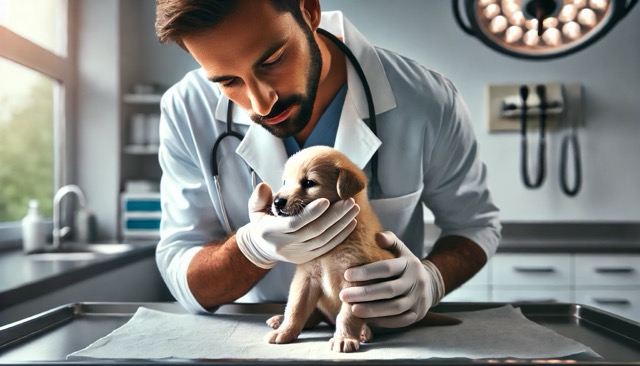
Long-Term Health Considerations
For those puppies and kittens who undergo cleft palate surgery, most go on to live full, healthy lives.
However, even after surgery, these pets may have some ongoing issues.
Managing health post cleft palate surgery includes monitoring for any breathing difficulties, recurrent infections, or dental problems that can arise from the structural abnormalities in the mouth.
Quality of Life After Surgery
For many pets, the quality of life after cleft palate treatment is excellent.
Once they’ve fully recovered from surgery, these dogs and cats are typically able to eat, drink, and play normally.
While some may require a bit more attention during recovery or need lifelong adjustments, their overall life expectancy and ability to enjoy life are generally unaffected.
It’s important to note that life expectancy post cleft palate surgery is comparable to that of any healthy pet, as long as the condition is properly treated and managed.
The key to maintaining a good quality of life in cleft palate pets is ensuring that they receive the right care during the healing process and that any potential complications are addressed quickly.
With ongoing love and attention, these pets can enjoy a normal, active life alongside their families.
I’m glad I took the time to revisit and rewrite this blog. It allowed me to inject the latest knowledge on cleft palate, information that I’m confident will be helpful for anyone facing this challenging condition. From understanding the causes to exploring treatment options, knowing how to navigate cleft palate in puppies and kittens can make all the difference.
But one important question remains: How can this be prevented? The good news is, there are steps that breeders and pet owners can take to reduce the risk of cleft palate. This is a critical topic, and it’s exactly what we’ll dive into in the next blog, which you can access here.

One of the most common challenge we encounter in breeding kennels is NEONATAL MORTALITY.
It can be very frustrating… even heart-breaking.
Good news though : you can do something about it !
We now have more knowledge than ever in this discipline.
In recent years, new research brought us a much better understanding of what can be done to optimize the health of newborn puppies.
By taking this course, this is what you will learn indeed !

 DR. EMMANUEL FONTAINE
One thought on “Cleft Palate in Puppies & Kittens: Essential Insights”