
🇫🇷 Lire en Français | 🇪🇸Leer en Español | 🇧🇷Leia em português
Newborn puppies, despite their tiny size, can be… surprisingly vocal! Right after birth, these little furballs express themselves through a symphony of sounds, ranging from soft whimpers and gentle mews… to more insistent yelps and persistent cries. When I discuss this topic in my presentations, people tell me that often, what catches their attention the most is what they interpret as ‘crying.’ And they wonder: “What does it mean?” In this blog, we’ll explore the reasons behind these cries, and decipher the language of newborn puppies. And when it comes to newborn puppy care, this is an important skill to have I believe!
- Why Is My Newborn Puppy Crying?
- How to Comfort a Crying Newborn Puppy
- Common Health Concerns in Crying Newborn Puppies
Why Is My Newborn Puppy Crying?

Understanding Newborn PuppY Behaviour
When it comes to newborn puppies, understanding their basic needs is crucial for their healthy development. These little bundles of joy, though fragile, communicate their needs in various ways, and being attuned to their behavior is key for any pet owner or caregiver.
From the moment they are born, puppies rely heavily on their mother and the environment provided by their caregivers. And one of the most noticeable aspects of newborn puppy behavior is their vocalizations. While these may seem like mere whimpers or squeaks, they are actually critical indicators of the puppy’s well-being.
Actually, newborn puppies crying is a normal part of their early development and can be influenced by various factors, including maternal behavior and environmental conditions.
Those are actually the two elements you should always assess when you hear them crying: the mother AND the newborn puppies’ environment.
A newborn puppy’s cry often sounds like a high-pitched, repetitive whimper or yelp. And overall, crying in newborn puppies is a sign of their dependency and a call for maternal care – which is crucial for their development obviously!
As a caregiver, observing and responding to these behaviors is vital. Each whimper, movement, or change in behavior is a communication from the puppy about their needs.
Signs of Hunger in Newborn Puppies: Decoding Their Needs
Hunger is a critical aspect of the newborn puppies’ behavior. We often say that during the first couple of weeks after they are born, newborn puppies have two main activities: sleeping… and nursing!
And a puppy that is not nursing well might cry more persistently or appear restless basically. This behavior calls for a closer inspection to ensure they are receiving adequate nutrition, either from their mother or, if necessary, through hand-feeding.
| Persistent Crying | One of the most obvious signs of hunger in a newborn puppy is continuous crying. Unlike their usual vocalizations, a hungry puppy’s cry tends to be more urgent and persistent. This is their primary way of alerting their mother, or you, that they need to be fed. |
| Restlessness | A hungry puppy often appears restless. You might notice them moving around more than usual, especially around their feeding area or whelping box. This restlessness is a search for food, indicating it’s time for their next meal. |
| Nursing Behavior | Pay attention to how a puppy nurses. A puppy that latches on and off frequently or seems to struggle while nursing may not be getting enough milk. This could be a sign of hunger, necessitating a check on their feeding process or the mother’s milk supply. |
| Physical Appearance | A thin or underweight appearance can also indicate hunger. Puppies should have a rounded, not bloated, belly. A puppy that looks thinner than its littermates might not be getting enough milk. |
The Impact of Cold on Newborn Puppies
Right after birth, newborn puppies experience a significant drop in body temperature, which can cause crying.
This instinctive crying is a natural response to their very first experience in the outside world.
Right after birth then, crying is therefore a typical and healthy sign in newborn puppies, often used in evaluating their vitality through methods like the APGAR scores. I strongly suggest incorporating these assessments in your kennels to monitor their well-being effectively for sure!
| Lethargy | One of the first signs of a cold puppy is lethargy. If a puppy is less active than usual or seems weak, it could be a reaction to low temperatures. |
| Whining or Crying | Persistent whining or crying can be a sign of discomfort due to cold. |
| Cold to Touch | A puppy’s body, especially their ears and paws, will feel cold to the touch if they are not maintaining a proper body temperature. |
| Refusal to Feed | Cold puppies may refuse to nurse or show less interest in feeding. This is a critical sign as feeding is essential for their growth and maintaining body heat. |
Newborn puppies are highly predisposed to hypothermia as they cannot regulate their own body temperature during the first 3 weeks after birth. Check this blog to learn everything you need to know about this condition and how to prevent it:
Newborn Puppies Temperature: The Critical Factor You Can’t Ignore
| 👉🏽 Feeding newborn puppies isn’t just about giving them milk—there are plenty of critical factors to consider to ensure they thrive. From proper nutrition to feeding techniques, every detail matters for their health and development. Check out my blog for a full guide on what to do here. |
| 👉🏽 Here is the milk replacer I recommend in newborn puppies. It is also available through a professional program. Learn more about options in the USA and Canada. |
Helping Puppies with Urination and Defecation
Newborn puppies don’t have the ability to urinate or defecate on their own during the first 3 weeks after birth. Normally, their mother stimulates these functions by licking the genital and anal areas.
This not only keeps the puppies clean but also encourages the necessary bodily functions that are crucial for their health.
Properly assisting newborn puppies with urination and defecation is a vital aspect of newborn puppy care, because if the mother doesn’t adequately stimulate them, the puppies may experience constipation, leading to discomfort… and resulting in their crying.
| Stimulation Technique | If the mother is not present, or if she is neglecting this duty, it’s up to the caregiver to assist. This can be done by gently rubbing a warm, damp cloth or cotton ball over the puppy’s genital and anal areas. The motion should be soft and circular, mimicking the mother’s licking action. |
| Frequency of Stimulation | Puppies need to be stimulated to urinate and defecate after every feeding. For newborns, this could mean every two to three hours, including during the night. |
| Watching for Signs of Digestive Issues | Be alert to any changes in the puppy’s elimination patterns. Constipation, diarrhea, or any abnormalities in their waste can indicate digestion problems and warrant a consultation with a veterinarian. |
Recognizing Illness Symptoms in Puppies
Being vigilant about illness symptoms in puppies is critical, especially during their early stages of life. Newborn puppies are particularly vulnerable due to their developing immune systems. Understanding and recognizing the signs of health issues can ensure prompt and appropriate care, vital for their overall well-being.
| Persistent Whining or Crying | While puppies do communicate through crying, excessive or persistent crying can be a sign of discomfort or illness. This is something that is observed when dealing with Toxic Milk Syndrome for instance. It’s crucial to observe the context and other accompanying symptoms to determine if the crying is due to illness. |
| Lethargy or Weakness | If a puppy is lethargic, unresponsive, or shows a lack of interest in nursing, it could be a sign of a health issue. Hypoglycemia is something to consider here. |
| Weight Loss | Rule of thumb: a healthy puppy gains weight on a daily basis. Weight monitoring is crucial when it comes to newborn puppy care, any weight loss should set an alert! |
| Physical Symptoms | Symptoms like coughing, sneezing, discharge from the eyes or nose, inflammation of the umbilical cord or any unusual swelling can be signs of illness. Also, check for any abnormalities in their coat, and skin. |
How to Comfort a Crying Newborn Puppy

Providing Adequate Nutrition for Puppies and Their Mother
Adequate nutrition is fundamental for the health and development of both newborn puppies and their mother. Ensuring that the mother dog is well-nourished is crucial, as it directly impacts her milk production, which in turn, is essential for the puppies’ growth and well-being.
| High-Quality Growth diet | Lactation is THE most demanding lifestage. The mother dog’s diet should therefore be rich in nutrients and calories to meet the demands of nursing. A growth diet, like a puppy diet is recommended during this period to support healthy milk production. Expert Tip: While nursing, feed the mother the same food planned for the puppies’ nutritional weaning; the familiar scent will naturally attract the puppies during weaning, making the transition smoother. |
| Increased Food Intake | The mother will need more food than usual while she’s nursing. Her food intake may need to increase significantly, depending on the size of the litter she is feeding. In fact, this is the reason why free-feeding is advised during lactation. It’s the only occasion where you’ll find me advocating for free-feeding in dogs! |
| Access to Fresh Water | An ample supply of fresh water is vital. Nursing is dehydrating work, and the mother dog needs to stay well-hydrated to maintain milk production. |
| 👉🏽 Proper nutrition is the cornerstone of healthy milk production in female dogs, ensuring they can nourish their puppies effectively. For all my tips and recommendations, check out my blog on this topic. |
| 👉🏽 Throughout lactation, this is the diet I recommend for small, medium, large, and giant dogs. These nutritional solutions are also available through a professional program. Learn more about options in the USA and Canada. |
Ensuring the Right Temperature for Puppy Comfort
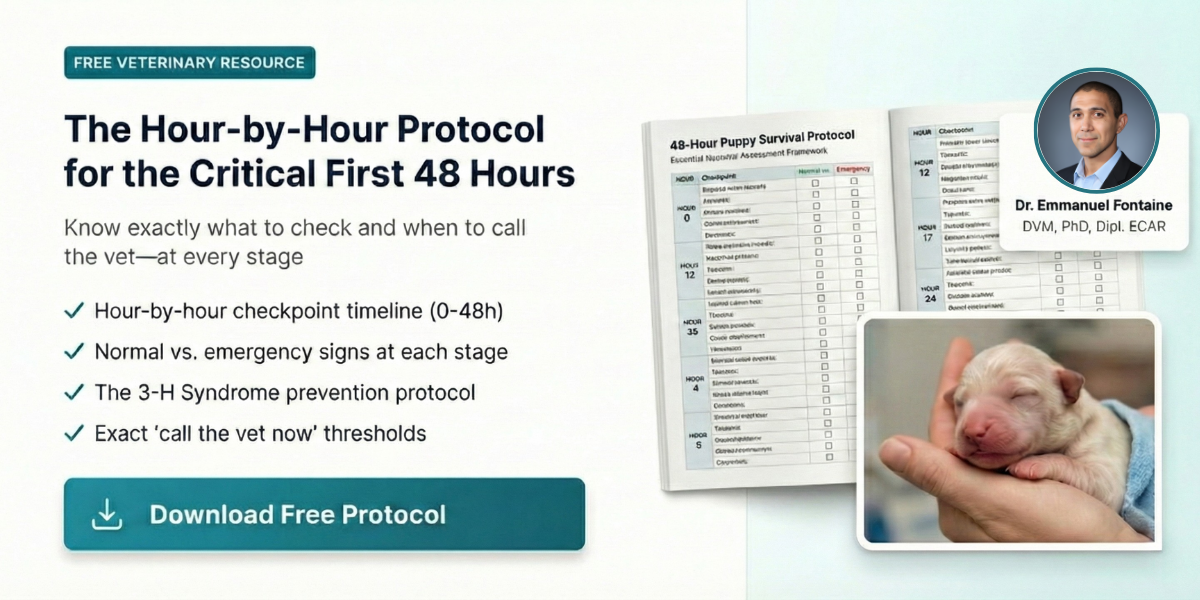
Maintaining the right temperature for newborn puppies is not just about comfort; it’s a critical health issue. Proper temperature regulation is particularly important in preventing conditions like what I call “the 3-H syndrome” (hypothermia, hypoglycemia and dehydration), which can occur in puppies when their body temperature drops too low.
Something you MUST remember: newborn puppies are unable to regulate their body temperature during the first 3 weeks after birth. And when they become hypothermic, they can digest no more…
I’ve thoroughly explored this subject in a previous blog post. Check it out to discover all my advice on this topic:
Newborn Puppies Temperature: The Critical Factor You Can’t Ignore
The Importance of Mother’s Presence for Puppies
The presence of a mother dog is not just comforting for puppies; it is essential for their overall development and well-being. As mentioned earlier in this blog, newborn puppies often cry to seek maternal care. It’s important to understand and correctly interpret the mother’s response to these calls.
The maternal response to puppy cries indeed evolves over time; initially (right after birth), the mother might be less responsive to cries but becomes more attentive as the puppies grow.
Several studies have been done on how to evaluate maternal care in canines, and there are some interesting findings:
- At birth, the female dog appears to be insensitive to the crying of the puppies and only begins to respond to their crying after all puppies are born typically;
- Maternal care is influenced by the age of the puppy: during the first week after whelping, female dogs are usually more responsive to the cryings; as puppies get older, this decreases;
- The litter size plays a role as well here: mothers with fewer puppies (1 to 5) appear to dedicate more time to individual puppies;
- The number of litters the mother had previously: in my experience, first-time mothers (primiparous females) often seem to lack proper maternal skills. However, research on the topic reveals a different trend: it’s actually more common for experienced mothers (multiparous females) to show less maternal care than their first-time counterparts, a finding I find quite intriguing.
I think this highlights the importance of maximizing maternal care for newborn puppies.
Genetic selection plays a role, certainly, and remember that strategies like employing pheromones in the maternity area have been shown to effectively enhance maternal behavior after birth. In my view, this is definitely an option worth considering!
| Emotional Comfort | The mother’s presence offers a sense of security and comfort to her puppies. Her warmth, heartbeat, and smell are familiar and soothing, which is vital for the emotional development of the puppies. |
| Feeding and Nutrition | Nursing is the primary way puppies receive nutrition in their early life. The mother dog’s milk contains the perfect balance of nutrients and antibodies essential for the puppies’ growth and immune system development. |
| Stimulating Physical Functions | The mother helps stimulate vital physical functions in her puppies, including urination and defecation, through licking and grooming. This stimulation is crucial for the puppies’ digestive health and hygiene. |
| 👉🏽 Pheromone diffusers are an excellent tool for reducing stress in breeding dogs, and studies have shown that they can significantly enhance maternal care in breeding females. Here is the pheromone diffuser I recommend for dogs. |
When to Seek Veterinary Help for Crying Puppies
While crying is a normal behavior for puppies, certain signs and symptoms may indicate that it’s time to consult a professional. Knowing when to seek veterinary care for puppies can ensure timely intervention for any underlying health issues.
| Persistent Crying | If a puppy cries continuously, especially after its basic needs have been met, it could indicate pain or discomfort. Persistent crying is a sign that the puppy needs medical attention. |
| Changes in Behavior | Sudden changes in a newborn puppy’s behavior, like increased lethargy or no more nursing, warrant a vet visit. These changes can be early indicators of health problems. |
| Physical Symptoms | Symptoms such as vomiting, diarrhea, labored breathing, or any visible injuries should be evaluated by a veterinarian. These symptoms can signify various health issues, from minor to severe. |
| Failure to Thrive | Puppies that are not gaining weight or are significantly smaller than their littermates might have underlying health conditions that require professional assessment. |
| 👉🏽Neonatal growth charts are an excellent tool to quickly identify puppies failing to thrive, helping breeders and veterinarians take early action. These charts include data from over 115 different puppy breeds. Download them here! |
| 👉🏽It is crucial to weigh newborn puppies at birth and daily throughout the neonatal period (from birth to 3-4 weeks of age), as consistent weight monitoring is a key indicator of their health and development. I recommend starting with kitchen scales (like this one), but for serious accuracy, consider this lab-grade scale, perfect for tracking puppy weights up to 5kg. |
Common Health Concerns in Crying Newborn Puppies

Detecting and Addressing Digestive Issues in Puppies
Detecting and addressing digestive issues in puppies is a key aspect of ensuring their healthy development.
Bloating and Gas: If a puppy’s belly appears swollen or they seem to be experiencing gas, these could be signs of digestive discomfort. Bloating in particular can be a serious issue in puppies. Remember also that bloating can be a consequence of bottle feeding/tube feeding a newborn that is hypothermic.
| Diet and Feeding Practices | Proper feeding practices play a crucial role in preventing bloating. Ensure that puppies are not overfed. If bottle-feeding, check that the formula is appropriate and not causing digestive issues. |
| Gentle Massage | Gently massaging a puppy’s belly can help alleviate bloating. This should be done carefully and softly, using circular motions to stimulate digestion and relieve discomfort. |
| Monitoring Elimination | Regular monitoring of a puppy’s elimination habits is essential. Assist with stimulation of elimination if necessary, particularly for very young or orphaned puppies who may need help in this area. |
| Veterinary Consultation | If bloating is severe or accompanied by other symptoms like vomiting or persistent crying, it’s important to consult a veterinarian. They can provide specific advice and treatment options to address the puppy’s condition. |
Regurgitation or Vomiting: Pay attention to whether the puppy regurgitates milk or has episodes of vomiting. This can be a sign of overfeeding, swallowing air during feeding, or more serious digestive issues.
Changes in Stool: Keep an eye on the puppy’s stool. Diarrhea or constipation can be indicators of digestive problems and should be addressed promptly.
Discomfort After Feeding: If a puppy seems uncomfortable, restless, or cries after feeding, it might be experiencing digestive discomfort.
The blog posts below will provide further details on these conditions and how to manage them:
White Stools In Newborn Puppies & Kittens: What Does it Mean?
Newborn Puppy Won’t Nurse? Helpful Tips for Concerned Owners
42 Eye-Opening Truths About Fading Puppy Syndrome
Toxic Milk Syndrome: What You Need to Know
Puppy & Kitten Bottle Feeding: The Essentials
| 👉🏽 Here is the milk replacer I recommend in newborn puppies. It is also available through a professional program. Learn more about options in the USA and Canada. |
| Burping Post-Feeding | For bottle-fed puppies, it’s important to burp them after each feeding session. This helps release any air they may have swallowed, reducing the risk of bloating and discomfort. |
| Gentle Pats on the Back | Hold the puppy upright against your shoulder or in your lap and gently pat its back. The pressure helps in releasing trapped air. Be gentle, as puppies are delicate. |
| Monitoring the Effectiveness | Observe the puppy’s response to burping. A successful burp often brings immediate relief from discomfort. However, if the puppy continues to show signs of distress, further investigation is needed. |
Identifying Signs of Hypothermia in Puppies
Identifying signs of hypothermia in puppies is crucial, particularly as it can lead to puppy growth abnormalities and other serious health issues.

Puppies are highly susceptible to temperature changes, and understanding the signs of hypothermia can ensure timely and effective intervention.
This topic is extensively covered in the following blogs, refer to them to learn all tips and tricks to prevent this life-threatening condition in newborn puppies:
Newborn Puppies Temperature: The Critical Factor You Can’t Ignore
Newborn Puppy Care: The A-to-Z of Nurturing New Beginnings
| 👉🏽Maintaining the ideal temperature for newborn puppies is crucial for their survival and well-being. There are different options available, including a heating lamp for evenly distributed warmth (like this one), a heating pad with adjustable settings for targeted heat (like this one), or a pediatric incubator, which offers precise temperature and humidity control (like this one). Choosing the right option depends on your needs, but each plays a vital role in keeping your puppies warm and healthy. |
| 👉🏽 To ensure accurate temperature monitoring, I recommend using a pediatric digital thermometer like this one or an infrared thermometer like this one for a non-invasive option. Both are fast, reliable, and essential for tracking a newborn puppy’s health. |
Recognizing Signs of Abnormal Behavior in Newborn Puppies
Recognizing signs of abnormal behavior in puppies is an essential aspect of ensuring their health and well-being. Among these behaviors, difficulties in nursing can be a significant indicator of underlying issues that require attention.
Excessive Whining or Crying: While puppies naturally communicate through whining, excessive or constant crying can indicate discomfort or distress. This could be related to hunger, pain, or other discomforts, including nursing difficulties.
Reluctance or Inability to Nurse: One of the earliest signs of a problem in puppies is a reluctance or inability to nurse properly. This can stem from a range of issues, from competition with littermates to physical problems like a cleft palate or weakness.
Isolation from the Litter: Puppies that consistently isolate themselves from their littermates or seem disinterested in group activities may be experiencing health or behavioral issues.
Lack of Coordination or Lethargy: Unusual clumsiness or a general lack of energy can be signs of developmental issues, nutritional deficiencies, or other health concerns.
| Observation During Feeding | Closely observe the puppies during nursing sessions. Look for signs of struggle or inability to latch on to the mother, as these can be early indicators of nursing difficulties. |
| Ensuring Equal Access to Food | In cases where there are nursing difficulties, ensure that each puppy has equal access to feed. This might involve supplementing with bottle feeding or creating a rotation system to give each puppy ample nursing time. Recent research indicates that variations in the weights of littermates, known as ‘litter heterogeneity,’ can affect their nursing access. This underscores the importance of assessing this factor immediately after birth. |
| Creating a Supportive Environment | Ensure that the puppies are in a warm, comfortable, and stress-free environment to encourage feeding and healthy behavior (see how to do this here) |
| Consulting a Veterinarian | If you notice persistent nursing difficulties or other abnormal behaviors in a puppy, consult a veterinarian. They can conduct a thorough examination and provide guidance or treatment options. |
The cries of newborn puppies are far more than just sounds; they’re vital indicators of their needs and well-being. This blog has hopefully enhanced your understanding and ability to interpret these cries effectively. Remember, as I often say in this field, “An ounce of prevention is worth a pound of cure.” By attentively listening to these cries, we can identify puppies that may be at risk. While, as I emphasize in my presentations, relying solely on these sounds isn’t enough – a more proactive monitoring approach is preferable – acknowledging and responding to these cries is a crucial, simple step that can greatly aid in the care and health of newborn puppies.

 DR. EMMANUEL FONTAINE