
Diving into the scientific literature on gastrointestinal disorders in kittens has been enlightening. And one of the most frequently mentioned pathogens causing this type of issue? Feline Panleukopenia indeed! This exploration has led me to uncover fascinating insights and innovative approaches, particularly in the realm of diagnostic tests for feline panleukopenia. These tests are not just a tool for diagnosis; they hold a multitude of applications that are invaluable in various scenarios. Whether you’re a devoted pet owner, an experienced cat breeder, or dedicatedly working in an animal shelter, there are essential aspects of the feline panleukopenia test that you need to know. Excited to share these intriguing findings and practical applications in this blog, as I believe feline panleukopenia test can be a game-changer in managing this challenging disease.
- What is Feline Panleukopenia?
- What Lurks Behind the Symptoms of Feline Panleukopenia?
- How Do We Diagnose Feline Panleukopenia?
- Can We Outsmart Feline Panleukopenia with Vaccination?
What is Feline Panleukopenia?

Feline Panleukopenia, also known as feline parvovirus, is a highly contagious viral disease that poses a significant threat to cats, especially kittens.
Indeed, in a recent study, they identified that 95.2% of cats with feline panleukopenia were kittens, and those were around 2.5 months on average.
What the scientific literature tells us is that cats under two years of age are significantly more susceptible to Feline Panleukopenia, with a staggering 72 times higher likelihood of developing symptoms compared to older cats!!!
This heightened risk underscores the importance of vigilant monitoring during a cat’s early years.
I often emphasize this, but it’s crucial to remember that the term “kitten” encompasses three distinct developmental stages, each with its unique needs and vulnerabilities:
– First, there’s the neonatal period, spanning from birth to about 4 weeks of age, a time of intense dependency and rapid development.
– Then comes the nutritional weaning period, typically between 4 to 8 weeks, a critical phase where kittens transition from mother’s milk to solid food.
– Finally, the pediatric period, from 8 weeks to around 1 year, marks a time of significant growth and learning as the kitten approaches its adult size.
Feline panleukopenia often strikes at a critical juncture in a kitten’s life – the transition from the weaning period to the pediatric stage. It is during this vulnerable phase that our vigilance and care must be at their highest to protect them from this perilous disease.
Indeed, during the weaning period when kittens switch from mother’s milk to solid food, there are changes in their gut bacteria. This leads to more rapid cell division in their intestines. Such changes can speed up the growth and spread of the feline panleukopenia virus, making this a crucial time to watch closely and take steps to prevent the disease.
Feline Panleukopenia is particularly concerning in shelter environments where the high density of cats can lead to rapid spread. This is reflected in the scientific literature, as most recent papers on the topic focus on veterinary shelter medicine. Cat breeders may also face challenges due to the contagious nature of the virus in their structures.
The silver lining? Those recent scientific studies offer a wealth of invaluable information, providing essential insights for everyone in the feline care spectrum – from cat owners and breeders to animal shelters.
What Lurks Behind the Symptoms of Feline Panleukopenia?

Feline Panleukopenia presents a complex array of symptoms and transmission modes that can often be misleading. Understanding these signs and how the disease spreads is crucial for early detection and effective management.
The Deceptive Nature of Symptoms
The most common clinical signs of Feline Panleukopenia include fever, vomiting, diarrhea, anorexia, and dehydration… but the clinical presentation can vary dramatically.
In kittens, early signs of the disease can be deceptively non-specific. Lethargy, fever, loss of appetite, and vomiting are early indicators… but diarrhea, especially hemorrhagic diarrhea that is often associated with canine parvovirus infection in puppies, is not a reliable sign in feline cases.
In fact, in kittens, the disease often takes a peracute course, leading rapidly to death… Sudden death or death within hours of symptom onset is often all we observe in kittens, making early detection a challenging task.
Adult cats typically show signs of inappetence and lethargy, coupled with vomiting and/or diarrhea.
Given the elusive and often misleading symptoms of Feline Panleukopenia, the role of definitive diagnostic tests becomes critical, serving as a beacon of clarity in accurately identifying the disease.
This is particularly vital in breeding catteries and animal shelters, where the risk of rapid and widespread infection is exponentially higher, making timely and precise testing not just a tool, but a crucial line of defence in guiding effective intervention strategies.
Coinfections: Complicating the Clinical Picture
Something interesting to keep in mind: recent studies reveal that Feline Panleukopenia doesn’t always act alone. Or at least, very often there are a combination of viruses that can be found in the digestive tract of the kittens suffering from this medical disease.
You might be wondering about these viruses, their unfamiliar names echoing questions in your mind. The reason they’re not household names in veterinary circles is simple: our routine diagnostic tests, including the advanced PCR panels, don’t typically search for these newly identified viruses.
Looking ahead, there’s a strong possibility that these names (at least some of them) will become more prominent in our diagnostic arsenal. This evolution in testing could revolutionize our approach to treatment and prevention, especially in high-risk environments like catteries and animal shelters. However, we’re not quite there yet.
Currently, our primary focus remains on detecting the feline panleukopenia virus – the principal adversary in this ongoing battle against the disease.
Transmission: More Than Just Direct Contact
Understanding the transmission of Feline Panleukopenia is key to its control.
The virus is primarily spread through the fecal-oral route. It means that the infection spreads when an animal or person accidentally consumes microscopic amounts of infected feces. This can happen through contaminated food, water, or even after touching something that has been contaminated with fecal matter from an infected individual.
Indirect transmission via contaminated surfaces or materials is also a significant risk. It is often reported that the feline panleukopenia virus can indeed survive in the environment for up to one year.
This mode of transmission makes environments like shelters or breeding facilities particularly vulnerable to outbreaks.
And there was a time when “environmental PCR” captured my attention I must admit – particularly in the realms of animal shelters and breeding catteries.
What do I mean by this? Imagine swabbing various surfaces within these facilities and sending these samples to a lab to detect lurking pathogens, with feline panleukopenia being a prime suspect.
The idea was… tantalizing: uncover hidden threats in the environment and preemptively strike to prevent an outbreak. And do this on a regular (yearly?) basis.
However, as interesting as this concept sounds, reality steers us towards a more straightforward solution: rigorous sanitation.
Feline panleukopenia is a resilient parvovirus and therefore demands a robust cleaning and disinfecting regimen. The key lies in using the right disinfectants that are effective against this type of virus.
In the battle against such formidable pathogens, especially in catteries and animal shelters, a well-thought-out sanitation protocol isn’t just a good practice – it’s an essential shield. By prioritizing sanitation, we can proactively safeguard these vulnerable environments from the silent yet pervasive threat of feline panleukopenia.
Survival Rates? A Remarkable Shift
An unexpected yet striking finding emerged from a study I read recently: an 80% survival rate among kittens suffering from the feline panleukopenia disease.
This figure stands in stark contrast to the historically reported mortality rates of 50–90%!
Such a significant improvement in survival rates may well be attributed to the enhanced medical care and resources available… but still.
I think this is great news and it emphasizes the fact that this is a treatable disease today and it showcases how advanced veterinary care can dramatically alter the outcomes for cats afflicted with this once-devastating disease.
How Do We Diagnose Feline Panleukopenia?

Clearly, this is where feline panleukopenia tests become crucial. Yet, the reality is more intricate than it initially appears!
Navigating the maze of diagnosing Feline Panleukopenia indeed requires a blend of precision, caution, and understanding of the tools at our disposal.
Point-of-Care Tests in Diagnosis
A point-of-care test is a simple, quick medical test that can be performed right where the patient is, like at a vet’s office or animal shelter, providing immediate results without the need to send samples to a lab.
And this is something heavily discussed in the recent veterinary scientific literature.
In many countries, the reality is that the ideal test simply doesn’t exist.
Don’t be mistaken – veterinarians do have in-clinic testing options, but they might not be what you’d typically anticipate I think!
And this is something that was pointed out in a recent study I read on feline panleukopenia diagnostic tests in shelters.
They wrote that in the absence of a specific point-of-care test for feline panleukopenia, veterinarians often turn to… Canine Parvovirus fecal antigen tests that are available actually!
A Canine Parvovirus fecal antigen test is a diagnostic tool used by veterinarians to detect the presence of canine parvovirus in a dog’s feces. And interestingly, as I just wrote, this test is also utilized in cats when there’s a suspicion of feline panleukopenia.
The reason for this cross-species application lies in the similarities between the canine parvovirus and the virus causing feline panleukopenia. Both viruses share enough characteristics that a test designed for one can often detect the other.
This makes the canine parvovirus fecal antigen test a valuable, albeit unconventional, tool for veterinarians to diagnose feline panleukopenia, especially in the absence of a widely available, specific test for this feline virus.
So, if you find your veterinarian using a dog test to check your cat for this disease, don’t be taken aback – it’s actually a smart move, grounded in the latest scientific research!
NB: There is a cat test that is available now, I found it online – but it is apparently only available in the US and I actually haven’t read/found any scientific study mentioning its use to date.
The test relies on a colour change to indicate the presence of the feline panleukopenia virus… but when it comes to diagnostic tests, there is one important element to always have in mind.
Remember, the true power of a test lies in its interpretation, and that’s where your veterinarian’s expertise in deciphering the results becomes absolutely crucial.
A positive result on this test, even a faintly positive one, strongly indicates an infection, particularly when the animal is showing clinical signs. However, if the test comes back negative yet the animal exhibits symptoms, the recommended course of action is clear and immediate: proceed directly to PCR testing for a definitive diagnosis.
PCR Testing: A Critical Tool with Caveats
PCR, or Polymerase Chain Reaction, is a groundbreaking technology that has gained widespread recognition, especially amidst the recent COVID-19 pandemic. It’s a sophisticated laboratory technique used to amplify tiny amounts of DNA, making it possible to detect the presence of specific genetic material in a sample.
In the veterinary world, PCR has become an invaluable tool, particularly in diagnosing gastrointestinal disorders in dogs and cats. Its precision and sensitivity make it a go-to method for veterinarians, allowing them to identify and respond to various pathogens with remarkable accuracy and speed.
But let’s circle back to the crucial point about interpreting diagnostic tests, as mentioned earlier. Because this holds especially true for PCRs: while the test itself is a powerhouse of detection, the real game-changer lies in the skillful interpretation of its results.
For instance, in the case of feline panleukopenia, the timing of recent vaccinations plays a crucial role in interpreting these results, as positive PCR outcomes are most common around seven days post-vaccination. So vaccination status (and when vaccination was performed) is definitely something to take into consideration when deciding to test for this disease!
I must confess, I’m a staunch advocate of using PCR panels for kittens battling diarrhea.
These panels are a powerful ally, enabling us to screen for a multitude of pathogens simultaneously. As previously discussed, it’s not unusual for feline panleukopenia to be accompanied by other pathogens, including Giardia – a microscopic parasite that causes gastrointestinal issues like diarrhea. Understanding these associations is crucial, as it empowers us veterinarians to tailor medical treatments more effectively.
However, experience has taught me a vital lesson: the importance of not over-relying on PCR panel results.
While they provide invaluable insights, it’s essential to interpret these results within the broader context of the patient’s clinical signs. This approach is critical because, ultimately, the true value of a test lies not just in its results, but in how those results are interpreted in conjunction with the observable symptoms. It’s this nuanced understanding that transforms data into meaningful, life-saving medical decisions in my opinion.
In animal shelters, this approach is particularly crucial, as we strive to prevent the dire consequences of false positives – which can lead to unwarranted isolation, or unnecessary euthanasia in some tragic instances.
Can We Outsmart Feline Panleukopenia with Vaccination?
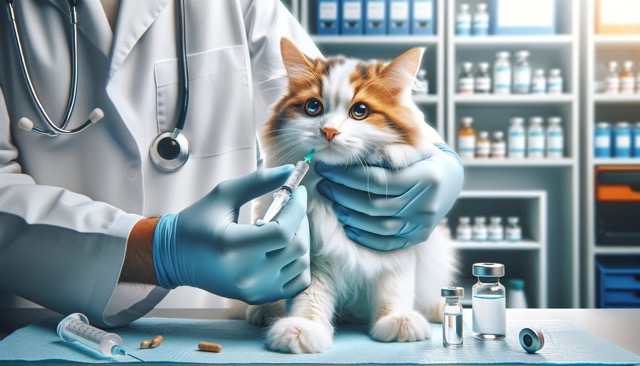
There’s a perception that feline panleukopenia has faded into the background, especially in privately owned kittens where cases are indeed less common.
However, a closer look at the plethora of studies emerging from animal shelters paints a different picture. These publications serve as a stark reminder that the relative scarcity of this disease today is largely thanks to one critical intervention: vaccination.
It’s crucial to emphasize this: feline panleukopenia is not a relic of the past. It remains a lurking threat in feline populations. Vaccination stands as our most effective weapon in preventing more fatal or severe cases.
This point cannot be overstated, especially in an era where the idea of discontinuing vaccinations for various reasons gains traction.
The data streaming in from animal shelters is a clear testament to the ongoing necessity of vaccination in maintaining the health and safety of our feline companions.
The World Small Animal Veterinary Association (WSAVA) provides clear vaccination guidelines for cats. This global authority offers invaluable guidance for veterinarians and pet owners alike.
Therefore, when it comes to vaccinating cats against feline panleukopenia and other diseases, the question shouldn’t be if we should vaccinate, but rather how frequently it should be done. This shift in perspective aligns more closely with the latest scientific insights we have available.
The encouraging news is that we now have a tool to help answer this question, for nearly every situation: feline panleukopenia antibody titer tests.
Available as a point-of-care test or through major veterinary laboratories, this test has the potential to be a game-changer in my opinion, at least in certain situations.
It empowers veterinarians to tailor vaccination schedules to each cat’s specific needs, ensuring optimal protection while adhering to the most current scientific knowledge.
And there are 4 main applications.
To Measure the FPV Antibody Response in Kittens Following Vaccination
Post-vaccination in a kitten, this feline panleukopenia antibody titer test helps gauge the immune system’s response.
Typically, the final vaccination in kittens is administered around 12–16 weeks, and a positive antibody test at 20 weeks is a strong indicator of an effective immune response.
This result can influence the vaccine schedule significantly. According to WSAVA guidelines, if a kitten shows adequate immunity at 20 weeks, especially after a 16-week vaccination, the routine 12-month booster might be unnecessary, potentially allowing for a shift to a triennial feline panleukopenia vaccination program.
However, the maturity of a kitten’s immune system and the quality of its response at 16 weeks are not yet fully understood. Thus, yearly antibody testing is advisable, especially if the last vaccine was administered before 16 weeks.
When applicable obviously, this approach aids in immunity development and ensures environmental exposure to the virus is effectively countered.
In cases where a kitten tests negative for feline panleukopenia antibodies at 20 weeks, a follow-up vaccination and retesting after 3–4 weeks are crucial.
If the kitten remains negative, it may be a non-responder to this panleukopenia vaccine, indicating a lifelong susceptibility to the disease.
As you can see, from the use of this test we can get LOTS of valuable health information!
It helps craft a tailored vaccination strategy, vital for safeguarding the health and well-being of our feline companions.
To Test Whether (Re)Vaccination for Feline Panleukopenia Is Necessary
As mentioned earlier, the question of whether or not to revaccinate is a critical one for many cat owners these days.
The current strategy is to vaccinate every 3 years and it hinges on the minimal Duration of Immunity that has been determined in vaccine studies.
Intriguingly, many vaccinated animals maintain protective antibody titers well beyond the standard three-year period, sometimes even for life.
This longevity of immunity opens the door to using triennial antibody testing as an alternative to routine booster vaccinations, aligning perfectly with a more personalized vaccine schedule.
And for those animals that have previously suffered serious adverse reactions to vaccines, the decision to revaccinate demands careful consideration.
Here again, a positive feline panleukopenia antibody titer test result from this test can guide veterinarians in making informed decisions about revaccination, ensuring the safety and well-being of the animal while minimizing unnecessary environmental exposure to vaccines.
This approach not only aids in preventing Feline Panleukopenia but also supports the overall health of the immune system in our feline friends – there is definitely a case for its use in this situation.
To Control Feline Panleukopenia Outbreaks in Animal Shelters…?
In the high-stakes environment of animal shelters, controlling Feline Panleukopenia infection and preventing outbreaks is a top priority.
So a strategic approach that has been suggested would involve testing animals for feline panleukopenia antibodies before they even enter the shelter.
This initial screening with the feline panleukopenia test determines their immunity status. Unprotected animals should ideally be vaccinated and either isolated or placed in foster care to develop active immunity before integrating into the shelter population.
However, due to the additional costs, the norm in shelters is typically to opt for immediate vaccination upon entry – which appears more practical and cost-efficient here. But this strategy could also be used to some extent in breeding catteries.
Also, during a feline panleukopenia outbreak, this antibody titer test could become a critical tool, as it can help swiftly identify cats without antibodies, marking them for immediate vaccination or passive immunization with hyperimmune serum (which is available in some countries).
This method allows for the segregation of protected animals from those at risk.
Importantly, antibody-positive cats can be spared additional vaccination.
And those testing negative, post-vaccination, should remain isolated until the incubation period of the disease has passed, typically 2–7 days, before being considered for adoption.
While this method theoretically offers a sound strategy for informed vaccination decisions in shelters, the reality of cost constraints often hinders its widespread adoption.
However, envisioning this approach in a breeding cattery, as previously discussed, reveals its potential to significantly enhance health management and disease prevention strategies.
To Determine the Optimal Age of First Vaccination in Kittens
Kittens, right after birth, receive their first line of defence against diseases through a special gift from their mother – the colostrum.
This first milk, rich in antibodies, is more than just nutrition; it’s a vital source of initial immunity, passing on protection against diseases the mother has either encountered or been vaccinated for, including feline panleukopenia.
Typically, this maternal immunity shields the kittens for about 8-14 weeks. Recent studies indicate though it could extend up to 20 weeks.
And as this inherited immunity gradually fades, it creates a critical and vulnerable phase known as the ‘immunity gap period.’ During this time, the waning maternal antibodies can interfere with the effectiveness of vaccinations, leaving the kittens particularly susceptible to pathogens like feline panleukopenia.
The timing of this vaccination is therefore critical, as very young kittens can only effectively respond to a vaccine when maternal antibody levels are sufficiently low. This level varies between litters and individual kittens, influenced by the colostrum’s antibody levels and the amount ingested – so definitely not something easy to determine as you can imagine!
Common practice involves administering the first vaccinates at 8-9 weeks, followed by additional doses at 2- to 4-week intervals until 12-16 weeks or older.
This schedule aims to ensure at least one vaccination occurs post maternal antibodies’ presence and pre-exposure to the virus. However, some doses may be redundant if the maternal antibodies are still present or if the kitten has already developed immunity.
Therefore ideally, the perfect timing for the first vaccination would be determined by measuring each kitten’s antibody levels to ascertain the decline of interfering maternal antibodies.
That is the theory. The practicality of using antibody testing has not been fully explored here.
Such testing would likely require re-testing kittens every 2-3 weeks, a process that could be stressful and costly.
This approach, while complex, highlights the importance of the feline panleukopenia test in crafting an effective vaccine schedule. It underscores the need for a balance between preventing Feline Panleukopenia and considering the environmental exposure and stress factors for young kittens.
The goal is to develop a vaccination strategy that is both effective and considerate of the kittens’ wellbeing – and at least, it gives the veterinarian another option that, in some situations, might be worth considering.
Reflecting on the numerous scientific papers I’ve delved into, I’ve gained a renewed perspective on feline panleukopenia and the capabilities and limitations of the current diagnostic tests. This disease, particularly crucial to consider in cases of diarrhea in kittens, demands constant vigilance due to its varied clinical manifestations, including, remember the possibility of acute death in kittens that are affected. Everyone involved in feline care needs to be aware of this disease I think. Fortunately, we are well-equipped with effective diagnostic tools which offer a wealth of clinical applications. With these tools at our disposal, I am optimistic about our ability to significantly reduce the impact of feline panleukopenia in the cat population. And that’s a priceless feeling I think. 🙂

 DR. EMMANUEL FONTAINE