🇫🇷 Lire en Français | 🇪🇸Leer en Español | 🇧🇷Leia em português
Imagine a world where whelping and queening no longer come with the constant guesswork and last-minute scrambles. It’s no fantasy—modern technology is transforming how dog and cat breeders approach birth predictions. In this blog, we’ll explore how these advancements empower breeders to anticipate parturition accurately, minimize risks, and ensure stress-free experiences for both mother and offspring. Let’s dive in!
- The Power of Accurate Timing
- Harness the Precision of Progesterone Testing
- Temperature Monitoring
- Ultrasounds and Fetal Biometry
- A Revolution: activity monitors
- Actionable Tips
History has given us some truly bizarre reminders of what happens when we lack reliable ways to track pregnancy.
One of my favorites?
The now-infamous story of Mary Toft, an Englishwoman who, in 1726, convinced multiple medical professionals that she was giving birth to… rabbits!!!
In that era, the inability to accurately verify and predict pregnancy timelines led even the most respected experts astray.
And while we’re well past the days of being fooled by such hoaxes, the principle remains: without precise information, guesswork fills the void.
Relying on rough estimates can lead to inconvenient surprises, unprepared whelping conditions, and potential risks to both mother and offspring.
Fortunately, modern science and veterinary tools have removed this element of doubt from the equation.
So in this blog, we’ll break down a range of proven strategies to help you consistently anticipate parturition and ease the stress on both you and your animals.
The Power of Accurate Timing
- Dogs: Breeding dates alone offer limited accuracy. Indeed, the duration from breeding to birth can range widely—anywhere from about 58 to 72 days. That’s a huge window of uncertainty, and for a busy breeder, a 14-day spread can mean the difference between calmly preparing and scrambling at the last minute. Narrow it down with progesterone testing (see below).
- Cats: As “induced ovulators,” cats ovulate approximately 24 hours after mating—typically requiring three matings in one day. So you need to observe AND confirm those matings! Queening occurs reliably 65±1 days after ovulation, making timeline predictions more straightforward.
PS: Remember that the gestation period in hybrid cats, like Bengals, can vary depending on the proportion of wild ancestry; it is calculated by averaging the gestation periods of the domestic cat (65 days) and the wild ancestor (e.g., Asian leopard cat, 70–75 days). For example, a first-generation hybrid (50% wild) might have a gestation period of around 68–70 days, closer to the midpoint between the two species.

I am on a mission to learn everything about dog and cat breeding. Sign up to my newsletter to follow my journey, and receive exclusive content and offers!
Harness the Precision of Progesterone Testing
Progesterone testing is a game-changer for dog breeders.
Rising progesterone levels signal ovulation, enabling accurate whelping predictions:
- Small dogs: 62 ± 1 days post-ovulation
- Medium & Large dogs: 63 ± 1 days post-ovulation
- Giant dogs: 64 ± 1 days post-ovulation
If the litter doesn’t arrive by a day or so after these target windows, it’s a clear sign to consult a veterinarian.
And in late pregnancy, “reverse progesterone testing” measures progesterone drops below 2 ng/mL, signaling labor within 48 hours.
👉🏽 Watch my short video on updates on this topic here.👈🏽
For cats, progesterone drop measurements haven’t proved as reliable.
Unlike in dogs, feline progesterone levels don’t dip until labor is already underway, so hormonal testing before that point won’t give you a neat countdown.
Temperature Monitoring
Temperature checks, another longstanding practice in canine breeding, can also offer clues.
Indeed, a drop in a dog’s body temperature often precedes labor by 12–36 hours.
However, this sign appears in only about 80% of dogs and can be quite subtle, with some bitches showing temperature dips as small as 0.3°C (0.5°F).
Start monitoring a week before the expected due date. While this isn’t foolproof, it adds a layer of preparedness.
Note: Cats do not exhibit reliable temperature changes related to parturition.
Ultrasounds and Fetal Biometry
Fetal biometry via ultrasound allows veterinarians to measure key indicators—like the diameter of the embryonic vesicle early on or the biparietal diameter (the distance across the fetus’s skull) in later stages—to project a whelping or queening date.
This technique has been validated, and we now have several specific equations even available for certain dog breeds (and for Maine Coon cats as well).
Ultrasound measurements give you a data point that’s rooted in observable fetal growth, making it a powerful “second opinion” if you’re combining it with progesterone testing in dogs or breeding dates in cats.
These tools are especially helpful when breeding dates are unclear.
👉🏽Here is a great online tool that helps select the best equation to use.👈🏽
A Revolution: activity monitors
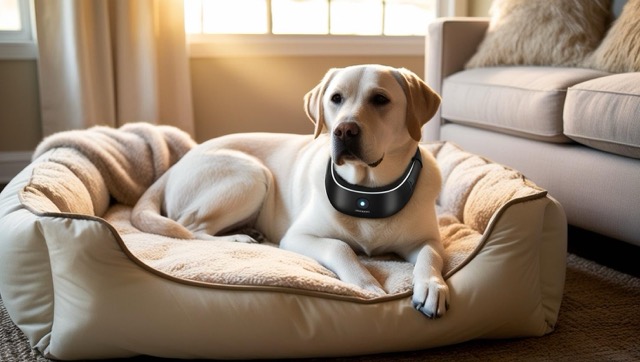
Technology is transforming birth predictions with activity monitors that:
- Detect changes in heart rate and activity levels 12–24 hours before labor.
- Alert breeders via smartphone apps.
- Monitor overall health to detect complications like dystocia.
My personal favorite? This one right here.
The reason I am super excited about it is because they validated a Pregnancy Health Monitor that is in my opinion game-changing.
👉🏽 Use code TMV_CARE for a 10% discount.👈🏽
This is the biggest news in this field in my opinion.
So instead of waiting for uncertain signs or constantly poking around for temperature shifts, you can simply check the data on a smartphone app and be alerted to impending whelping.
While similar feline-specific tools aren’t yet on the market, the rapid pace of innovation suggests we’ll see them before long.

Actionable Tips
For Dog Breeders:
- Implement Progesterone Testing: As soon as your bitch enters her fertile period, work with your veterinarian to measure progesterone levels. Identifying the ovulation day gives you a solid timeline: expect birth 62–64 days later depending on the size of the dog.
- Consider “Reverse Progesterone” Before Whelping: Close to the expected due date, test progesterone levels again. A drop below 2 ng/mL indicates you’re within about 48 hours of whelping—a perfect heads-up to prepare your whelping area.
- Use a Pregnancy Health Monitor: If available, invest in an activity monitor designed for pregnant dogs. These devices can give you a 12–24-hour warning before labor starts and also keep an eye on overall health, reducing surprises.
For Cat Breeders:
- Track the Mating Process Carefully: Since cats are induced ovulators, note the day of the first successful mating and count from there (about 65 days to queening). Ensuring at least three matings in one day helps pinpoint ovulation and tighten your timeline.
- Fetal Biometry via Ultrasound: Regular ultrasound check-ups can provide an accurate estimation of fetal development and parturition timing. This works even better when you don’t have a perfect record of the mating day.
Precise birth prediction isn’t magic; it’s a combination of proven techniques, reliable veterinary support, and the right mindset. By understanding each tool at your disposal—be it progesterone tests, fetal ultrasounds, or activity monitors—you take charge of the timing and reduce uncertainty. With each pregnancy, you’ll feel more confident, more professional, and more prepared to handle whatever comes your way I believe.

One of the most common challenge we encounter in breeding kennels is NEONATAL MORTALITY.
It can be very frustrating… even heart-breaking.
Good news though : you can do something about it !
We now have more knowledge than ever in this discipline.
In recent years, new research brought us a much better understanding of what can be done to optimize the health of newborn puppies.
By taking this course, this is what you will learn indeed !

 DR. EMMANUEL FONTAINE