🇫🇷 Lire en Français | 🇪🇸Leer en Español | 🇧🇷Leia em português
Understanding the puppy weaning window is not about picking an age on a calendar. It is about recognizing enzymatic readiness, reading the signals your puppies are giving you, and programming a gut outcome that lasts a lifetime. In this article, you will learn the science behind weaning, the practical steps to get it right, the supplies you need on hand, and the warning signs that tell you something has gone wrong. Your vet is your essential partner in this process, and together, you can give every puppy the best possible start.
- TL;DR: Key Takeaways
- What Should You Know About the Puppy Weaning Window?
- What Should You Do When Weaning Begins?
- What Tools and Supplies Should You Have Ready?
- What Warning Signs Should You Watch For?
- You Have the Knowledge to Protect Every Puppy
TL;DR: Key Takeaways
- The puppy weaning window is an enzymatic readiness event, not an arbitrary age milestone. Puppies signal when their gut is ready for solid food through behavioral and physical cues.
- Microbial colonization begins before birth. The dam’s gut health directly shapes the puppies’ microbiome, colostrum quality, and immune defenses.
- About 25% of puppies develop diarrhea between 5 and 14 weeks of age during the transition to solid food, a condition called weaning dysbiosis.
- Canine-specific probiotics like Saccharomyces boulardii (SB-1079) given to the dam can improve colostrum quality and reduce neonatal complications. Human probiotics can cause harm.
- Puppies should gain weight on a daily basis. Failure to gain weight is a 48-hour emergency requiring immediate veterinary intervention.
- Work closely with your veterinarian or theriogenologist to monitor the dam’s milk, track puppy growth, and intervene early if weaning dysbiosis appears.
What Should You Know About the Puppy Weaning Window?
How the Puppy Gut Develops Before and After Birth
Scientists once believed puppies were born with completely sterile intestines. Current research challenges that view. Several types of bacteria, including Staphylococcus and Streptococcus (common skin and mucous membrane bacteria) and Neisseria zoodegmatis (a species found in dog mouths), have been isolated from the canine placenta and from the meconium (the first feces) of healthy newborn puppies. This means microbial colonization likely starts before birth, inside the womb.
Think of the puppy’s gut at birth like a freshly planted garden. The seeds were placed in the soil during pregnancy, and the first watering is colostrum, the thick, antibody-rich first milk the dam produces. Puppies are born with a highly permeable intestinal barrier, meaning large molecules can pass through easily. This openness, called gut closure, shuts down within 12 to 16 hours after birth. That is why early colostrum intake is vital: it delivers immune protection and seeds the gut with beneficial bacteria like Lactobacilli.
Unlike cattle or pigs, which rely entirely on colostrum for their first immune antibodies, dogs have an endotheliochorial placenta that allows about 5 to 10% of the dam’s immunoglobulins (protective antibodies) to reach the puppies before birth. Still, puppies absolutely require colostrum within the first 12 to 16 hours to build full immune protection.
Why Weaning Triggers a Gut Crisis
The transition from milk to solid food marks a dramatic dietary shift. Switching abruptly to commercial solid food forces the gut microbiome (the community of bacteria living in the intestines) to undergo rapid changes. At 2 days old, a puppy’s gut is dominated by Firmicutes, a family of bacteria that thrives on milk sugars. By 21 days, it shifts to a mix of Bacteroidetes, Fusobacteria, and Firmicutes, families better suited to digesting a wider variety of nutrients.
Imagine the gut microbiome as a team of workers, each with a specialized job. When the diet changes suddenly, the team must be reorganized overnight. Some workers are laid off, new ones are hired, and during that chaotic transition, mistakes happen. That is weaning stress, and it causes dysbiosis (microbial imbalance), increases intestinal permeability (leaky gut), and triggers inflammation. Approximately 25% of puppies develop diarrhea between 5 and 14 weeks of age because of this transition.
Here is a fascinating detail from veterinary research: pig studies, which closely model canine gut development, show that early weaning stress causes chronic diarrhea in 43.6% of early-weaned piglets versus only 4.8% in controls. Female piglets were even more susceptible, at 58.8% compared to 29.9% in males. Dogs are carno-omnivores (meat-eaters that can also digest plants and starches), unlike cats, which are strict carnivores. Dogs have 3.1-fold higher lactase (milk sugar enzyme), 4.4-fold higher sucrase, and 4.6-fold higher maltase (starch enzymes) than cats. Dogs also have nearly 2-fold higher glucose transporter activity in their intestines and express the sweet taste receptor T1R2, which cats completely lack. This means dogs’ guts are uniquely equipped to transition to solid food, but the timing of that transition must be right.
| Age/Stage | Dominant Gut Bacteria | Diet | Key Event |
|---|---|---|---|
| Day 2 | Firmicutes | Dam’s milk only | Initial colonization from birth canal and colostrum |
| Day 21 | Bacteroidetes, Fusobacteria, Firmicutes | Transitioning from milk | Major microbiome reorganization begins |
| 5-14 weeks | Shifting toward adult profile | Mixed: milk and solid food | 25% of puppies develop weaning diarrhea |
| Post-weaning | Stabilizing adult profile | Fully solid food | Gut barrier matures and inflammation subsides |
Fading Puppy Syndrome and the Microbiome Connection
Fading Puppy Syndrome (FPS) is one of the most heartbreaking conditions a breeder can face. Apparently healthy puppies gradually deteriorate and die within the first two weeks of life. Studies now show that FPS is intimately connected to the gut microbiome. Puppies that develop FPS display an abnormal microbial signature as early as day 1 after birth.
Specifically, FPS puppies show a higher ratio of Proteobacteria to Firmicutes (two major bacterial families), increased Pasteurellaceae, and drastically lower levels of beneficial Clostridia and Enterococcus compared to healthy littermates. This is not something you can see with the naked eye, but it is something your veterinarian can investigate through fecal analysis if early signs appear. Bringing this knowledge to your vet gives them a head start on the right diagnostic approach. Puppies born via cesarean section also display lower bacterial diversity and higher levels of potentially harmful bacteria, which is why vaginal delivery, when safe, supports better gut colonization and faster early weight gain.
Your observations as a breeder are critical here. Decreased activity as early as day 1, puppies that feel cooler than their littermates, or poor muscle tone are early signals that warrant an immediate conversation with your vet. The connection between the dam’s microbiome and her puppies’ survival is a frontier area of veterinary science, and your awareness of these signals can make the difference.
| Indicator | Healthy Puppy | FPS Warning Sign |
|---|---|---|
| Activity level (Day 1) | Active, seeks nipple, strong reflexes | Decreased activity, weak nursing attempts |
| Body temperature | Warm as littermates | Cooler than littermates |
| Muscle tone | Firm, good reflexes | Limp, poor reflexes |
| Weight gain | Daily weight gain | Fails to gain or loses weight |
| Gut bacteria (Day 1) | Firmicutes-dominant | High Proteobacteria-to-Firmicutes ratio |
| Stool character | Normal soft consistency | Watery or absent |
What Should You Do When Weaning Begins?
Supporting the Dam’s Milk and Microbiome
Successful weaning begins with the dam. At peak lactation, which occurs between 3 and 5 weeks after whelping, she may need up to four times her normal maintenance diet, divided into four daily meals. Feeding her a high-quality, energy-dense diet rich in DHA (docosahexaenoic acid), an omega-3 fatty acid, supports puppy brain and eye development through her milk.
Here is where a canine-specific probiotic becomes a powerful tool. Saccharomyces boulardii strain SB-1079, a yeast-based probiotic, has been shown to boost colostrum quality and reduce the risk of low-birth-weight puppies. This is not a human probiotic. Human probiotics are designed for human microbiomes and can cause bloating, severe diarrhea, and even promote antibiotic resistance in developing puppies. Work with your vet to source a canine-specific formulation.
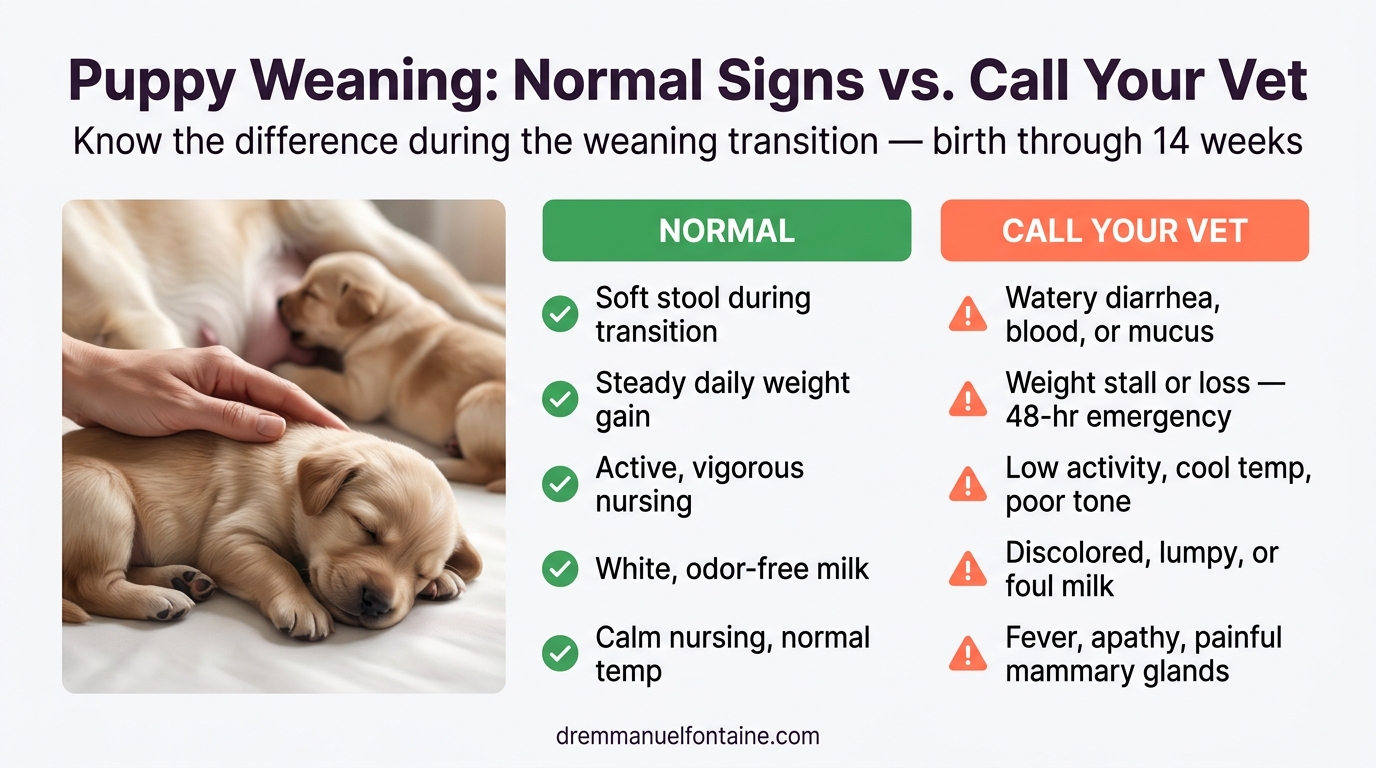
Monitor the dam’s milk regularly for changes in appearance, color, and smell. Normal milk should be white and odor-free. Any yellowish, greenish, or brownish discoloration, lumpy consistency, or foul odor may indicate mastitis or infection. Also watch for swelling, heat, or redness of the teats. If you notice any of these signs, contact your vet within 24 hours.
| Approach | What Works | What Fails |
|---|---|---|
| Probiotic choice | Canine-specific Saccharomyces boulardii (SB-1079) at 1.3 x 10^9 CFU/day | Human probiotics (cause dysbiosis and antibiotic resistance) |
| Dam’s diet at peak lactation | 4x maintenance ration, 4 meals/day, DHA-enriched | Standard adult food, 1-2 meals/day |
| Milk monitoring | Daily visual and smell checks; vet contact within 24 hours if abnormal | Assuming milk is fine without checking |
How to Start the Weaning Transition Safely
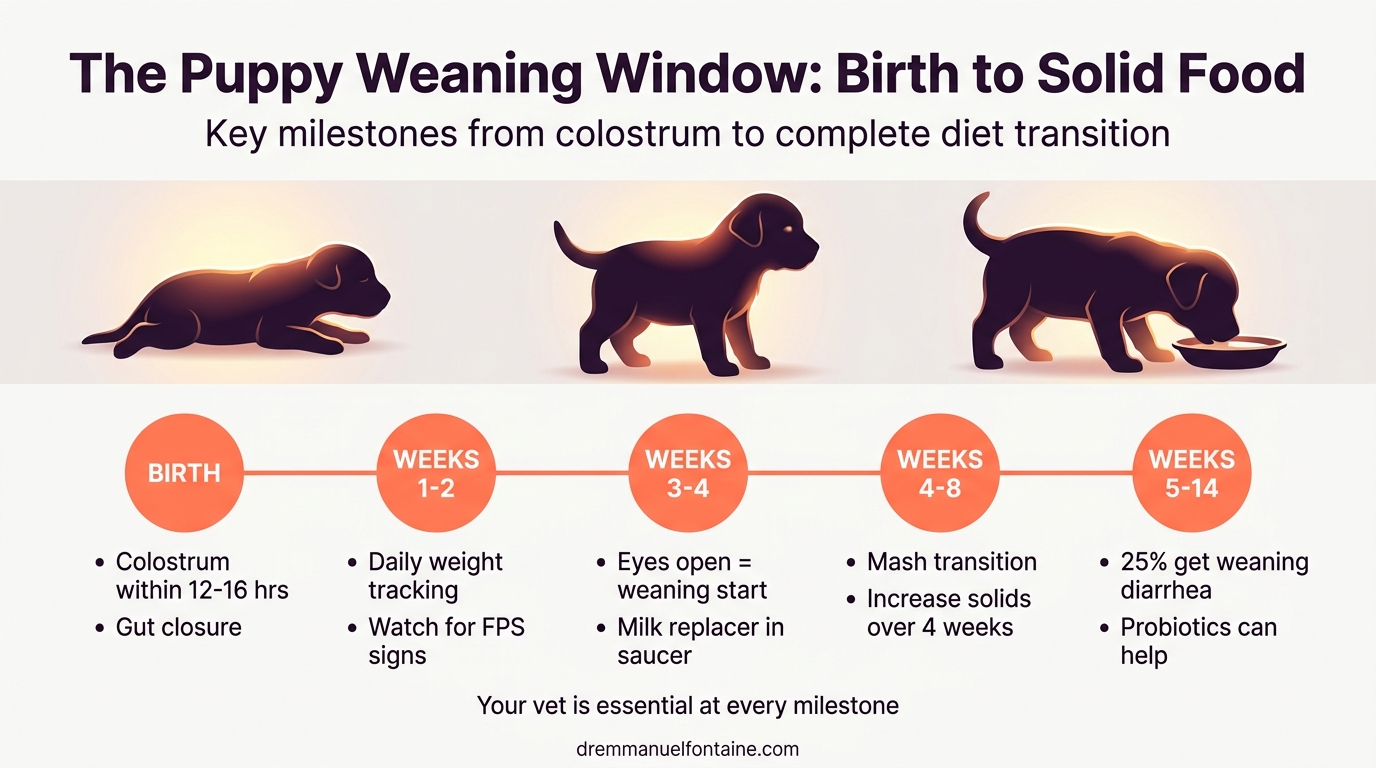
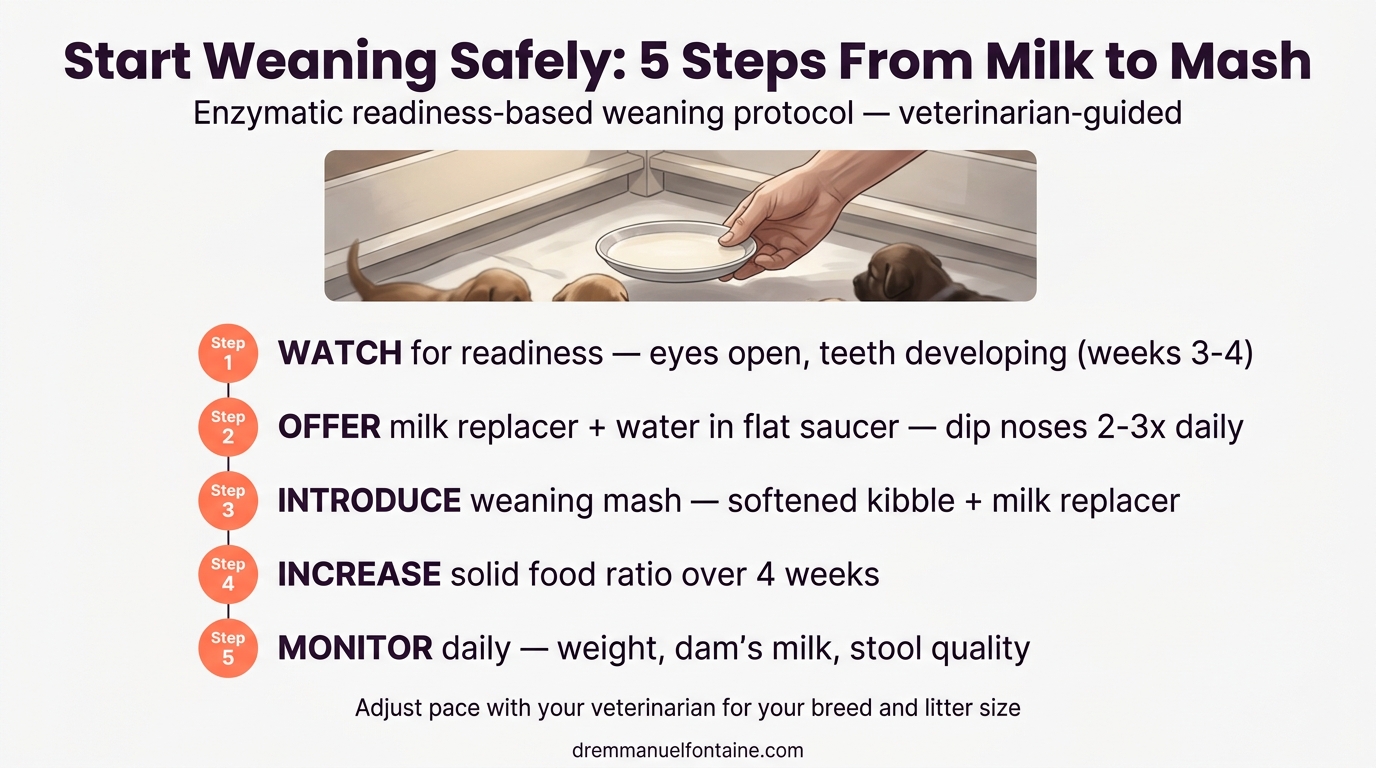
Begin offering solid food when the puppies’ eyes open and teeth start developing, typically around 3 to 4 weeks of age. This timing is not arbitrary. It aligns with the enzymatic readiness of the gut. As we already discussed, the microbiome is undergoing massive reorganization by day 21, and the puppy’s digestive enzymes are ramping up to handle food beyond milk.
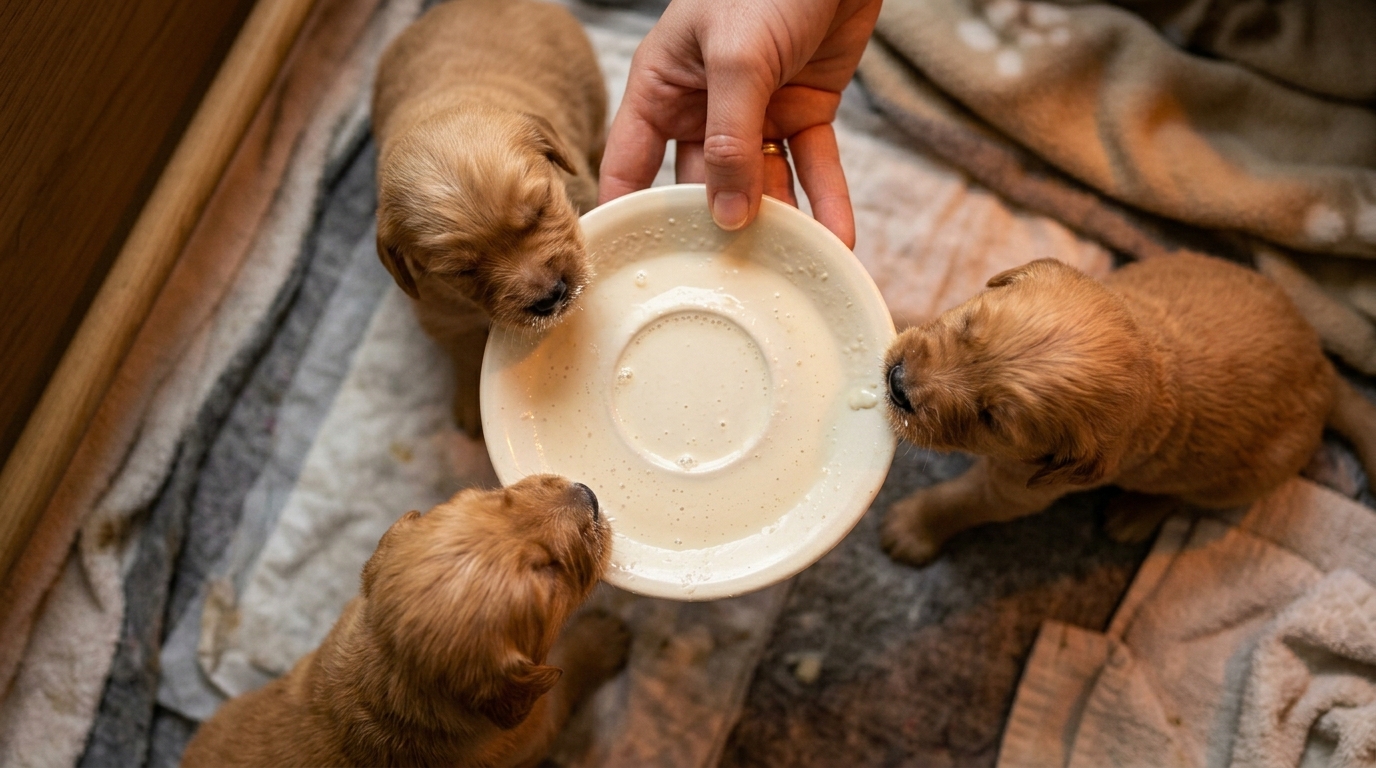
Start with a mixture of puppy milk replacer and water, offered in a flat saucer. Dip the puppies’ noses into it 2 to 3 times daily. Most puppies learn to lap on their own within 1 to 4 days. Think of this as teaching a toddler to use a spoon. It is messy, it takes patience, and each puppy will learn at their own pace.
Gradually introduce a weaning mash by mixing the milk replacer with softened puppy kibble. Increase the solid food ratio over 4 weeks while reducing the liquid component. Your vet or an experienced mentor can guide you on the right consistency and pace for your specific breed and litter size. Remember, dogs have significantly higher starch-digesting enzyme activity than cats, so their guts are built for this transition when the timing is right.
Managing Weaning Diarrhea and When to Call Your Vet
Weaning diarrhea is common but should never be ignored. As we discussed earlier, approximately 25% of puppies experience diarrhea between 5 and 14 weeks of age. Normal puppy feces are naturally softer than adult dog feces, with a higher moisture content.
Canine-specific probiotics can help manage weaning diarrhea. Bacillus coagulans and Enterococcus faecium are spore-forming or immune-boosting strains shown to treat and prevent stress-related weaning diarrhea in puppies. Ask your vet about incorporating these into the weaning protocol. It is also important to follow the deworming schedule your veterinarian defined.
Contact your vet urgently if a puppy begins losing weight. Also call immediately if the dam shows fever, severe apathy, hot or painful mammary glands, or bloody or foul-smelling milk. Remember, weaning dysbiosis must be distinguished from actual infections like Canine Parvovirus type 2 (CPV2), Coronavirus, or Giardia. Up to 18.9% of puppies may shed high viral loads of CPV2 without showing clinical signs, so your vet’s diagnostic expertise is essential.
| Sign | Normal During Weaning | Call Your Vet |
|---|---|---|
| Stool consistency | Slightly softer than adult (moisture 50-77%) | Watery, bloody, or worsening over 48 hours |
| Weight trend | Steady daily gains | No gain for 24 hours or any weight loss |
| Puppy energy | Active between meals | Lethargic, refusing food, cooler than littermates |
| Dam’s teats | Soft, normal color, no heat | Red, hot, swollen, or painful; foul-smelling milk |
What Tools and Supplies Should You Have Ready?
Essential Monitoring Equipment
Accurate monitoring is the foundation of a successful weaning transition. A digital kitchen or postal scale is essential for daily weight tracking. A puppy that fails to gain weight or loses weight is in immediate danger. The use of neonatal and pediatric growth charts is essential to properly monitor these phases.
You also need a reliable thermometer. Monitoring the dam for fever and checking puppies whose body temperature feels lower than their littermates are critical early detection steps. Think of your monitoring tools as your eyes and ears. They translate what the puppies cannot tell you into numbers your vet can act on. A fecal scoring chart, such as the Bristol Stool Form Scale, helps you track stool quality objectively. Share these records at every vet visit.
| Equipment | Purpose | Key Baseline |
|---|---|---|
| Digital kitchen/postal scale | Daily puppy weight tracking | Use neonatal and pediatric growth charts |
| Thermometer | Dam fever check; puppy temp comparison | Cooler-than-littermate puppies are at risk of fading |
| Record-keeping notebook/app | Log weights, scores, milk observations | Share daily logs with your vet for trend analysis |
Feeding and Nutritional Supplies
When to start weaning puppies depends on recognizing the right developmental cues, and you need the right supplies on hand before those cues appear. Stock a commercial puppy milk replacer. Never use cow’s milk or goat’s milk, which can cause digestive distress. You will also need flat saucers for initial lapping practice, syringes and puppy bottles for hand-rearing if the dam cannot nurse, and high-quality puppy kibble for the gradual mash transition.
The dam’s nutrition is equally important. Have an energy-dense, DHA-enriched diet ready for her, because at peak lactation she may eat up to four times her normal ration. Canine-specific probiotics, particularly Saccharomyces boulardii (SB-1079) for the dam and Bacillus coagulans or Enterococcus faecium for the puppies, should also be in your whelping kit. Ask your vet to recommend specific products appropriate for your breeding program.
| Supply | Use | Important Note |
|---|---|---|
| Puppy milk replacer (e.g., KMR) | Initial weaning liquid and supplemental feeding | Never use cow’s or goat’s milk |
| Flat saucers | Teaching puppies to lap | Dip noses 2-3x daily during Stage 1 |
| Syringes and puppy bottles | Hand-rearing if dam cannot nurse | Sterilize between uses |
| High-quality puppy kibble | Weaning mash and solid food transition | Choose breed-size-appropriate formula |
| DHA-enriched dam diet | Peak lactation support (3-5 weeks post-whelping) | Up to 4x maintenance ration, 4 meals/day |
| Canine-specific probiotics | Dam: SB-1079 (1.3 x 10^9 CFU/day); Puppies: Enterococcus faecium | Never substitute human probiotics |
What Warning Signs Should You Watch For?
Early Signals That Something Is Wrong
Catching problems early during the weaning transition can mean the difference between life and death. Puppies developing Fading Puppy Syndrome show abnormal behavior as early as day 1 after birth. Decreased activity, weak nursing attempts, poor muscle tone, and body temperature that feels cooler than littermates are all early warning signs.
For the dam, remember the daily milk checks we covered earlier. Watch for subtle changes before they become emergencies. Restlessness, pain, or defensive reactions when puppies try to nurse may indicate mammary problems. Mild swelling and redness of the teats are early signs of mastitis. Changes in the milk itself, such as watery or lumpy consistency, discoloration (yellowish, greenish, or brownish), or an unpleasant odor, are strong indicators that something is wrong. These observations, combined with the weight tracking, give your vet the data needed to intervene quickly.
| Early Warning Sign | What You Observe | Immediate Action |
|---|---|---|
| Decreased puppy activity (Day 1+) | Puppy is less active than littermates, weak nursing | Note and monitor hourly; contact vet if no improvement in 12 hours |
| Cooler body temperature | Puppy feels colder than siblings | Warm puppy gently; contact vet immediately |
| Dam restless during nursing | Pain, defensive reactions, pulling away | Examine teats for swelling/redness; contact vet within 24 hours |
| Milk appearance changes | Watery, lumpy, yellowish/greenish, foul odor | Stop nursing from affected teat; contact vet within 24 hours |
| Stool score declining | Softer, more watery feces over 2+ days | Record fecal scores; discuss with vet if trend continues |
Emergency Danger Signs Requiring Immediate Veterinary Care
Some signs demand immediate action with no waiting. Remember the weight tracking from earlier? A puppy that fails to gain weight or begins losing weight is a critical emergency. Weight loss can lead to death within 48 hours if the condition is not reversed. This is worth repeating because time is the enemy in these situations.
For the dam, escalate to emergency veterinary care if she develops fever, severe apathy, rapid deterioration, or severely painful and hot mammary glands. Bloody or foul-smelling milk is also a major red flag. Puppies’ eyes normally open between 7 and 14 days of age. Any swelling or bulging under the closed eyelids, especially if pus emerges when the eyes are gently opened, requires immediate veterinary attention.
Fading Puppy Syndrome, once clinical signs fully develop, carries an extremely high mortality rate. This is why the early signals we discussed in the previous section matter so much.
| Emergency Sign | Details | Action Required |
|---|---|---|
| Puppy weight loss | Any weight loss in a neonate | Contact vet immediately; 48-hour survival window |
| Dam fever / severe apathy | High temperature, weakness, rapid deterioration | Emergency vet visit within hours |
| Hot, painful mammary glands | Severely swollen, red, hot teats | Emergency vet visit; stop nursing from affected glands |
| Bloody / foul-smelling milk | Visible blood or strong foul odor in milk | Stop nursing immediately; emergency vet contact |
| Eye swelling with pus (before Day 14) | Bulging eyelids, pus discharge | Vet must open eyes; infection treatment needed |
| FPS clinical signs | Progressive weakness, no nursing, cold, limp | Emergency vet intervention; aggressive supportive care |
Want to put all of this into action during your next litter? Inside the Breeder Vault, you’ll find the Puppy Weaning Window Field Protocol — a printable day-by-day weaning timeline, daily weight tracking sheets, dam milk quality checklists, weaning diarrhea decision trees, and veterinary request scripts designed to be used in real time from birth through full transition to solid food. It’s the operational companion to everything you just learned.
You Have the Knowledge to Protect Every Puppy
The puppy weaning window is not a date on a calendar. It is a biological event driven by enzymatic readiness, microbiome development, and the signals your puppies give you every day. You now understand how the gut develops before and after birth, why the transition to solid food is a critical period, and how the dam’s health directly shapes her puppies’ survival and long-term wellbeing.
You know when to start weaning puppies, what supplies to have ready, and which warning signs demand immediate action. You know the difference between normal weaning softness and pathological diarrhea. You know that canine-specific probiotics can be a game-changer and that human probiotics can do harm. Most importantly, you know that your vet is your essential partner in every step of this process. Your observations, combined with their expertise, give every puppy in your care the strongest possible foundation. Your dogs are counting on you, and now you are ready.

 DR. EMMANUEL FONTAINE