
Newborn kittens are undoubtedly delicate creatures, entirely dependent on their mother’s milk for balanced growth and development. However, not every kitten is fortunate enough to have this natural source available. Whether due to the absence of a mother, a lack of milk production, maternal rejection, or weight loss issues, many caretakers face the critical challenge of finding a viable alternative. A frequent question that arises in such distressing situations is, “How do I make kitten milk?” In this blog, we’ll explore effective solutions for these scenarios, delving into the essentials of homemade kitten formula. I will equip you with the knowledge to ensure your tiny charges receive the best possible care right from the start.
- Why Should You Make Homemade Kitten Milk?
- What Ingredients Are Safe for Kitten Milk?
- What I look for in a kitten milk replacer
- Essential Accessories for Feeding Kittens with Commercial Milk Replacer
Why Should You Make Homemade Kitten Milk?

Ensuring Nutritional Adequacy for Orphaned Kittens
It’s crucial to start with a fundamental understanding when it comes to feeding newborn kittens: the milk produced by a mother cat, or queen, is uniquely formulated to meet the rapid developmental needs of her young.
Kittens typically reach their adult size by about one year of age, with the most significant growth spurts occurring in the first four months.
This accelerated growth indicates that a queen’s milk is densely packed with energy and essential nutrients, such as proteins, calcium, and phosphorus, which are vital for healthy development.
When we compare the composition of cat’s milk to that of larger mammals like cows or goats, or even to human milk replacers, the differences are stark.
| Cat | Cow | Goat | |
| Energy (kcal/L) | 1170 | 630 | 710 |
| Proteins (g/Mcal) | 69.2 | 21.8 | 46 |
| Calcium (g/Mcal) | 1.17 | 0.55 | 1.7 |
| Phosphorus (g/Mcal) | 1.19 | 0.48 | 1.46 |
| Lactose (g/Mcal) | 26.5 | 28.8 | 57.7 |
For example, both cow’s and goat’s milk are lower in protein and fat but higher in lactose compared to cat’s milk, making them less suitable for kittens.
Read this blog to find our more: Why Goat Milk is No More A Valuable Alternative for Newborn Puppies
Additionally, many human milk replacers contain starch, which newborn kittens cannot digest due to the absence of specific digestive enzymes like amylase at this early stage of life.
This means that neither cow’s milk, goat’s milk, nor human-formulated milk replacers provide a viable alternative to a queen’s milk.
Instead, those caring for newborn kittens require a specialized nutritional solution that replicates the high energy and nutrient concentration of the mother’s milk as closely as possible.

I am on a mission to learn everything about dog and cat breeding. Sign up to my newsletter to follow my journey, and receive exclusive content and offers!
The Risks of Improper Nutrition
Improper nutrition in newborn kittens can lead to a host of serious health issues that jeopardize their growth and survival.
Here is a concise list of the main conditions that can arise from inadequate nutrition:
| Weight Loss | Insufficient intake of nutrients can quickly lead to weight loss in newborn kittens, which is a critical concern given their already low body weight. Weight loss at this early stage can severely impact their development and immune function. |
| Hypothermia | Kittens have limited energy reserves and rely heavily on nutrition to maintain body heat. Without proper nutrition, they lack the calories needed to generate adequate body heat, leading to hypothermia, a dangerous drop in body temperature. |
| Hypoglycemia | This condition, characterized by dangerously low blood sugar levels, is common in kittens that are not receiving enough nutrition. It can lead to weakness, seizures, and if untreated, can be fatal. |
| Dehydration | Nutritional deficits can prevent kittens from taking in enough fluids, either directly or through their food, leading to dehydration. This can exacerbate other health issues and lead to further decline in their condition. |
| Bacterial Infection | Stressful conditions like hypothermia and hypoglycemia can weaken a kitten’s immune system and lead to what is known as bacterial translocation. This occurs when bacteria from the intestines “translocate” to other parts of the body, causing severe infections. |
| Developmental Delays | Chronic nutritional insufficiency can result in prolonged developmental delays, affecting everything from the kitten’s physical growth to its cognitive and sensory development. |
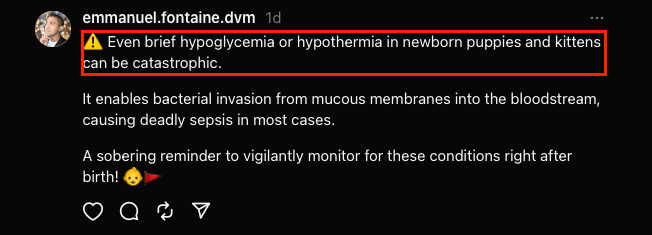
Addressing these risks involves using a kitten formula that closely mimics the mother’s milk.
What Ingredients Are Safe for Kitten Milk?
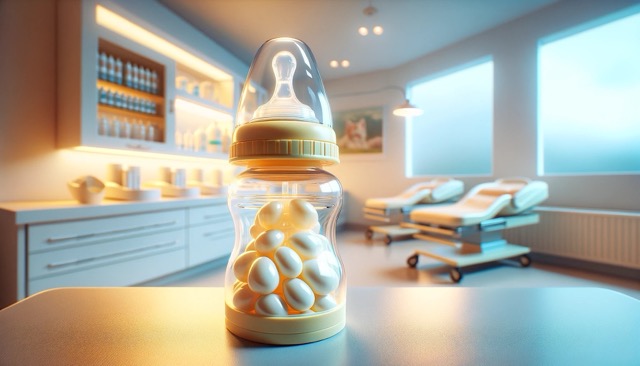
A recipe I used to share…
When I first began my journey in kitten care, I often shared a homemade kitten milk replacer recipe that was based on a textbook published in 2001.
The formula consisted of the following:
- 90 mL of condensed milk
- 90 mL of water
- 120 mL of plain yogurt (not low fat),
- and either 3 large or 4 small egg yolks.
This recipe, likely developed long before its publication, was a staple recommendation for those in need of an emergency milk solution for newborn kittens.
However, with time and advances in veterinary nutrition, my perspective on the best options for feeding orphaned kittens has evolved significantly.
Today, I no longer recommend this old recipe as my go-to option.
The understanding of the nutritional needs of kittens has deepened, leading to more sophisticated and tailored solutions that better mimic the nutritional profile of a mother cat’s milk.
And what I think about it today
Creating a homemade kitten milk formula that closely matches the complex nutritional profile of a queen’s milk is exceptionally challenging, if not impossible, with standard kitchen ingredients.
The recipe I previously recommended—comprising condensed milk, water, plain yogurt, and egg yolks—falls short in several critical ways.
For instance, queen’s milk is extraordinarily high in energy and specific nutrients like proteins, calcium, and phosphorus, calibrated to support rapid kitten growth.
The energy content alone in queen’s milk is about 1171.1 kcal/L, with precise ratios of calcium to phosphorus and high protein levels tailored for kittens’ developmental needs.
However, common household ingredients like yogurt and condensed milk cannot replicate these high nutrient concentrations.
They lack the precise balance of minerals and proteins necessary, and their composition might introduce elements like lactose at levels different from those naturally found in cat’s milk.
Also, while egg yolks are nutrient-dense, they do not provide the exact type of proteins or calcium-phosphorus balance needed.
Therefore, while homemade recipes can serve as emergency substitutes, they do not offer the specialized nutrition that commercial kitten formulas or, ideally, a mother cat’s milk provides.
This discrepancy can impact a kitten’s growth and health, underlining the importance of choosing or crafting a formula that meets the rigorous nutritional needs of kittens.
Comparing Homemade and Commercial Kitten Milk
Today, I think that commercial kitten milks are typically far superior to homemade options because they are scientifically formulated to closely mimic the nutritional profile of a queen’s milk.
These commercial formulas are developed with precise concentrations of proteins, fats, minerals, and vitamins to ensure that orphaned or supplemental-fed kittens receive the balanced nutrition they require for optimal growth and health.
They also ensure the correct balance of calcium to phosphorus, critical for bone development, and the right kind of proteins that are easily digestible for kittens.
Of course, there are scenarios where homemade options might be considered:
| Not Being Prepared | When caregivers are caught unprepared without access to commercial milk replacers. |
| Natural Disasters | In emergency situations such as floods, earthquakes, or other events that disrupt regular supply chains and access to pet care supplies. |
| Immediate Need | When a kitten is found unexpectedly and immediate nutrition is crucial before commercial options can be procured. |
However, these instances highlight the primary rule: always be prepared.
For cat breeders, this means having an appropriate kitten milk replacer on hand at least 2-3 weeks before a female cat is due to give birth.
For shelters, especially during or anticipating kitten season, stocking up on essential supplies like commercial milk replacer a month in advance is crucial.
Being prepared not only ensures the health and growth of the kittens but also alleviates the stress of last-minute solutions that may not fully meet the nutritional needs of these vulnerable animals.
What I look for in a kitten milk replacer

When selecting a commercial kitten milk replacer, there are several key factors I consider to ensure that the product meets the highest standards of quality and effectiveness for feeding newborn kittens:
| Optimal Nutritional Profile | The replacer must closely match the nutrient composition of a queen’s milk, as previously detailed. This includes high energy content, balanced levels of proteins, calcium, phosphorus, and appropriate amounts of lactose. |
| Ease of Dilution | A quality milk replacer should dissolve easily in water without forming clumps. Proper dilution is crucial as incorrect mixing can lead to inconsistent nutrient delivery and potentially affect the digestibility of the formula. This common mistake can impact a kitten’s health significantly. |
| Prebiotic Supplementation | The inclusion of prebiotics in the formula is highly beneficial. Prebiotics promote a healthy gut microbiome, mirroring the benefits found in natural mother’s milk. This addition can help support the overall digestive health of the kitten, enhancing nutrient absorption and immune function. |
| DHA Supplementation | Incorporating DHA into the formula supports optimal brain and visual development in newborn kittens, enhancing their cognitive abilities and overall health. |
| Powder-Based Formula | I prefer powder-based milk replacers because they allow for adjustments in osmolality. This feature is particularly useful in managing common neonatal issues such as constipation or diarrhea. Adjusting the concentration can help provide the right balance of fluids and nutrients to address these conditions effectively. |
| Shelf Stability and Safety | The milk replacer must be produced and packaged in a way that ensures it remains free from contamination and retains its nutritional value over its shelf life. This ensures every batch mixed is safe and beneficial for the kittens. |
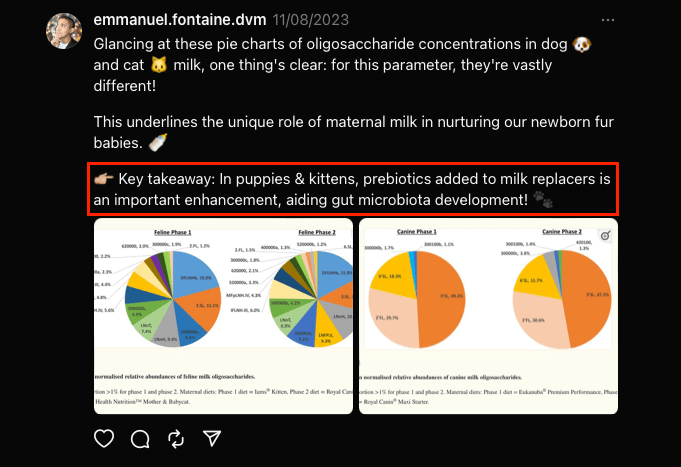
These criteria help ensure that the milk replacer not only meets the immediate nutritional needs of kittens but also supports their overall health and development effectively
My Recommendation: My favorite milk replacer is Royal Canin Babycat Milk, which I highly recommend whenever it is available. Its formulation and ease of use make it an excellent choice for kitten care.
Essential Accessories for Feeding Kittens with Commercial Milk Replacer

When using a commercial milk replacer for kittens, having the right accessories can make the feeding process easier and more effective.
Here’s a list of the top accessories you should consider:
Bottle and Nipple Set
Specifically designed for kittens, these bottles come with smaller nipples and holes appropriate for a kitten’s mouth and suction ability.
This is a reason why I love the Babycat milk replacer as it comes already with the bottle and nipple.
Several kits are available online as well, like the following two:
Newborn Kitten Puppy Feeding Bottles for Nursing
Nipple Brush
Small brushes to clean inside the nipples, ensuring they remain clear of residue and safe for the kittens to use.
Here is an option:
Digital Scale
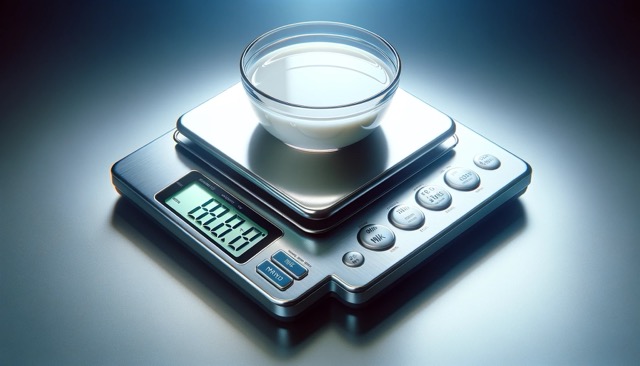
To measure the exact amount of powder and water for mixing, ensuring the correct nutritional balance. Remember, dilution is critical so you want to be very precise here!
I’ll use the same type as the one recommended to weigh puppies and kittens, with a 1g accuracy.
Thermometer
To check the temperature of the milk before feeding, ensuring it is not too hot or too cold for the kittens. Remember also that hypothermia is also a common problem in newborn kittens so before bottle-feeding, ideally, you need to check their temperature as well
Soft Towels or Cloths
For cleaning the kittens after feeding and stimulating them to urinate and defecate, which is something their mother would normally do.
These accessories will help ensure that the kittens receive the best possible care and nutrition during their critical early weeks.
My views on feeding newborn kittens have evolved significantly over the years. While there was a time when homemade kitten milk recipes were my go-to recommendation, I no longer believe they offer the best solution under normal circumstances. The reality is that commercial kitten milk replacers are far superior due to their precise nutritional formulations designed specifically to support healthy growth and development in kittens.
In rare cases, such as emergencies or when no other option is available, a homemade recipe may be necessary. However, for everyday use, commercial formulas provide a level of precision and nutritional completeness that homemade mixtures simply can’t match.
The key takeaway is the importance of being prepared. If you anticipate being responsible for the care of newborn kittens, it’s crucial to equip yourself with a high-quality commercial milk replacer well in advance. Being prepared means ensuring you have the best tools at your disposal to help these vulnerable kittens thrive from the start. This proactive approach can make a significant difference in their early development and long-term health.
Spaying & Neutering in kittens is a topic surrounded by myths, outdated practices, and concerns.
The great news?
There are new rules to follow that can help us make better decisions for the health and well-being of our feline friends!
Don’t miss out on this opportunity to elevate your expertise in feline care.
Enroll today and be at the forefront of kitten spaying and neutering practices!

 DR. EMMANUEL FONTAINE