🇫🇷 Lire en Français | 🇪🇸Leer en Español | 🇧🇷Leia em português
Tonight, I’m giving a lecture to a group of veterinary students on nutrition and reproduction, focusing on the crucial topic of lactation in cats. While preparing for this talk, I recalled an idea that struck me during my recent travels in Mexico, where I gave a series of lectures on newborn puppy and kitten care. Inspired by those discussions, I envisioned a new tool—a weight loss calculator for lactating female cats. This innovative calculator could be a game-changer for catteries, offering a simple yet effective way to monitor and manage the health of lactating queens. By closely tracking weight loss, we can ensure neonatal health and optimize lactation management. Intrigued? Keep reading to discover how proper nutrition and monitoring can make a significant difference in the well-being of lactating queens!
- What Should I Feed My Lactating Cat?
- How Can I Ensure My Cat’s Milk Supply is Sufficient?
- How to Monitor and Maintain the Health of a Lactating Cat
What Should I Feed My Lactating Cat?

Is a Special Diet Necessary for Lactating Cats?
Yes, absolutely!
Lactation is the most demanding life stage for a cat.
During this period, the energy needs of a female cat are multiplied by 2 or 3 compared to their regular maintenance needs.
This means that a lactating cat requires significantly more calories and nutrients to produce enough milk, especially if she has a large litter.
To meet these increased demands, feeding a lactating cat a growth diet, which is typically formulated for kittens is crucial.
These diets are more energy-dense and nutrient-rich compared to regular adult maintenance diets. Indeed, a growth diet packs more calories and essential nutrients into every bite, ensuring the lactating cat gets what she needs to produce sufficient milk.
Additionally, it’s recommended to free-feed during lactation.
In my lectures, I always emphasize that this is the only time when free-feeding is advisable.
Many people think cats should always have food available because they believe cats will regulate their intake. However, this is a misconception.
Cats can overeat for various reasons, including stress, boredom, or simply because they enjoy the taste of their food.
In catteries, I strongly advocate monitoring the amount of food given to cats to prevent overeating.
However, lactation is the exception.
During this period, the mother cat will need a lot of energy and nutrients to produce milk adequately. So, while free-feeding, ensure the diet is appropriate and nutrient-dense to support her and her kittens effectively.
But wait, there’s more to consider when feeding a lactating cat.
| 👉🏽Throughout gestation, I recommend feeding this diet—or this one. These are both suitable for all cats, from the first day of pregnancy to the end of lactation, and provide the right support for healthy development and milk production. These nutritional solutions are also available through a professional program. Learn more about options in the USA and Canada. |
What Nutrients Are Essential for a Lactating Cat’s Diet?
Here are the essential nutrients to include in a lactating cat’s diet and why they are important:
| Nutrient | Why It is Important |
| Protein | Protein supports milk production and maintains the mother cat’s muscle mass. It is essential for the growth and development of the kittens. |
| Fat | Fat provides a concentrated source of energy, which is vital during lactation when energy demands are high. It also helps in the absorption of fat-soluble vitamins. |
| Calcium | Calcium is crucial for milk production and helps prevent conditions like eclampsia, which can occur due to calcium deficiency. Note that this condition is VERY rare in cats. It supports strong bones and teeth in kittens. |
| Phosphorus | Phosphorus works in tandem with calcium to support skeletal health. It is also essential for energy metabolism. |
| Omega-3 and Omega-6 Fatty Acids | These fatty acids are crucial for the development of the kittens’ brain and vision. DHA is the key nutrient to remember here. |
| Taurine | Taurine is an essential amino acid for cats, vital for heart function, vision, and reproduction. It also ensures healthy growth and development in kittens. |
It is also essential that the nutrition of the mother during lactation helps promote her gut microbiome.
The gut microbiome is a complex community of microorganisms living in the digestive tracts of animals.
It plays a major role in overall health, including the development of the immune system, and some authors consider it an organ in itself due to its critical functions.
Using a diet that promotes a healthy gut microbiome in the mother is vital because the microbiome of the newborn kittens is directly influenced by the mother’s microbiome.
Studies clearly show that the way the mother is fed during gestation and lactation has a direct impact on the development of the kittens’ microbiome. Therefore, paying attention to this aspect is crucial when selecting a lactating cat diet.
An important factor to consider is the protein-to-carbohydrate ratio of the diet.
There’s a common misconception that “cats are carnivores, so they should only eat meat.” While it is true that cats have a specific metabolism that requires a high amount of protein, studies indicate that they can benefit from carbohydrates in their diet.
The protein-to-carb ratio significantly impacts the quality of the kittens’ microbiome.
Research shows that a diet with moderate protein and moderate carbs results in a more diverse microbiome, which is a reflection of good/better health.
This evidence suggests that feeding only meat during lactation—and generally all the time—is not a sound strategy.
A balanced diet that includes appropriate amounts of both proteins and carbohydrates is essential for the optimal health of lactating cats and their kittens.
| 👉🏽Throughout gestation, I recommend feeding this diet—or this one. These are both suitable for all cats, from the first day of pregnancy to the end of lactation, and provide the right support for healthy development and milk production. These nutritional solutions are also available through a professional program. Learn more about options in the USA and Canada. |
How Much Food Does a Nursing Cat Need?

In my opinion, this is where things get interesting.
I love math—and nutrition is very much about math, actually.
While it’s never 100% accurate (this is biology we are dealing with, inherently unpredictable), using math to quantify and monitor is a great tool we should always use when breeding cats. This is how we gain accuracy.
And there’s this picture I always show during my lectures.
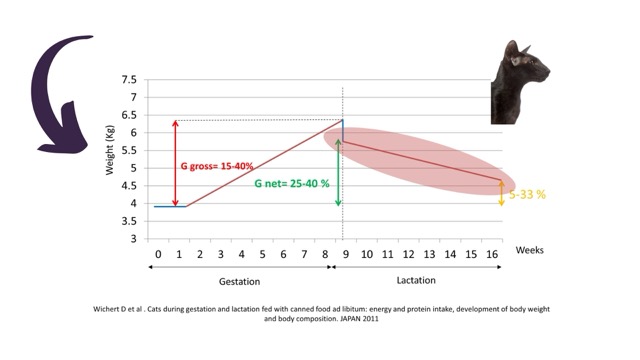
It tells you everything you need to know to properly monitor feeding the queen during gestation and lactation.
Based on this, I developed a calculator to monitor a queen’s weight gain during gestation.. and now another to monitor weight loss during lactation.
This is something you must remember: queens will always lose weight during lactation, which is very different from what we observe in dogs.
So, yes, you free-feed them during lactation, but how do you know that your “free-feeding” is correct? By weighing her during lactation and ensuring controlled weight loss as described in the picture.
From the time the queen gives birth to 8 weeks post-parturition, she should lose 5-33% of her weight at parturition.
- So first, weigh the queen after she has given birth to all the kittens to establish a good reference point.
- Then, weigh her weekly and compare it to the values provided in my new calculator, which you can download here.
This calculator will give you an idea of how much the queen should weigh at X weeks after parturition.
If she doesn’t lose more than the determined amount, it means you are feeding her correctly.
If she loses too much, increase her caloric intake to ensure proper milk production.
If she gains weight (which is unlikely but possible in biology), restrict her food intake during lactation—you don’t want her gaining weight during this period as it might impact her future reproductive career.
Monitoring the queen’s weight is a key factor in ensuring a sufficient cat milk supply, stimulating milk production, and preventing low milk supply in cats. By closely tracking her weight, you can make necessary adjustments to her diet to support her health and her kittens’ development.

I am on a mission to learn everything about dog and cat breeding. Sign up to my newsletter to follow my journey, and receive exclusive content and offers!
How Can I Ensure My Cat’s Milk Supply is Sufficient?

Signs Your Cat is Producing Enough Milk
The best marker of a queen’s milk supply is the weight gain of her newborn kittens.
If the queen is producing enough milk to sustain her kittens, they will gain weight daily. This is the ultimate marker of health in newborn kittens.
Consistent weight gain is crucial; any weight loss or plateau in a newborn kitten indicates something is wrong. Often, this is the first clinical sign you’ll observe, signaling potential issues with the queen’s milk supply.
It’s vital to weigh the newborn kittens daily right after they are born.
This practice allows you to monitor their growth closely and ensure they are thriving. If you notice any weight loss or stagnation, it’s essential to investigate immediately to prevent further complications.
For more detailed recommendations on monitoring newborn kittens, check my previous blogs here:
How To Care For Abandoned Kittens: A Complete Guide
The Premature Puppy Guide: Early Care for Fragile Lives (written for puppies but it contains the current monitoring recommendations I use in kittens as well)
How to Stimulate Milk Production in Cats

To enhance milk production, the key is anticipation—particularly through proper nutrition during the queen’s gestation.
Gestational nutrition directly influences lactation ability.
In contrast to the approach taken with bitches, managing the diet of a pregnant queen requires immediate attention to energy density from the very start of gestation.
We systematically enhance this by adding an additional 10% energy per week leading up to parturition. Essentially, this means transitioning queens to a growth-oriented diet right from the onset of pregnancy to ensure they are adequately nourished throughout this critical period.
For a deeper dive into this strategy, I encourage you to read more in my detailed blog on this subject:
What Should be the Weight of Your Pregnant Queen?
And while some suggest remedies like fenugreek to boost lactation, there’s no substantial research supporting their efficacy; instead, emphasis should be on correct nutrition.
Solutions vary for cases of agalactia, where queens produce no milk at birth.
Sometimes it’s a delay caused by stress or procedures like C-sections.
Here, antidopaminergic drugs like metoclopramide or domperidone, which promote prolactin secretion, can be effective.
These drugs are often available in veterinary clinics and could be a practical option to discuss with your vet.
However, it’s crucial to have a backup plan.
I always recommend having a high-quality kitten milk replacer ready as part of your maternity toolkit.
For guidance on choosing the best milk replacer, do refer to my latest blog on the subject:
How to Make Kitten Milk: Tips for Success
This comprehensive approach should offer substantial insights and strategies to address the issues of failed passive transfer and insufficient milk production.
Common Causes of Low Milk Supply and How to Address Them
| Cause | How To Address |
| Inadequate Nutrition | Ensure the queen is on a nutrient-dense, high-energy diet designed for lactation to meet her increased nutritional needs. Remember, it is important to focus on both nutrition during lactation AND gestation, prior to the queen giving birth. |
| Dehydration | Always provide fresh water and encourage the queen to drink regularly to support milk production. Think mixed feeding (=combining a dry and a wet diet) here! |
| Stress | Create a calm, quiet environment for the queen, free from disturbances and stressors to promote optimal milk production. |
| Illness or Infection | Monitor the queen’s health closely and seek veterinary care if you notice any signs of illness or infection that could impact her milk supply. |
| Mastitis | Monitor daily the color of the milk—anything different than white is abnormal—and palpate the mammary glands to ensure they are not indurated, hot, and painful. Seek veterinary care if any abnormalities are detected. |
| Postpartum Metritis | This infection of the uterus can occur after parturition and is different from pyometra. Monitor the queen’s vaginal discharge and overall health; if she appears sick or has a fever, seek veterinary consultation immediately. |
| Infrequent Nursing | Encourage regular nursing by ensuring the kittens are latching properly and feeding frequently to stimulate milk production. |
| Large Litter Size | Supplement the queen’s milk with kitten formula if she is unable to produce enough milk for all her kittens, ensuring each kitten receives adequate nutrition. |
| Genetic Factors | While genetic factors can be difficult to control, selecting queens from lines known for good milk production can help mitigate this issue in future litters. |
| 👉🏽 Here is the milk replacer I recommend in newborn kittens. It is also available through a professional program. Learn more about options in the USA and Canada. |
How to Monitor and Maintain the Health of a Lactating Cat
Regular Health Checks
During lactation, I recommend monitoring the following aspects closely, in addition to the general health of the queen:
– Mammary Glands:
Palpate them every day to ensure they are soft and non-painful. Look for signs of pain, heat, and induration, which are typical of mammary gland infections. Also, check the color of the milk; it should be white. Brown, green, red, or any color other than white is abnormal and indicative of mastitis.
Additionally, inspect for wounds. As kittens get older, their nails become sharper and can irritate the mammary glands, creating entry points for germs.
Milk is an excellent medium for bacterial growth, so preventing and addressing these wounds promptly is crucial.
– Weight of the Queen:
As mentioned earlier, this is a simple yet vital parameter to monitor the adequacy of your nutritional program during lactation.
Weigh the queens weekly. While queens naturally lose weight during this period, controlling this weight loss through proper nutrition is essential.
Use the calculator I created to help manage and track the queen’s weight.
Proper nutrition ensures the queen recovers quickly after weaning, which is crucial for her overall health.
Common Health Issues in Lactating Cats and Their Solutions

There are plenty of things that can happen during this period, unfortunately, but really, when it comes to the queen herself, there are four things I will always focus on during this period:
1. Stress:
Remember that cats thrive on familiarity and routine.
If they are stressed, it will lead to the secretion of cortisol, which can impact milk production and potentially lead to serious consequences, such as the mother not taking care of her kittens anymore or, in extreme cases, cannibalism.
To reduce stress, I recommend the use of pheromones in the maternity area.
Pheromone diffusers, introduced 7 days before parturition and used until 3 weeks after,, can appease the mother and increase maternal behavior.
This practice is particularly beneficial in catteries where the consequences of stress can be even more severe.
| 👉🏽I believe that pheromone diffusers are an excellent tool for reducing stress in breeding cats, Here is the pheromone diffuser I recommend for cats. |
2. Mastitis:
Mastitis is an infection of the mammary gland, with bacterial infections being the most common in cats. It can occur anytime during gestation but is more frequent right after parturition or around the peak of lactation, typically three weeks after the kittens are born.
Monitoring milk production and mammary glands daily is crucial, as mastitis can alter milk composition and lead to neonatal diarrhea.
Mastitis is generally treated with antibiotics, but there are two approaches: some veterinarians treat the mother and allow the kittens to nurse, while others remove the kittens and switch to a milk replacer to prevent toxic milk syndrome. Discuss with your veterinarian which approach to follow.
Recent studies show that kittens receiving antibiotics in their first year of life have a 20x higher risk of developing chronic GI disorders, so treatment approaches may evolve in the future.
3. Postpartum Metritis:
This condition often occurs in the week following birth and is an infection of the uterus, not a pyometra. It happens because the cervix is open, and there are debris and blood in the uterus post-parturition, which can lead to infection if germs ascend from the environment.
Monitoring the queen’s vaginal discharge to ensure it is not purulent and checking for fever are crucial.
Sometimes, metritis can be caused by a retained placenta or fetus, so it’s important to count the placentas expelled after birth and know the number of kittens expected.
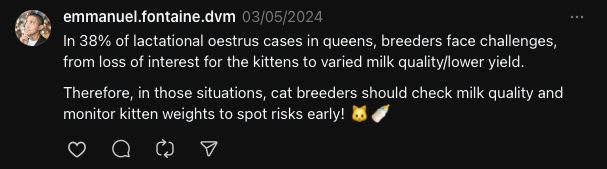
4. Queen Getting in Season During Lactation:
Some breeders mention that a queen starting a season during lactation may neglect her kittens.
I wrote a series of posts on Thread on this topic, and I encourage you to read them for more detailed information on how to manage this situation effectively.


Importance of Hydration and Clean Environment

Cats are originally desert animals, so they tend to drink less water. This behavior needs to be encouraged in lactating queens to ensure their health and milk production.
One effective strategy is mixed feeding, which means providing a combination of dry and wet diets.
Wet food contains more water, is very palatable, and helps ensure queens receive adequate hydration during lactation. Additionally, mixed feeding can optimize the mother’s gut microbiome, which in turn benefits the kittens’ microbiome as discussed earlier.
Maintaining a clean environment is equally critical, as it can prevent infections such as mastitis and postpartum metritis.
Regularly changing bedding and sanitizing the nesting area minimizes the risk of bacterial growth and other pathogens. This practice is especially important since the kittens’ immune systems are still developing, making them more susceptible to infections.
For more detailed strategies on maintaining a clean environment for lactating cats, I encourage you to read my full blog on this topic:
The Power of Three: Mother, Newborn and Environment in Veterinary Neonatology
| 👉🏽Choosing the right disinfectant is paramount for newborn kitten care, and today I recommend using Accelerated Hydrogen Peroxides (AHPs). They have become the standard in both human and veterinary medicine and are always my first choice for effective and safe disinfection. This is the product I recommend. |
Lactation is a very critical stage for female cats, and I am glad I took the time to write this blog. Reflecting on this specific stage has highlighted what can be done to optimize the mother’s health and ultimately the health of the newborns. Additionally, it gave me the opportunity to create a lactation cat weight-loss calculator. This simple tool can help better monitor the health of the mother and the impact of her nutrition during this period.
I firmly believe that what can be measured can be improved, and this is the idea behind the calculator. It provides a straightforward method to ensure you are on the right track during a period that is often stressful for everyone. I encourage you to give it a try—it’s a simple step that can yield significant benefits, reassuring you that you are doing the right thing for your lactating cat and her kittens during this (always) stressful period!
Spaying & Neutering in kittens is a topic surrounded by myths, outdated practices, and concerns.
The great news?
There are new rules to follow that can help us make better decisions for the health and well-being of our feline friends!
Don’t miss out on this opportunity to elevate your expertise in feline care.
Enroll today and be at the forefront of kitten spaying and neutering practices!

 DR. EMMANUEL FONTAINE
Thank you for this informative article.
May I please ask how do I orevent mastitis?
LikeLike
Thank you Dr Emmanuel!
LikeLiked by 1 person