🇫🇷 Lire en Français | 🇪🇸Leer en Español | 🇧🇷Leia em português
Too much—or too little—fat can quietly sabotage your breeding plans. Whether you’re breeding dogs or cats, body condition isn’t just about appearance—it’s a critical factor in fertility, pregnancy outcomes, and newborn survival. Research shows that fat tissue doesn’t just store energy; it acts like a hormone-producing organ, directly influencing ovulation, litter size, birth weight, and even the risk of dystocia. In this guide, you’ll learn why mastering body condition is one of the most powerful tools to improve reproductive success in your kennel or cattery.
- TL;DR
- What Surprising Role Does Fat Play in Reproduction?
- Why Does Body Condition Matter So Much for Breeders?
- What Are the Reproductive Risks of Poor Body Condition?
- The Surprising Truth About When Fat Affects Fertility
- What Are the 13 Essential Strategies Every Breeder Should Implement?
- 1. Post the BCS Chart Visibly
- 2. Track Weights Year-Round
- 3. Weigh the Food
- 4. Use Neonatal & Pediatric Growth Charts
- 5. Feed Species-Specific During Pregnancy
- 6. Track Weight During Gestation
- 7. Watch Weight During Lactation
- 8. Recover Before Rebreeding
- 9. Keep Studs Lean and Fertile
- 10. Use Diets with Omega-3s (EPA/DHA)
- 12. Start 8 Weeks Before Mating
- 13. Create a Stage-Based Feeding Plan
- The Breeder’s Secret Weapon: Detailed Logbooks
TL;DR
- Body condition score (BCS) has a direct impact on fertility, litter size, and newborn survival in both dogs and cats.
- Fat tissue is hormonally active and influences reproductive health through estrogen production, inflammation, and insulin sensitivity.
- Poor body condition—whether overweight or underweight—can lead to silent heats, dystocia, low sperm quality, and smaller litters.
- The reproductive system is programmed during early growth, making neonatal and pediatric weight tracking essential.
- Nutritional conditioning should begin 2–3 months before planned breeding to improve reproductive cell quality.
- Maintaining ideal weight during pregnancy, lactation, and recovery is critical to long-term breeding success.
- Consistent tracking of BCS, body weight, and diet across all life stages is one of the most powerful tools for breeders.
What Surprising Role Does Fat Play in Reproduction?
Back in the 1980s, scientists made a discovery that changed everything about how we understand reproduction.
Even after menopause, some women still had significant estrogen in their blood. Their ovaries had shut down — yet estrogen remained. The culprit? Fat tissue itself.
A team led by Drs. Evan Simpson and Peter MacDonald revealed that fat cells could convert testosterone into estrogen, thanks to an enzyme called aromatase. It turned out fat wasn’t just storage — it was a hormone-secreting organ that directly affected reproductive health.
This insight reshaped human medicine.
And today, it should reshape how dog and cat breeders think about fertility.
Why Does Body Condition Matter So Much for Breeders?
For years, breeders were told to keep their animals in ideal body condition before breeding.
But recent studies reveal how deep the connection truly goes.
Fat tissue doesn’t just sit there. It:
- Secretes hormones like leptin and estrogen
- Influences insulin sensitivity
- Fuels chronic inflammation
- Directly impacts fertility hormones
All of these factors can either support or sabotage your breeding program’s success.
Most concerning? Even after correcting body weight, some reproductive damage can be irreversible.
What Are the Reproductive Risks of Poor Body Condition?
What Happens in Overweight Dogs and Cats?
- Silent or irregular heat cycles
- Poor ovulation and longer time between heats
- Higher dystocia rates
- Smaller litters and more low birth weight newborns
- Reduced libido and semen quality in males
What Happens in Underweight Dogs and Cats?
- Anestrus (no heat)
- Smaller litter sizes
- Lower sperm count and semen volume
- Delayed reproductive maturity
- Increased risk of pregnancy complications
The Surprising Truth About When Fat Affects Fertility
This all starts way earlier than most breeders think.
Growth isn’t just about getting bigger—it’s when an animal’s entire reproductive system gets built and programmed for life!
If there’s too much or too little fat during this critical window, it can seriously affect the development of the hypothalamic-pituitary-gonadal axis—the hormonal engine that drives everything reproductive.
The damage can start early and be permanent.
Some reproductive damage from poor body condition can be irreversible, even after correcting weight issues. This is why tracking growth using proper neonatal and pediatric growth charts is essential for serious breeding programs.
The timeline for fertility preparation is much longer than most realize.
For optimal breeding results, you need to be thinking about body condition at least 2-3 months before any planned breeding. This isn’t arbitrary—it’s biology!
Here’s why that timeframe matters:
- Sperm development takes about 60 days in dogs & cats
- Egg maturation is very different from what we see in humans, but it seems reasonable to think that anything that happens in the 2-3 months prior to breeding has an impact
- Nutritional changes need about 8 weeks to actually improve reproductive cell quality
Temperature matters too—and not just ambient temperature.
Body fat acts as insulation, which is why overweight males often have poorer sperm quality.
The testicles need to maintain a temperature about 2°C (3.6°F) below normal body temperature for optimal sperm production.
What Are the 13 Essential Strategies Every Breeder Should Implement?
1. Post the BCS Chart Visibly
Body condition scoring provides an objective method for assessing fat coverage, with 5/9 representing ideal condition. Post this chart in your facility to encourage consistent monthly assessments.
The 9-point scale allows you to accurately track condition:
- 1-3/9: Underweight, with visible ribs and no palpable fat
- 4-5/9: Ideal condition, with ribs easily felt but not seen
- 6-9/9: Overweight to obese, with ribs difficult to feel and no visible waist
Research conclusively demonstrates that animals at either extreme experience multiple reproductive challenges. Clinical cases consistently show that females at optimal condition produce larger, healthier litters than their overweight or underweight counterparts.
| 👉🏽I believe dog & cat breeders should continuously monitor the body condition scores of their animals—rule of thumb: only breed dogs/cats in optimal body condition. Download the dog chart and the cat one; I strongly suggest printing it and attaching it to a wall in every kennel and cattery. |
2. Track Weights Year-Round
Implement monthly weight checks on all adult breeding animals.
Record these measurements consistently, aiming to maintain weight within ±5% of ideal (excluding pregnancy).
This consistent tracking is crucial for maintaining optimal body condition.
Weight tracking becomes especially important during specific reproductive stages:
- During pregnancy: Female dogs should gain approximately 15-25% of their body weight, while cats need about 25-40%
- During lactation: Dogs should generally maintain weight, but cats may lose some weight
- Post-weaning period: Females must return to ideal body condition before the next breeding cycle
3. Weigh the Food
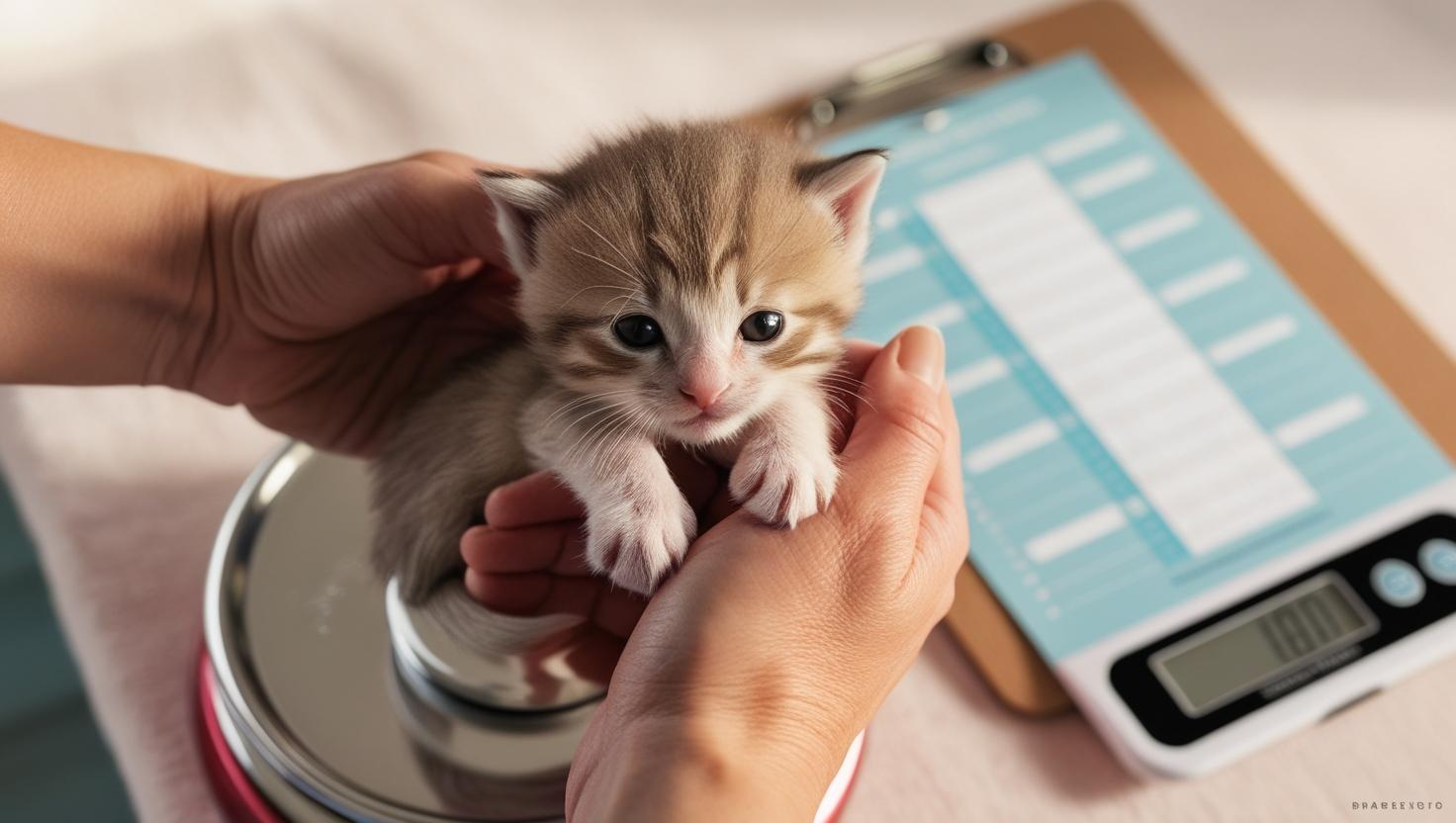
Using measuring cups for pet food can lead to significant inconsistency. Depending on how they’re used, the actual amount can vary by up to 25%. A quality kitchen scale that measures in 1-gram (0.035 oz) increments is essential for proper portion control.
Create a feeding system that works:
- Weigh out exact portions for each animal based on current needs
- Store meals in labeled containers if preparing in advance
- Record any adjustments in your breeding records alongside weight and BCS data
Preventing weight issues through precise feeding is infinitely easier than correcting problems later. Some damage from obesity, like joint degeneration, can be permanent even after weight correction.
| 👉🏽 I recommend starting with kitchen scales (like this one) |
4. Use Neonatal & Pediatric Growth Charts
Growth tracking should start from day one. This isn’t just about monitoring size—it’s about ensuring the proper development of reproductive systems.
Implement this tracking protocol:
- Track daily weights until 3-4 weeks of age
- Switch to weekly measurements until 2-3 months, and then do it monthly until the puppy/kitten reaches its adult size
- Note any growth spurts or plateaus that deviate from the growth charts
During early growth periods, the hormonal systems that drive reproduction are developing their programming. When puppies or kittens grow too quickly or too slowly, it can interfere with this delicate system.
A digital scale that measures as little as 5 grams (0.18 ounces) is ideal for tiny newborns, while one that can handle up to 5 kg (11 pounds) will work through the juvenile period.
| 👉🏽Neonatal growth charts include data from over 115 different puppy breeds and over 30 different kitten breeds. Download the puppy ones here, and the kitten ones here. |
5. Feed Species-Specific During Pregnancy
Dogs and cats have different nutritional needs during pregnancy:
For dogs: Maintain normal feeding until day 42 of pregnancy, then gradually increase. The first six weeks don’t require extra calories, and feeding too much during this period leads to unnecessary weight gain.
For cats: Increase calories from day 1 of pregnancy. A queen’s metabolism shifts immediately, and her nutritional demands increase right from conception.
The quality of fat matters tremendously. Cats especially require arachidonic acid from animal fat—it’s non-negotiable for their reproductive health.
Weight monitoring during pregnancy is essential:
- Dogs should gain approximately 15-25% of their pre-pregnancy weight
- Cats should gain about 25-40% of their pre-pregnancy weight
Anything significantly more than this is probably just fat accumulation, not healthy pregnancy weight!
6. Track Weight During Gestation
Weekly weight monitoring throughout pregnancy gives you enough data points to spot concerning trends before they become problems. Use the same scale, at the same time of day for consistency.
Proper weight management starts before pregnancy.
Females should enter pregnancy at an optimal body condition score of 5/9—not too thin, not too heavy.
When animals gain excessive weight during pregnancy, it becomes incredibly difficult to return to ideal condition before the next breeding cycle. This creates a downward spiral where each pregnancy results in more retained weight, making each subsequent pregnancy riskier.
7. Watch Weight During Lactation
For dogs, the goal during lactation is to maintain their weight while providing enough nutrition to support milk production.
Cats typically experience some weight loss during lactation, but this needs to be carefully managed with high-energy nutrition to prevent excessive decline in body condition.
Extreme weight fluctuations can seriously impact future fertility. When a mother becomes significantly underweight during lactation, it can delay the return to estrus—sometimes by several months.
Nursing mothers need approximately 2-3 times their normal caloric intake at peak lactation. Consider feeding smaller meals 3-4 times daily rather than once or twice a day during this high-demand period.
8. Recover Before Rebreeding
One of the most critical factors for continued breeding success is getting your dam back to her ideal body condition (BCS 5/9) after weaning.
Both being overweight OR underweight can sabotage future fertility.
When a female stays overweight after a litter, she often has trouble conceiving the next time, while underweight females might not cycle regularly.
Implement this recovery protocol:
- Gradual weight normalization after weaning through controlled exercise and careful portion control
- Weekly weigh-ins to track progress
- Allow at least one heat cycle to pass before breeding again
The recovery timeline depends on the breed and individual, but generally allow at least 6-8 months between litters for cats, and 8-12 months for dogs depending on the breed size.
9. Keep Studs Lean and Fertile
Fat tissue contains an enzyme called aromatase that converts testosterone into estrogen—exactly what you don’t want happening in your male! Plus, extra padding around the scrotum raises testicular temperature, damaging sperm production.
When male dogs or cats carry too much weight, their reproductive system suffers:
- Lower breeding drive
- Decreased semen quality and volume
- Reduced sperm count and more abnormal sperm
- Hormone imbalances—testosterone drops while estrogen rises
Aim for a fit, athletic stud. You should be able to feel his ribs without pressing hard, and he should have a visible waist when viewed from above. Think lean athlete, not bodybuilder or couch potato.
Remember that sperm development takes about 60 days in dogs. This means any improvements in diet or exercise need to happen at least 2-3 months before planned breeding.
10. Use Diets with Omega-3s (EPA/DHA)
Omega-3 fatty acids—particularly EPA and DHA—support reproductive health in several ways:
- Support fertility in both males and females
- Improve reproductive cell quality
- Promote reproductive tissue health
- Control inflammation throughout the body
These essential nutrients are crucial components of cellular membranes in reproductive cells. For males, research indicates that proper omega-3 supplementation can improve semen quality. For females, it can help maintain appropriate hormone levels, specifically progesterone, which is essential for pregnancy maintenance.
Some premium pet foods already include omega-3s at optimal levels for breeding animals.
11. Choose Antioxidant-Rich Diets
Oxidative stress damages reproductive cells. Antioxidants protect both sperm and eggs from cellular damage that can derail conception and embryo development. The most important antioxidants for reproduction are vitamin E, vitamin C, and beta-carotene.
Sperm are especially vulnerable to oxidative damage because of their high metabolic activity and unique cell structure. Vitamin E helps maintain sperm membrane integrity, which is crucial for fertilization.
The timing of antioxidant optimization matters! Starting at least 60-90 days before breeding allows for complete cycles of sperm production and egg maturation.
Beyond just protecting cells, antioxidants help with hormone production, improve blood flow to reproductive organs, and support implantation. Look for foods with added antioxidants listed in the guaranteed analysis.
12. Start 8 Weeks Before Mating
Begin nutritional conditioning at least 8 weeks before planned mating. This isn’t arbitrary advice—it’s based on the biological timeline of reproductive cell development.
For male dogs, sperm development takes approximately 60 days to complete. For females, egg quality is heavily influenced by nutritional status in the 2-3 months before breeding.
Focus on these key areas during the pre-breeding period:
- Gradual weight optimization if needed
- Enhanced protein quality in the diet
- Fatty acid supplementation with verified omega-3 sources
- Antioxidant support for cellular health
- Appropriate vitamin/mineral balance without over-supplementation
Making changes right before breeding is like studying the night before a big exam—the real benefits come from consistent preparation over time.
13. Create a Stage-Based Feeding Plan
Different reproductive stages require different nutritional approaches. Develop specific feeding protocols for each phase:
Growth Stage
- Track growth meticulously using neonatal & pediatric growth charts
- Maintain ideal body condition (not too thin, not too chubby)
- Avoid rapid growth spurts that can affect development
Pre-Breeding/Conditioning Stage (2-3 months before breeding)
- Focus on omega-3 fatty acids for improved fertility
- Include antioxidant-rich foods to protect developing eggs and sperm
- Maintain consistent portion control
Pregnancy Stage
- For dogs: Maintain normal feeding until about day 42, then gradually increase
- For cats: Increase food gradually from day one of pregnancy
- Monitor weight gain weekly
Lactation Stage
- Provide energy-dense meals with frequent feeding opportunities
- Ensure constant access to fresh water
- Adjust portions based on litter size and weight trends
Recovery Stage
- Return to ideal body condition (BCS 5/9) before considering breeding again
- Allow at least one heat cycle to pass after significant weight change
The Breeder’s Secret Weapon: Detailed Logbooks
The most successful breeders maintain a dedicated logbook for each breeding animal.
This simple habit transforms breeding outcomes by creating accountability and identifying patterns.
Track these essential elements:
- Weight measurements (taken at least monthly)
- Body Condition Score (BCS) on the 9-point scale
- Diet details including brand, amount, supplements
- Reproductive milestones like heat cycles, breeding dates, whelping/queening
- Health interventions including vaccinations and deworming
Whether digital or paper, what matters is that all information for one animal lives in one place. This brings scientific precision to your breeding program—separating hobby breeders from those who consistently produce healthy, thriving litters.
For decades, fat was seen as an inert bystander in reproduction. Today, we know it communicates directly with the reproductive system, influencing every aspect of fertility.
The strategies outlined here aren’t just chores—they’re acts of stewardship that build the foundation for the next generation, starting at the cellular level.
True excellence in breeding won’t belong just to those with champion titles or perfect pedigrees. It will belong to those who understand that reproductive success begins with careful attention to body condition throughout every stage of their animals’ lives.
“Do the best you can until you know better. Then when you know better, do better.” — Maya Angelou
Now you know better. Let’s raise the standard—together.
Free Breeder Resource:

1,800+ savvy subscribers received “Fertility Starts With Fat”— a 4-page printable protocol featuring my recommended protocol & checklist. Join my weekly email and grab it instantly.
Subscribe
Please select all the ways you would like to hear from Dr Emmanuel Fontaine:
EmailYou can unsubscribe at any time by clicking the link in the footer of our emails. For information about our privacy practices, please visit our website.
We use Mailchimp as our marketing platform. By clicking below to subscribe, you acknowledge that your information will be transferred to Mailchimp for processing. Learn more about Mailchimp’s privacy practices.

 DR. EMMANUEL FONTAINE