
Exploring the critical phases of canine and feline reproduction, this blog offers a comprehensive guide on assessing the presentation of neonates during parturition. Understanding the presentation, position, and posture of puppies and kittens at birth is pivotal for ensuring a healthy start to life. With practical advice for breeders, veterinarians, and pet enthusiasts, we unravel the complexities of birth processes in dogs and cats. Highlighting the importance of timely intervention and expert care, this article empowers readers with knowledge to support the wellbeing of mother and offspring during this crucial time.
Category: Dog Whelping
Your comprehensive guide to the dog whelping process, providing practical advice on preparation, recognizing labor signs, and postpartum care. A crucial resource for breeders seeking to navigate the birthing experience with confidence, ensuring the safety and well-being of both the mother and her puppies.
[BLOG] Determining the due date in the bitch: can we do this ?
Discover the art of determining the due date in canines with precision and confidence. Understanding the exact pregnancy length, traditionally observed at 63±1 days from ovulation, significantly impacts breeding success and management. Contrary to common practice, relying on the date of the first breeding may result in a broad 58 to 72 days range, complicating due date prediction. Learn about the valuable role of ovulation timing in enhancing fertility and predicting parturition with near certainty. This guide also explores size-specific delivery expectations and alternative methods for due date estimation, including biometric measurements and progesterone level assessments, to support breeders and veterinarians in ensuring optimal outcomes for both dam and offspring.
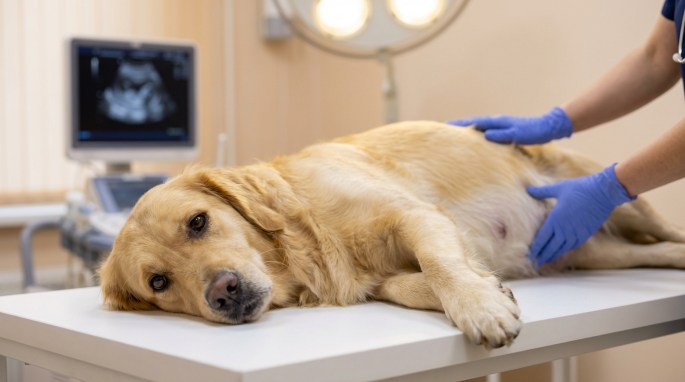
How to Spot and Manage Canine Maternal Hydrops
A rock-hard belly in late pregnancy could be deadly hydrops. Learn to spot the warning signs your vet might miss — before it’s too late.

