
Think of it as a bustling city within your dog’s digestive system, inhabited by trillions of microorganisms, including bacteria, fungi, and viruses: this is what we refer to as the gut microbiome. And this ‘hidden organ’ is not just a passive resident: the gut microbiome is indeed a key player in your dog’s overall health, from shaping its immune system to influencing behaviour and weight gain! Lately, I’ve been immersing myself in the world of the puppy microbiome, a subject you might have seen me passionately discussing on Threads. The more I’ve read about the development of this intricate ecosystem, the more I’ve realized its profound impact on a dog’s health. It’s not an exaggeration to say that the journey to a healthy adult dog begins with a well-balanced puppy microbiome. This is now something I have integrated into all my lectures on newborn puppy care, and in this blog, I’m excited to share with you everything I’ve learned from the latest published papers. Whether you’re a seasoned dog owner or new to the world of pets, you’ll find valuable insights and practical tips to ensure your furry companion’s gut health is on the right track from the get-go.
- What is the Puppy Microbiome and Why is it Crucial for Dog Gut Health?
- How Does the Puppy Microbiome Develop and What Influences It?
- What Are the Signs of an Imbalanced Puppy Gut Health?
- How Can We Nurture a Healthy Puppy Microbiome?
What is the Puppy Microbiome and Why is it Crucial for Dog Gut Health?
Understanding the Puppy Microbiome
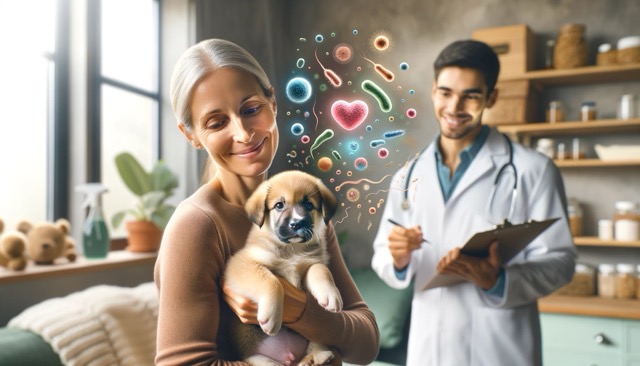
The puppy microbiome is a complex and dynamic community of microorganisms; it plays a pivotal role in the development of a dog’s gut health.
From the moment a puppy is born, its gut begins to be colonized by a diverse array of bacteria, viruses, and fungi. This colonization is not just incidental; it’s a critical part of the puppy’s development, influencing everything from digestion to immune system function.
One crucial aspect to remember though is that the development of a newborn puppy’s microbiome begins even before birth!
There is a new chapter in canine reproduction, known as DOHAD – “Developmental Origin of Health and Diseases.” And DOHAD highlights how everything from the time of breeding influences a newborn puppy’s health, including its microbiome.
Research shows that the mother’s health and diet during gestation significantly impact her puppies’ microbiome development. This is vital, as the early formation of the microbiome sets the stage for a puppy’s gut later in life.
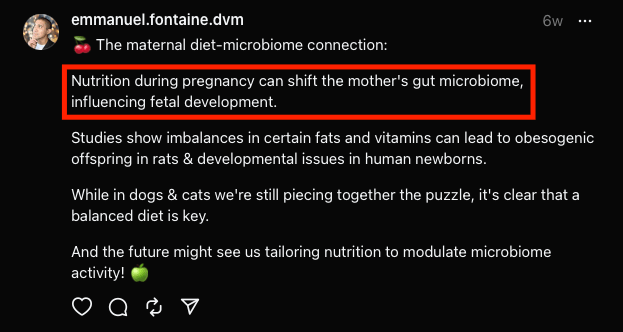
Understanding this connection underscores the importance of maternal care and nutrition, as it’s not just about the immediate well-being of the mother, but also about laying a healthy foundation for her puppies.
This key takeaway is a game-changer in my opinion. It emphasizes that the journey to optimal gut health in dogs starts much earlier than we previously thought.
The Link Between Microbiome and Long-Term Gut Health in Dogs
The impact of diet on a dog’s gut microbiome cannot be overstated. What a puppy eats in its early life has far-reaching effects on its gut and continues well into adulthood.
Diet can foster a healthy microbiome, which in turn supports the overall health and well-being of the dog. Conversely, a poor diet can lead to an imbalance in the gut flora, known as dysbiosis, which can predispose dogs to a range of health issues, including allergies, obesity, and even behavioural problems.
The gut microbiome is not just a passive system; it’s an active participant in a dog’s health. It helps in the digestion and absorption of nutrients, protects against pathogens, and even plays a role in modulating the immune system.
A well-balanced microbiome in puppies sets the stage for a strong immune system, efficient digestion, and a lower risk of chronic illnesses.
How Does the Puppy Microbiome Develop and What Influences It?
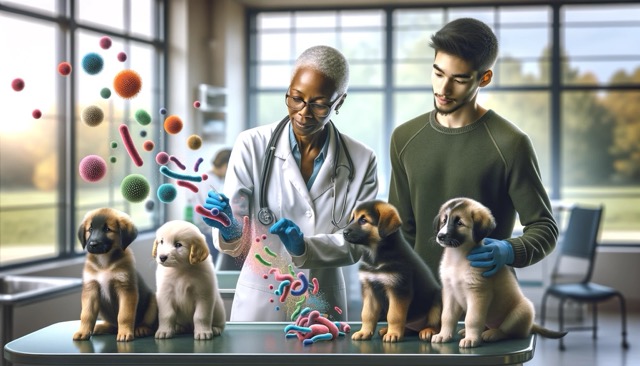
Key Stages in Puppy Microbiome Development
Maternal Factors
The development of the puppy microbiome is a fascinating journey; and as we just mentioned, it begins even before birth!
- A fundamental principle I often emphasize in my lectures is the paramount importance of the mother’s health: only breed healthy females! This rule is especially crucial when considering the impact on the gut microbiome.
Chronic disorders (=long-lasting conditions that can be managed but not always cured) in a breeding female, particularly those related to gastrointestinal health (think Inflammatory Bowel Disease – IBD- or chronic pancreatitis for instance), can adversely affect the developing microbiome of her puppies. Therefore, it’s essential to ensure that any female dog used for breeding is free from chronic health issues!
- The diet of a mother dog during pregnancy significantly impacts her newborn puppies’ microbiome. It’s crucial to support the mother’s microbiome, which should be a key factor in choosing her diet during gestation.
Here’s a quick refresher: newborn puppies gain about 70% of their final birth weight in the last 20 days of gestation. This means feeding a pregnant dog is a two-phase process. Until Day 42 of gestation, she should eat a maintenance energy level diet, either a normal adult diet or one specifically designed for early gestation. After Day 42, her energy needs increase by about 10% per week, signalling a shift to a more energy-dense diet, like one formulated for puppies.
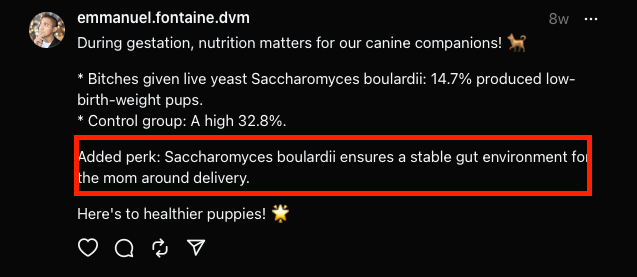
- When focusing on microbiome optimization, always select a diet that bolsters microbiome health. This can involve strategies using probiotics or prebiotics. Probiotics are beneficial bacteria that help maintain a healthy gut environment, while prebiotics are dietary fibres that feed these good bacteria. Both have their proven benefits.
However, remember that nutrition is about balance. More isn’t always better. Choose one approach and stick with it. Ongoing research in this area promises more options in the future, but balance remains key. Overdoing even beneficial elements can lead to issues, so moderation is essential in nurturing a healthy microbiome.
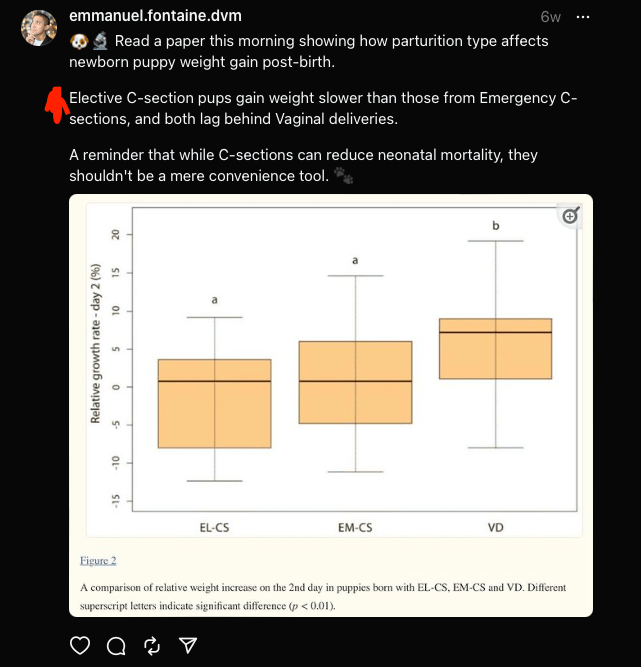
- Discovering how the birthing process affects a newborn puppy’s microbiome was a real eye-opener for me this year. It’s led me to reconsider the use of C-sections, particularly elective ones. It turns out that the mode of birth plays a significant role in shaping a puppy’s digestive microbiome. This difference is notably more pronounced in puppies born via elective C-section.
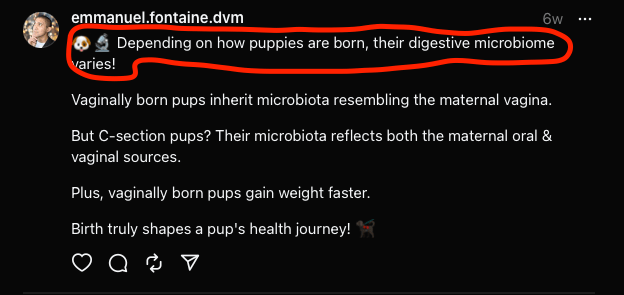
This insight serves as a crucial reminder: elective C-sections are valuable for reducing neonatal mortality when there’s a clear, identified risk. However, if there’s no imminent risk, their use should be minimized, not chosen for convenience. While quicker, elective C-sections have lasting effects on the puppies’ microbiome development. It’s a trade-off that needs careful consideration, emphasizing the importance of natural processes in the early stages of a puppy’s life.
What happens after birth
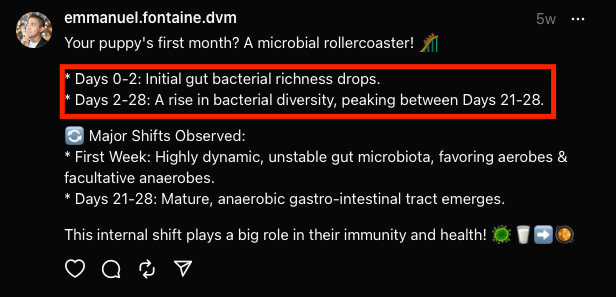
For years, the development of the newborn puppy microbiome was a bit of a mystery. However, recent research has illuminated this fascinating area.
We’ve learned that at birth, a puppy’s gut microbiome is strikingly different from its mother’s. As they grow older, this microbiome undergoes a gradual transformation, slowly aligning more closely with that of their mother.
This evolving process is a critical aspect of their early development, highlighting the dynamic nature of a puppy’s gut health from the very beginning.
And in the neonatal phase of a puppy’s life, several key moments stand out:
Colostrum Intake
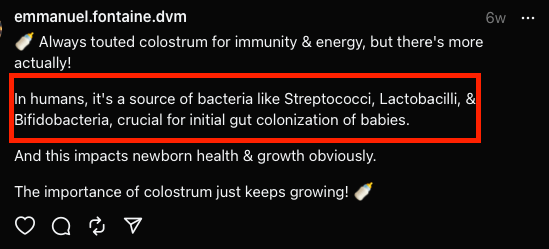
Back in vet school, I viewed colostrum primarily as an immunity booster. Later, I recognized its role as an energy booster, crucial for preventing hypoglycemia in newborn puppies. Recently, I discovered it’s also a microbiome booster! Colostrum is indeed rich in bacteria that colonize the puppy’s digestive tract after birth. Its importance in puppy development extends beyond immunity to being a foundational element for gut health.
Nutritional Weaning:
This is the transition from milk to solid food, and it significantly influences the puppy’s microbiome. The diet’s nutrients can modulate bacterial populations in the gut, supporting or hindering specific bacterial groups. Like with the mother’s diet, strategies involving probiotics or prebiotics can be effective. However, moderation is key. Over-supplementation could indeed disrupt the delicate microbial balance. Also, a gradual transition is crucial. Rapid dietary changes can negatively impact the microbiome, increasing the risk of weaning diarrhea, a common issue during this sensitive period.
Environment:
The environment where puppies grow also affects their microbiome development, particularly in urban settings. This aligns with the hygiene hypothesis, suggesting that overly sanitized environments might hinder microbiome development. While cleanliness is vital in kennels to prevent disease, it’s a reminder to balance sanitation with exposure. The concept of spot cleaning, essential in animal shelters, might also benefit newborn puppies by providing a controlled yet diverse microbial environment.

Factors Influencing the Puppy’s Gut Health

Several factors play a role in shaping the puppy’s gut health. We already mentioned several of them in the previous section (maternal factors, colostrum, environment, etc…); but there are actually more!
Birth Weight
A vital factor to consider in newborn puppy care is their birth weight.
In all my discussions about caring for newborn puppies, I emphasize the importance of weighing them immediately after birth and then daily until nutritional weaning. This weight tracking is a crucial health indicator.
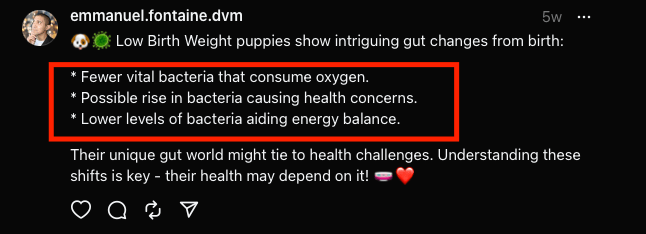
Recent research reveals that a newborn puppy’s microbiome composition is influenced by its birth weight. Puppies with lower birth weights tend to have a less developed microbiome, which might contribute to their increased vulnerability during the neonatal period. Early identification of these puppies is essential for providing them with the additional care they need. This is especially true in terms of supporting their developing microbiome.
Nutrition During The Neonatal Period
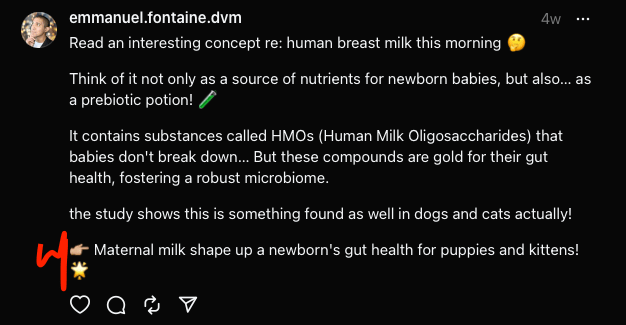
Of course, diet plays a significant role during this early stage. Newborn puppies primarily depend on their mother’s milk for nutrition. The composition of this milk is crucial, as it includes oligosaccharides that function as prebiotics.
These prebiotics in the mother’s milk are key in supporting the development of the newborn puppy’s microbiome, providing the necessary nourishment to foster a healthy gut environment right from the start.
This is actually a key element to keep in mind, I see it as a reminder that:
- In this crucial period, supporting healthy lactation in the mother is paramount.
Nutrition plays a vital role here. This is the one instance where I advocate for free-feeding a growth diet to a female dog.
The objective is to help her maintain her weight during lactation, which is the most nutritionally demanding life stage for a dog. It can indeed significantly deplete an animal’s body reserves.
Once again, choosing a diet that is optimized for microbiome support is important, as it not only benefits the mother but also indirectly supports the developing microbiome of her puppies.
- Should the situation arise where puppies require bottle-feeding, selecting a milk replacer with prebiotics is crucial.
These prebiotics play a significant role in supporting the puppies’ microbiome, mirroring the benefits provided by the prebiotics naturally present in their mother’s milk.
This ensures that even when bottle-fed, the puppies receive the necessary support for a healthy gut environment, akin to what they would have received from their mother.
What Are the Signs of an Imbalanced Puppy Gut Health?
Recognizing Early Symptoms of Gut Health Issues in Puppies
Identifying early signs of gut health issues in puppies is crucial for preventing long-term complications. In the DOHAD paper I referenced earlier, the authors discuss how gastrointestinal issues in puppies might lead to chronic problems in their later lives. This highlights the importance of taking all possible measures to prevent such issues during puppyhood. Ensuring a healthy start can have long-lasting effects on their overall well-being, emphasizing the need for proactive care in these early stages.
Typically, early signs of gut health problems in puppies manifest in two ways: neonatal diarrhea and/or constipation. These symptoms are key indicators to watch for in assessing the early gastrointestinal health of puppies.
I’ve covered these issues extensively in a previous blog, where I discuss practical approaches for managing them. I highly recommend checking it out for more detailed guidance:
White Stools In Newborn Puppies & Kittens: What Does It Mean?
Additionally, monitoring how newborn puppies grow during the neonatal period is crucial.
Nowadays, we have neonatal growth charts that offer even more accuracy, and I strongly advise using them. These tools are real game-changers for newborn puppy monitoring, in my opinion.
Here is the link to download these essential growth charts: Neonatal Puppy Growth Charts.
The Consequences of an Unhealthy Puppy Microbiome
On top of what we already mentioned before, an unhealthy puppy microbiome can have far-reaching consequences beyond the digestive system. In humans, newborn babies with imbalanced gut health are at a higher risk of developing allergies and autoimmune diseases. We have some evidence that in puppies, it might be the same… This is because a significant portion of the immune system is located in the gut, and an imbalanced microbiome can lead to an overactive immune response.
Behavioral changes can also be a symptom of poor gut health in dogs. Puppies experiencing discomfort from gut issues may become lethargic, less playful. Additionally, chronic gut health problems can impact nutrient absorption, leading to deficiencies that affect the puppy’s overall development and growth.
It’s important to recognize that these symptoms can be indicative of various conditions, and a veterinarian’s assessment is crucial for an accurate diagnosis and treatment plan.
How Can We Nurture a Healthy Puppy Microbiome?

The Mother & Her Nutrition
- Ensure that only healthy females are bred, particularly those free from any chronic gastrointestinal conditions.
And should we consider the mother’s microbiome as a factor in breeding selection, aiming to only choose females with a healthy microbiome that could be passed on to the puppies?
While we haven’t reached that point yet, the wealth of information emerging from recent studies is enlightening. The critical role of the mother’s microbiome in shaping that of her puppies suggests that, in the future, we might develop tools to assess the digestive microbiome of potential breeding females.
This assessment could influence breeding decisions, determining whether a female’s microbiome needs optimization before breeding.
Currently, clinical signs are the best indicators for such decisions, but as our understanding deepens, new strategies may emerge. These advancements could revolutionize how we approach breeding, ensuring healthier outcomes for future generations of puppies.
- Optimize the nutrition of the mother during gestation & lactation
Nutrition, at its core, revolves around three fundamental questions: what to feed, how to feed, and how much to feed. This becomes particularly crucial during gestation.
In my view, dogs should be fed two distinct diets during gestation: from breeding until 42 days of gestation, a diet with a maintenance energy level, supplemented with beneficial nutrients like folic acid and antioxidants for the first part of gestation. Then, from day 42 of gestation until parturition, switch to a growth diet that is more energy-dense to meet the increased nutritional demands, considering that puppies gain 70% of their final birth weight in the last 20 days. I’d recommend using the same diet during lactation.
Prioritizing diets that support the microbiome is key. Look for options that are easily digestible and include prebiotics, which are instrumental in fostering a healthy gut environment. Such diets not only nourish the mother but also indirectly benefit the developing puppies, setting a strong foundation for their future health.
- Prioritizing natural birth is crucial for optimizing microbiome development in newborn puppies.
However, this should always be a decision made in consultation with your veterinarian. In cases where there are risk factors identified during gestation, an elective C-section might be recommended.
The key point to remember is that the type of parturition significantly influences the microbiome development in newborn puppies.
Gestation monitoring can also help identify litters at risk of having low birth weight puppies. For instance, large litters might contain up to 30% low birth weight puppies, and overweight females may give birth to smaller puppies. Monitoring these factors during gestation is vital to take preventive measures if necessary, as highlighted in a related blog here. These steps are essential in newborn puppy care, ensuring the best start for their health and development.
Probiotics: Building Blocks of a Healthy Puppy Gut?
Probiotics play a crucial role in establishing and maintaining a healthy gut microbiome in puppies. However, my approach doesn’t necessarily involve immediately supplementing their diet with commercial probiotics.
- Prioritizing colostrum intake immediately after birth is essential for newborn puppies.
Colostrum is not just an immunity and energy booster; it’s also a microbiome booster. It’s packed with bacteria that are the first to colonize a puppy’s digestive tract, making it the most natural and effective probiotic source for them.
A practical tip: if you have a female dog at home experiencing pseudopregnancy with lactation, the initial milk she produces is typically of normal colostrum quality and can serve as a substitute.
One approach is to milk the bitch and freeze the colostrum, which some authors suggest can be stored for up to six months. This can be a valuable backup if needed.
Using colostrum from females in your own kennel is always the best alternative, as it’s specifically adapted to your environment, providing the most suitable microbiome support for your puppies.
- What about the use of commercial probiotics in this context?
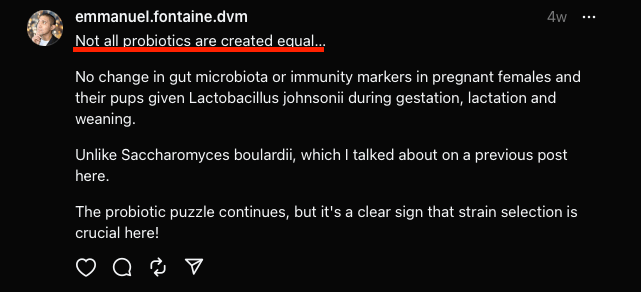
Introducing commercial probiotics for puppies can help populate their gut with health-promoting microbes, especially at the time of nutritional weaning when their digestive system is still developing. This is typically when I’d recommend using them if needed, and studies have shown they can be beneficial here.
When selecting probiotics for puppies, it’s essential to choose strains that are specifically designed for canines. These probiotics help in balancing the intestinal flora, preventing the overgrowth of harmful bacteria, and supporting overall gut health.
The Role of Prebiotics in Supporting Puppy Gut Flora
Prebiotics are non-digestible fibers that feed the beneficial bacteria in the gut. They are as crucial as probiotics in maintaining a healthy puppy microbiome. And before looking into purchasing prebiotic supplements to optimize the gut flora of a newborn puppy, there are several important considerations to keep in mind.
- First and foremost, it’s crucial to ensure that newborn puppies nurse adequately from their mother during the neonatal period.
The mother’s milk is a natural source of prebiotics, specifically oligosaccharides, which stimulate the growth of beneficial bacteria in the puppies’ digestive tract. This is, in fact, the best source of prebiotics available!
Additionally, during this period, monitoring the weight gain of the newborns is vital, as it serves as a key indicator of their health. Thankfully, we now have access to neonatal growth charts, which have become true game changers in accurately tracking and ensuring the healthy development of newborn puppies.
- Then, if there’s a need to bottle-feed the puppies for any reason, it’s important to choose a dedicated canine milk replacer that is supplemented with prebiotics.
These prebiotics are essential for stimulating the growth of healthy bacteria in the puppies’ digestive tract.
Opting for such a milk replacer is a key consideration for promoting gut health, especially when the mother’s milk isn’t available. This approach helps ensure that the puppies still receive support for a developing healthy microbiome, even in the absence of natural nursing.
- Another option to consider is the use of milk replacers supplemented with IgY, available in certain countries.
IgY stands for Immunoglobulin Y, a type of antibody found in bird eggs. These antibodies, when included in milk replacers, have been shown to positively influence the microbiome of puppies.
Research indicates that immunoglobulin supplementation during the neonatal period can enhance microbiome diversity and promote the growth of healthy bacteria. This effect is particularly noticeable in large breed dogs, which are more prone to developing diarrhea.
Therefore, if you have access to such milk replacers, they are definitely worth considering, especially for breeds susceptible to gastrointestinal issues. This innovative approach can provide an additional layer of support for the developing gut health of newborn puppies.
Importance of Nutritional Choices in Early Stages
As puppies transition to solid food at the time of weaning, there are various strategies to optimize their microbiome. I’ve come across diets supplemented with prebiotics, others with bovine colostrum… Each of these has shown potential benefits and is certainly an alternative worth considering.
However, as I’ve emphasized before, balance is key in nutrition. More isn’t always better.
My preference leans towards diets that are already fortified with these nutrients. Once you’ve made your choice, I recommend sticking to it and avoiding the addition of too many extras without veterinary advice.
Over-supplementation can be counterproductive. Excessive nutrients, even beneficial ones, could potentially lead to gastrointestinal disorders we aim to prevent.
This is particularly true during weaning, when the puppies’ digestive microbiome is still developing and fragile. An overstimulated gut can be as problematic as an undernourished one, so maintaining a balanced approach is crucial for their healthy development.
I find it mind-blowing honestly. Our understanding of the newborn puppy microbiome has advanced significantly in just a few short years. It sometimes seems like almost everything we do can impact it, and that’s likely true. The encouraging news is that with this enhanced understanding, we already have several strategies at our disposal – and undoubtedly more are on the horizon – to optimize gut health in puppies, which also extends to their adult life due to the clear connection between the two. When I think of this topic, I’m always reminded of a powerful sentence I read in a WHO textbook: “If we change the beginning of the story, we change the whole story.” This resonates profoundly with the topic of gut health. This journey into understanding and nurturing the puppy microbiome is not just about addressing immediate health concerns but about shaping, for the better their entire health narrative!


