🇫🇷 Lire en Français | 🇪🇸Leer en Español | 🇧🇷Leia em português
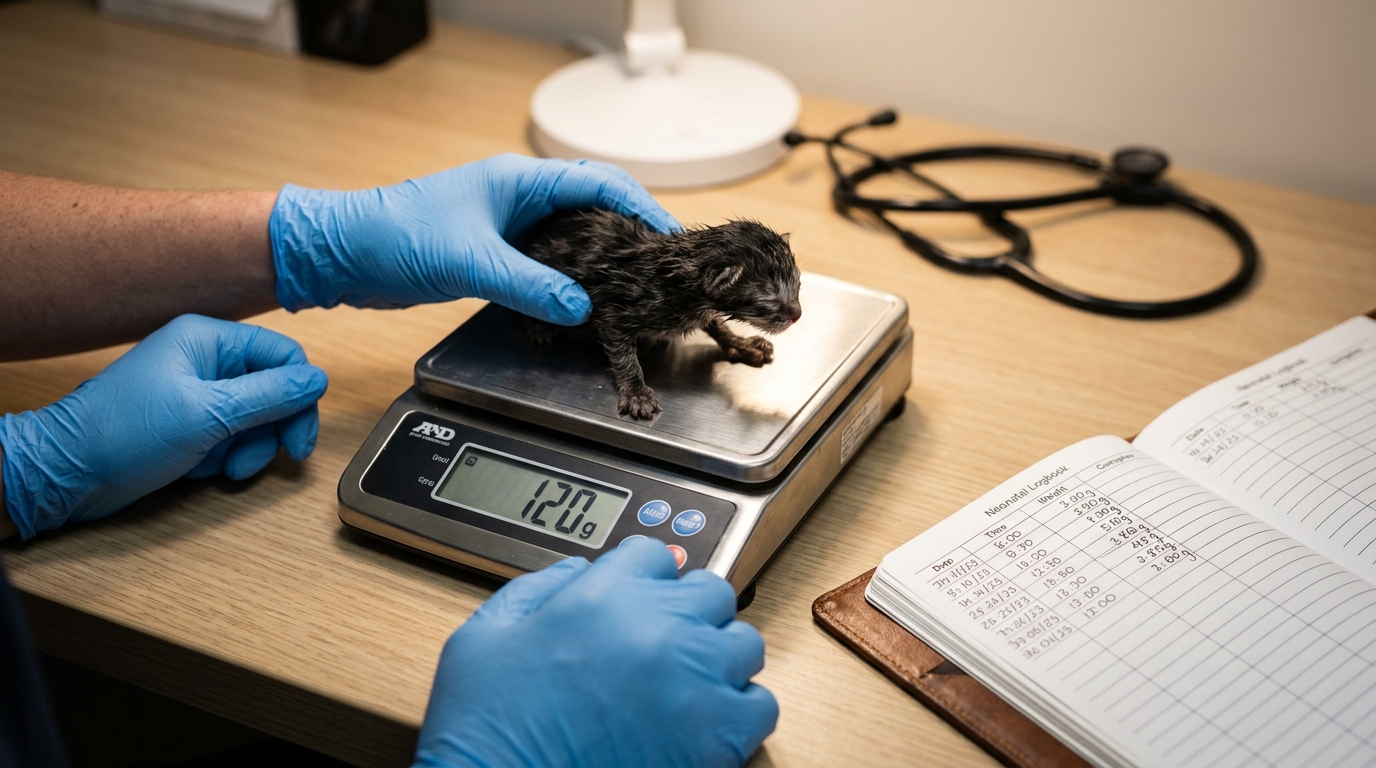
“What is the best way to monitor a newborn puppy or kitten‘s health?” If I had a dollar for every time a breeder asked me this question, I could probably retire. And for the last two decades, my answer has been invariably the same: a simple scale. Not a stethoscope, not a thermometer, not a blood test. A scale. Because the most powerful predictor of neonatal survival is something any breeder can measure at home, every single day: body weight. A healthy newborn puppy or kitten must gain weight daily. Any day without weight gain is a warning. Any day with weight loss is a potential emergency. When you combine daily weighing with a breed-specific neonatal growth chart, you gain the ability to detect problems 24 to 48 hours before clinical signs appear, giving you the window you need to save lives. Neonatal mortality remains one of the most heartbreaking challenges in dog and cat breeding, claiming 10 to 30% of newborns in the first weeks of life. Yet the tools to fight it are remarkably accessible: a precision gram scale, a growth chart you can find online for free, and a simple logbook.
- Key Takeaways
- Know the Science Behind Survival
- Do the Daily Work: Weighing and Plotting
- Intervene Early: Colostrum and Supplemental Feeding
- Have the Right Equipment and Supplies
- Watch for Red Flags and Know When to Call the Vet
- Empower Yourself with Data
Key Takeaways
- Birth weight is the single strongest predictor of neonatal survival, and breed-specific thresholds determine which puppies or kittens are genuinely at risk.
- Low-birth-weight neonates lack glycogen reserves and body fat, making them vulnerable to the deadly “neonatal triad” of hypothermia, hypoglycemia, and dehydration.
- A precision digital gram scale and breed-specific neonatal growth charts are non-negotiable tools for early detection of failure to thrive, often catching crises 24 to 48 hours before clinical collapse.
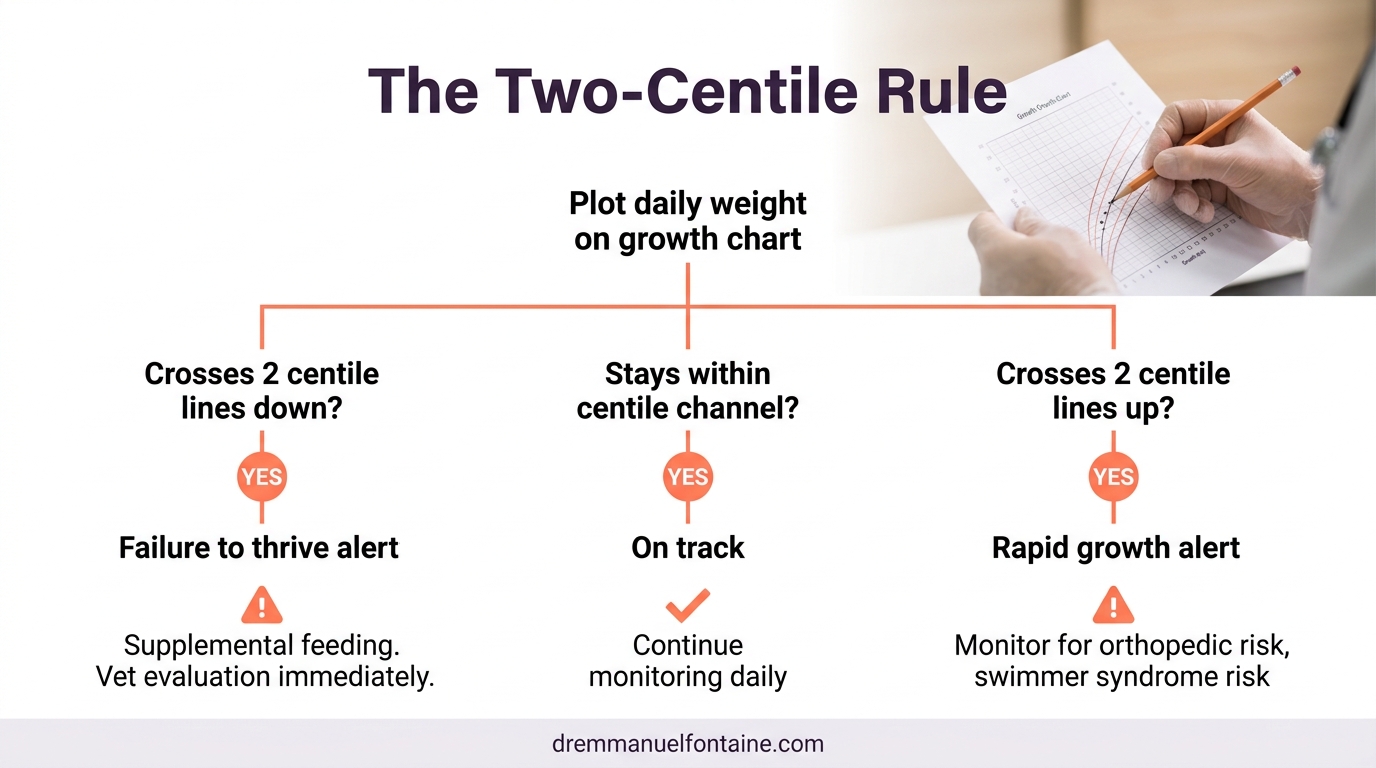
- The “two-centile rule” states that when a neonate crosses two growth chart lines downward, immediate intervention is required to prevent death. Crossing two lines upward is equally important to detect, as abnormally rapid growth increases the risk of orthopedic disorders and swimmer puppy or kitten syndrome.
- Low-birth-weight animals develop the “thrifty phenotype,” a metabolic adaptation that increases risk of obesity and orthopedic disease in adulthood, requiring careful nutritional management throughout growth.
- Temperature control is non-negotiable: a neonate with body temperature below 34.5 C (94 F) develops gastrointestinal ileus and cannot digest milk, risking fatal aspiration pneumonia.
- Working with your veterinarian to establish 7 to 8 pediatric touchpoints during growth ensures early detection of problems that a standard three-visit vaccination protocol would miss entirely.
Know the Science Behind Survival
Low Birth Weight is Strictly Breed-Specific
One of the most dangerous misconceptions among breeders is that low birth weight is a universal concept. It is not. A Labrador Retriever puppy weighing 200 g (7.1 oz) at birth is dangerously underweight, while a Chihuahua puppy at 120 g (4.2 oz) sits comfortably at the 50th centile on its breed-specific neonatal growth chart. Modern veterinary science uses statistical models to determine breed-specific weight thresholds at which neonatal mortality risk spikes, moving away from arbitrary rules like “the smallest 25% of the litter.”
This is why working with your veterinarian early in the breeding season is critical. Your vet can help you establish the breed-specific birth weight reference ranges for your particular breed and size category, so you know exactly which neonates require intensive monitoring.
Table 1: Breed-Specific Birth Weight Ranges and Risk Thresholds
| Breed Category | Example Breeds | Normal Birth Weight Range | Risk Threshold (LBW) |
|---|---|---|---|
| Giant breeds | Great Dane, Mastiff | 500-900 g (17.6-31.7 oz) | < 450 g (< 15.9 oz) |
| Large breeds | Labrador, German Shepherd | 300-500 g (10.6-17.6 oz) | < 250 g (< 8.8 oz) |
| Medium breeds | Beagle, Cocker Spaniel | 200-350 g (7.1-12.3 oz) | < 150 g (< 5.3 oz) |
| Small breeds | Chihuahua, Yorkshire Terrier | 75-170 g (2.6-6.0 oz) | < 70 g (< 2.5 oz) |
The Neonatal Triad: Why Birth Weight Matters
Low-birth-weight neonates are not simply “small versions” of normal puppies or kittens. They are physiologically immature. Their bodies contain negligible glycogen reserves and essentially no body fat (around 1 to 2% compared to 18 to 20% in normal newborns). This makes them extraordinarily vulnerable to three interconnected killers: hypothermia (dangerously low body temperature), hypoglycemia (dangerously low blood sugar), and dehydration.
The numbers are sobering. Very-low-birth-weight neonates face mortality rates around 50 to 55%, compared to just 4% for normal-weight littermates. This makes early detection not just important, but life-saving. Your scale is the first line of defense.
Table 2: The Neonatal Triad: Normal vs Low Birth Weight
| Condition | Normal Weight Neonate | Low Birth Weight Neonate | Mortality Risk |
|---|---|---|---|
| Glycogen reserves | Adequate for 24-48 hours | Negligible; crisis in 8-12 hours | 50-55% |
| Body fat | 18-20% | 1-2% | Severe |
| Susceptibility to “triad” | Lower | Extreme | Eightfold increase |
The Critical First 48 Hours: When Weight Loss is a Red Flag
The first 48 hours of life are make-or-break. A neonate’s growth rate during this window reflects colostrum intake, which is vital for energy and passive immunity (IgG antibodies). Because the intestinal barrier closes at 12 to 16 hours, early nursing is non-negotiable.
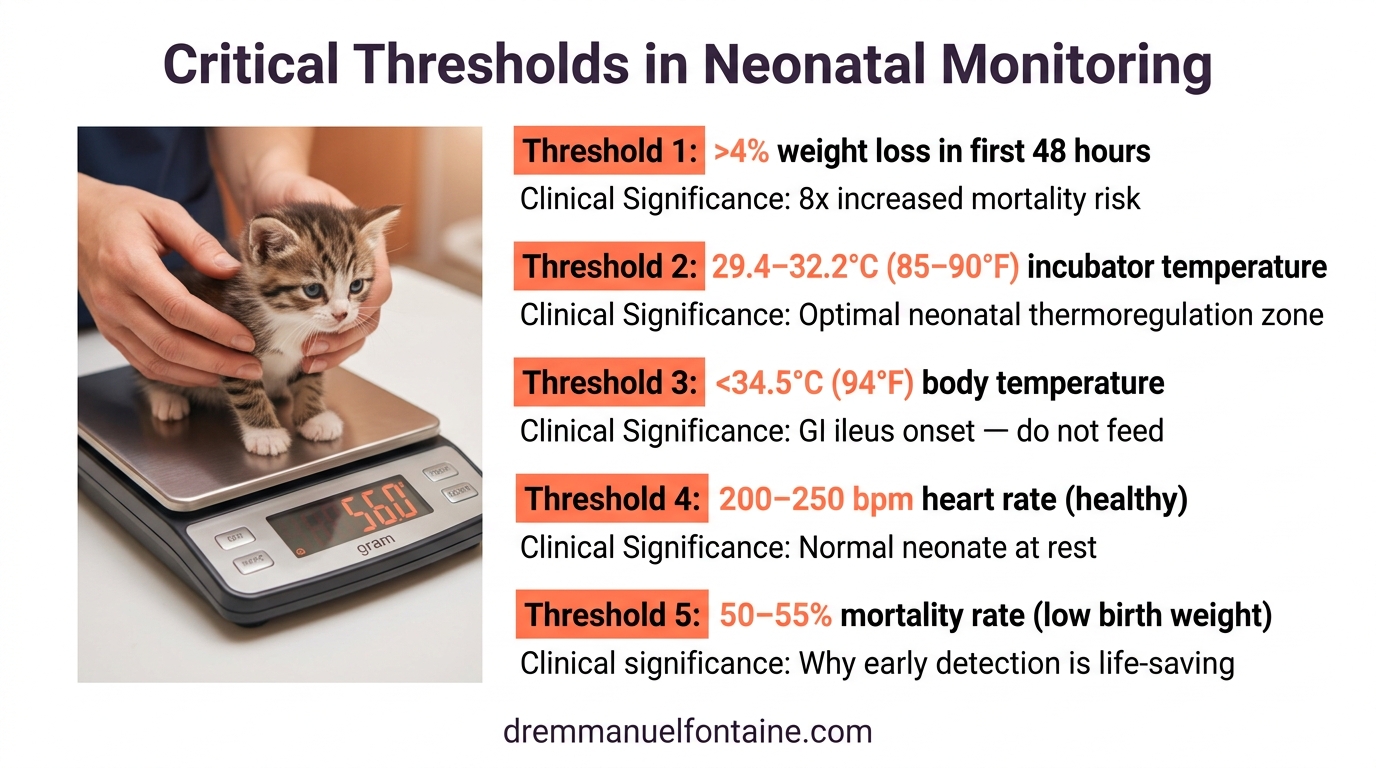
Weight loss during the first 48 hours is a red flag. Puppies losing more than 4% of birth weight face an eightfold increase in neonatal mortality risk. This is why weighing at 0 hours, 12 hours, 24 hours, and 48 hours is critical. Without these checkpoints, a catastrophic weight drop can hide until clinical collapse occurs.
Table 3: The Critical First 48 Hours
| Time Point | Normal Expected Change | Alert Threshold | Intervention Required |
|---|---|---|---|
| 0-12 hours | Weight gain | >7% loss | Immediate nursing assessment |
| 12-24 hours | Stabilization, then gain | >6% loss from birth | Assess colostrum intake; consider supplementation |
| 24-48 hours | Consistent daily gain | >4% loss from birth | Tube feeding + veterinary evaluation |
| Beyond 48 hours | Daily weight gain (plot on growth chart) | No gain or any weight loss | Veterinary evaluation + intensive monitoring |
Do the Daily Work: Weighing and Plotting
Invest in a Precision Digital Gram Scale
The visual estimation method, or “eyeballing,” has no place in modern neonatal monitoring. You need a precision digital gram scale accurate to plus or minus 1 gram with a capacity range from 50 grams to 5 kg (0.11 to 11 lbs). Food scales, postal scales, or pediatric baby scales all work.
Weigh every newborn at birth, at 12 hours, at 24 hours, and then daily thereafter. Record these weights in a dedicated neonatal logbook. Newborn puppies and kittens must gain weight every single day. Any day without gain is abnormal. Any weight loss is a red flag that demands immediate attention. The most reliable way to interpret these daily weights is to plot them on a breed-specific neonatal growth chart, which puts each measurement in context against the expected growth trajectory for that breed. Your veterinarian can help you interpret the numbers and adjust your intervention strategy.
Table 4: What to Look for in a Digital Gram Scale
| Feature | Essential | Good to Have | Why It Matters |
|---|---|---|---|
| Accuracy | Plus or minus 1 gram | Plus or minus 0.5 gram | Detects early warning weight changes |
| Capacity | Up to 5 kg (11 lbs) | Up to 10 kg (22 lbs) | Accommodates puppies/kittens through weaning |
| Display | Digital readout | Backlit screen | Easy reading in dim whelping boxes |
| Tare function | Yes | Auto-zero | Reset to zero between animals; saves time |
Plot on Growth Charts and Watch the Centiles
Simply logging numbers in a notebook is insufficient. You must actively plot daily weight measurements on standardized neonatal growth charts featuring centile curves. We now have neonatal growth charts available online for over 100 dog breeds and 40 cat breeds, which show you whether your puppy or kitten is tracking along an expected path.
A healthy neonate should track steadily along its established centile line, staying within a “channel” between two adjacent lines. If your neonate crosses two centile lines downward, this is a definitive growth alert signaling failure to thrive that demands immediate intervention. Equally important, crossing two centile lines upward flags abnormally rapid growth. This is one of the key reasons why growth charts matter so much: a neonate growing too fast is at increased risk for orthopedic disorders and swimmer puppy or kitten syndrome. Without the growth chart, you would have no way of knowing. And of course, any time a weight loss is detected, this is a potential problem that requires immediate attention.
Table 5: Centile Trajectory Interpretation
| Centile Trajectory | What It Means | Example: 25th to 10th Line | Required Action |
|---|---|---|---|
| Steady along one line | Healthy, normal growth | Day 5-12: stays at 25th | Continue normal care; routine vet check |
| Gradual move between adjacent lines | Possible small issue, monitor | Drops from 25th to 15th over 3 days | Increase monitoring frequency to twice daily |
| Crosses two lines downward | Failure to thrive | Drops from 25th to 5th in 48 hours | Tube feed + veterinary evaluation immediately |
| Crosses two lines upward | Growing too fast; risk of orthopedic disorders and swimmer syndrome | Rises from 25th to 50th in 5 days | Consult your veterinarian; monitor closely |
Intervene Early: Colostrum and Supplemental Feeding
When objective weighing flags a neonate as low birth weight, action is required. Ensure vulnerable neonates receive colostrum within the first hours of life. Colostrum contains critical antibodies and energy that milk replacer cannot provide.
If a neonate is too weak to nurse, tube feed using a commercial colostrum replacer or high-quality milk replacer. Tube feeding bypasses the weak suckle reflex and ensures the neonate receives adequate nutrition. Your veterinarian can teach you the safe technique using sizes 5 to 14 French red rubber catheters depending on the species and breed.
Table 6: Colostrum and Supplemental Feeding Guide
| Time Window | Feeding Method | Best Option | Failure-to-Thrive Action |
|---|---|---|---|
| 0-8 hours | Natural nursing | Dam nursing | Monitor weight closely; assist if weak |
| 8-24 hours | Natural or supplemental | Bottle feeding if weak | Tube feed with commercial colostrum |
| 24-48 hours | Natural + supplemental | Bottle or tube feeding | Every 2-4 hours; monitor weight daily |
| Beyond 48 hours | Species formula | Puppy or kitten milk replacer | Adjust portions by 10% if not gaining |
Have the Right Equipment and Supplies
Temperature Control Devices: The Core of Neonatal Care
Newborns cannot regulate their own body heat for the first three weeks. A pediatric incubator is the gold standard, maintaining a localized temperature of 29.4 to 32.2 C (85 to 90 F) and 55 to 65% humidity during the first week. Alternative heat sources include microwavable hot packs, warm water bottles covered with blankets, heating pads with automatic shut-offs, or closely monitored heat lamps.
You must pair heat sources with a pediatric electronic thermometer capable of reading low temperatures (down to 32 C or 89.6 F) with accuracy of plus or minus 0.1 C. Always check the neonate’s temperature before feeding. If body temperature drops below 34.5 C (94 F), the animal develops gastrointestinal ileus and cannot digest milk.
Table 7: Temperature Control Equipment Comparison
| Equipment Type | Temperature Range | Pros | Cons |
|---|---|---|---|
| Pediatric incubator | 29.4-32.2 C (85-90 F) | Precise; humidity control; safest | Expensive; takes space |
| Heating pad (auto shut-off) | 28-30 C (82-86 F) | Affordable; portable | Requires monitoring; uneven heat |
| Hot water bottle + blanket | Variable; 25-30 C (77-86 F) | Inexpensive; easy setup | Must change water regularly; messy |
| Heat lamp (monitored) | 27-32 C (80-90 F) | Adjustable via distance | Requires constant supervision; burn risk |
Identification and Tracking Supplies
Tracking must be individualized. You need soft Velcro ID collars, colored woolen string, loosely tied ribbons, or non-toxic permanent markers (applied to the abdomen or toenails) to distinguish littermates that look alike. Pair these with a dedicated neonatal logbook where you record individual daily weights, food intake, urination and defecation frequency, activity levels, and developmental milestones.
This logbook becomes your historical record. When patterns emerge, you and your veterinarian can look back and identify exactly when an issue started and what triggered intervention. This data is invaluable for learning and improving your protocols with each litter.
Table 8: Identification Methods for Neonates
| Method | Durability | Cost | Best Use Case |
|---|---|---|---|
| Velcro ID collar | Medium; slips off occasionally | Low ($2-5 per collar) | Larger breeds; adjustable as puppy grows |
| Colored woolen string | Low; needs replacement weekly | Very low (< $1) | All breeds; emergency temporary ID |
| Loose ribbon (non-restrictive) | Low; tangles in dam’s teeth | Very low (< $1) | Very young neonates (first 2 weeks) |
| Non-toxic marker (abdomen) | Low; washes off in 24-48 hours | Low ($3-5) | Day-by-day marking; supplement other methods |
Feeding and Resuscitation Supplies
Stock species-specific high-quality commercial milk replacer formulated specifically for puppies or kittens. Keep frozen maternal colostrum or a commercial colostrum replacer on hand to ensure passive immunity if a neonate cannot nurse within the first 4 to 16 hours.
For tube feeding, maintain red rubber catheters in sizes 5 to 14 French (depending on breed and species) with corresponding syringes. For more vigorous orphans, use human infant bottles with soft nipples or specialized pet nursers. For stimulation, use cotton swabs, gauze, or warm, wet cloths to gently massage the anogenital region and stimulate urination and defecation after every feeding.
For resuscitation, have a pediatric suction bulb or baby nasal aspirator to clear mucus at birth, towels or wipes to rub and dry the neonate, and 2% iodine tincture or chlorhexidine to disinfect the umbilical stump. Work with your veterinarian to ensure all staff understand proper resuscitation techniques.
Table 9: Essential Neonatal Supplies Checklist
| Supply Type | Item | Quantity | Critical for |
|---|---|---|---|
| Nutritional | Commercial puppy/kitten milk replacer | 2-4 containers per litter | Supplemental feeding |
| Nutritional | Commercial colostrum replacer (or frozen colostrum when available) | 1-2 servings per litter | Passive immunity; early weak neonates |
| Feeding | Red rubber catheters (sizes 5-14 French) | 2-3 per size | Tube feeding weak neonates |
| Feeding | Pet nursing bottles + soft nipples | 2-3 bottles | Bottle feeding if mother unavailable |
| Resuscitation | Pediatric suction bulb | 1-2 | Clearing airway at birth |
| Umbilical care | 2% iodine tincture or chlorhexidine | 1 bottle | Preventing septicemia from umbilical infection |
| Stimulation | Cotton swabs + warm gauze | As needed | Post-feeding bowel and bladder stimulation |
Watch for Red Flags and Know When to Call the Vet
Weight and Growth Trajectory Alerts
Early weight loss is the earliest indicator of a compromised neonate. Puppies losing more than 4% of birth weight within the first 48 hours face an eightfold increased risk of neonatal mortality. Rule of thumb: neonates must gain weight every single day. A newborn puppy or kitten should never lose weight. When weight loss occurs, it is abnormal and requires immediate attention. The most reliable way to assess whether a neonate is growing adequately is to plot daily weights on a breed-specific neonatal growth chart.
The “two-centile rule” is your most powerful tool. When plotting daily weights on a breed-specific growth chart, a trajectory that crosses two centile lines downward is a definitive red flag signaling failure to thrive that demands immediate supplemental feeding and veterinary evaluation. Equally critical, crossing two centile lines upward detects neonates that are growing too fast. This matters because abnormally rapid growth increases the risk of orthopedic disorders and swimmer puppy or kitten syndrome. This is precisely why growth charts are so important: they catch both ends of the danger spectrum. Without them, you would only notice a neonate in trouble once clinical signs appear.
Table 10: Weight and Growth Alerts
| Alert Type | Measurable Threshold | Urgency Level | Immediate Action |
|---|---|---|---|
| Early weight loss | >4% loss in first 48 hours | CRITICAL | Tube feed + vet call within 2 hours |
| No daily weight gain | Any day without gain | HIGH | Increase feeding; plot on growth chart; call vet |
| Weight loss after 48h | Any weight loss | CRITICAL | Tube feed + veterinary evaluation immediately |
| Two-centile drop | Crosses two lines downward | CRITICAL | Tube feed + vet evaluation immediately |
| Two-centile rise | Crosses two lines upward | HIGH | Consult vet; risk of orthopedic disorders and swimmer syndrome |
Hypothermia: The Silent Killer
Neonates cannot shiver or regulate their own body temperature for the first few weeks. A healthy newborn heart rate is normally 200 to 250 beats per minute, but severe chilling can drop this to a fatal 40 bpm. A dam may also actively push away and reject a newborn whose skin feels cold, creating a vicious cycle of isolation and further temperature loss.
The escalation point is gastrointestinal ileus. If body temperature falls below 34.5 C (94 F), gut motility completely stops. You must never feed a hypothermic neonate. Introducing milk when the gut is paralyzed causes food to sit, putrefy, and be regurgitated, leading to fatal aspiration pneumonia. The neonate must be slowly rewarmed to at least 35.5 to 35.6 C (96 F) before feeding. Work with your veterinarian to establish safe rewarming protocols.
Table 11: Hypothermia Staging and Response
| Temperature | Clinical Signs | Physiological Status | Feeding Status |
|---|---|---|---|
| 36.1-38 C (Normal) | Active; strong suckle; normal behavior | Thermoregulating adequately | Feed normally |
| 35-36 C (Mild chilling) | Sluggish; weak suckle; shivering if older | Early compensatory efforts | Feed with caution; rewarm first |
| 34.5 C (Ileus threshold) | Lethargy; weak/absent suckle; poor color | Gastrointestinal ileus developing | DO NOT FEED; rewarm immediately |
| 32-34 C (Severe) | Unconscious or near-unconscious; gasping | Severe metabolic depression; aspiration risk | DO NOT FEED; emergency vet care |
Behavioral and Metabolic Crisis Signs
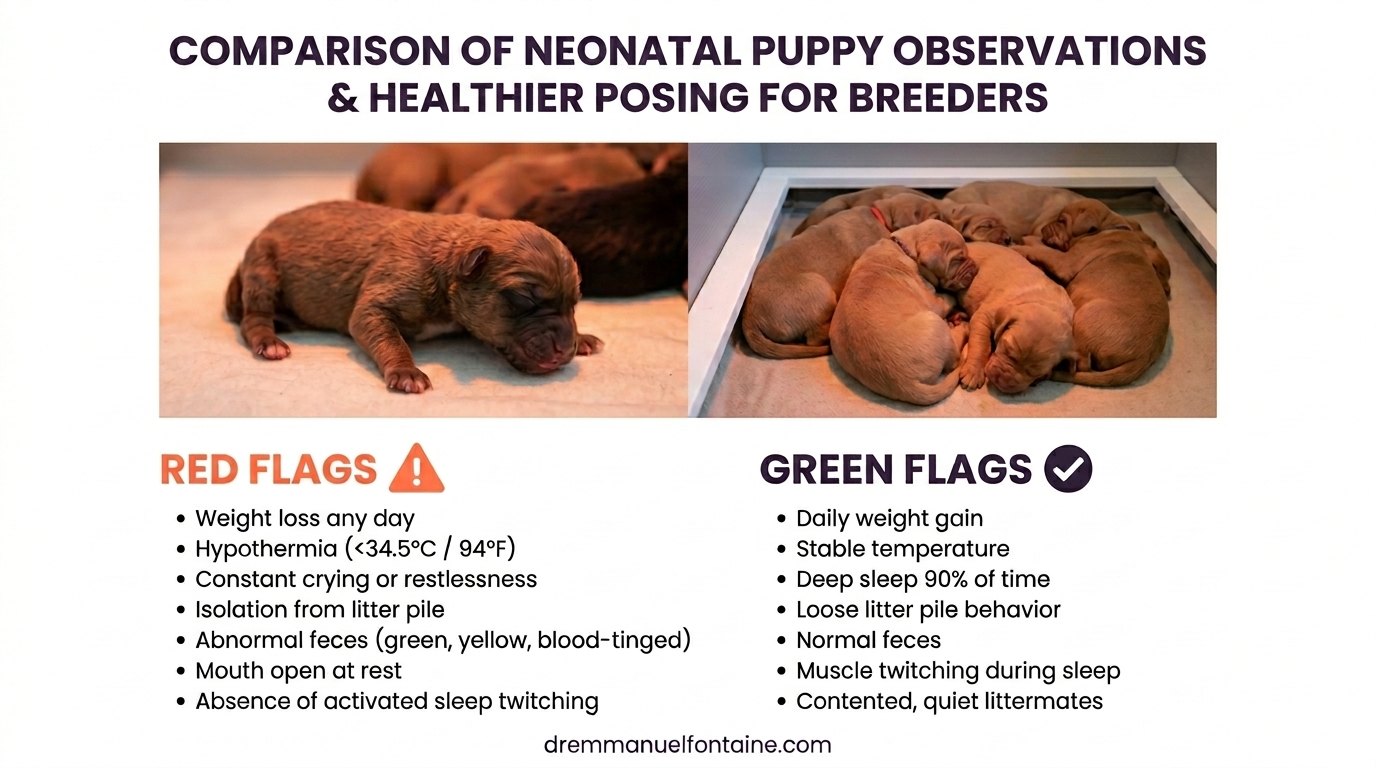
Healthy puppies and kittens spend about 90% of their time sleeping. During this sleep, they should exhibit “activated sleep” characterized by nearly continuous muscle twitching and jerking. A significant decrease or total absence of this twitching is a major warning sign that the animal is severely compromised.
A contented litter sleeps in a loose “pig pile” and is relatively quiet. Immediate red flags include neonates that are constantly crying, whimpering, or restless, which almost always indicates they are cold, starving, or battling an infection. A neonate that isolates from the litter pile, lies flat on its side instead of its chest, lies with its mouth open, or shows unusually little movement should be treated as a medical emergency. Signs of sepsis include cyanosis (blue or gray mucous membranes), profound weakness, and sloughing of extremities due to severe hypoxia. Abnormal feces (green or yellow watery stools suggesting overfeeding, white stools indicating lactose intolerance, or blood-tinged stools suggesting sepsis) warrant immediate veterinary evaluation.
Table 12: Behavioral Warning Signs
| Behavior | Normal Finding | Yellow Flag (Monitor) | Red Flag (Vet Call) | Crisis Sign (Emergency) |
|---|---|---|---|---|
| Sleep pattern | 90% sleep with twitching | Reduced twitching | No twitching during sleep | Unresponsive; cannot arouse |
| Vocalizations | Quiet; occasional mewing | Increased crying; restlessness | Constant cry; distress | Silent; weak mewing |
| Litter pile behavior | Snuggled in loose pile | Occasional isolation | Isolating from pile | Cannot position on chest |
| Mucous membranes | Deep pink; moist | Slightly pale; moist | Pale; dry | Cyanotic (blue-gray) |
| Feces color | Mustard yellow; pasty | Slightly tan; normal consistency | Green/yellow watery | Blood-tinged; foul odor |
Empower Yourself with Data
Neonatal mortality breaks hearts. Every lost puppy or kitten represents a failure that haunts breeders for years. But this tragedy is not inevitable. The breeders who have the lowest neonatal losses are not those with the largest litters or the fanciest facilities. They are the ones who systematized the fundamentals: daily weighing, breed-specific growth charts, objective decision-making, and early partnership with their veterinarian.
A scale costs less than a single veterinary emergency visit. Neonatal growth charts are available online for free for over 100 dog breeds. A neonatal logbook is a simple notebook. Yet together, these tools transform you from a reactive caregiver into a proactive guardian who can detect crises 24 to 48 hours before collapse occurs, giving you the window you need to intervene.
The science is clear: birth weight and growth trajectory are the strongest predictors of neonatal survival. By implementing daily weighing and plotting on neonatal growth charts, you give every neonate in your care their best chance at life. That is a legacy worth building. Start today with a scale and a chart. Your next litter will thank you.
Get the next issue on Saturday morning
Every Saturday, my free newsletter brings you one piece of science on reproduction and newborn care in dogs and cats, written for breeders and their veterinarians. Read it in English, French, Spanish or Portuguese.
Free. Unsubscribe anytime.


